Last updated: May 2026
The honest answer to is Laikipia Kenya safe for tourists is yes — visitors on conservancy-based safaris experience one of the safest forms of African travel available — but the longer answer requires distinguishing between several different categories of risk: wildlife, road, health, urban crime, and the periodic land-conflict events that make occasional international news. This guide gives you the honest assessment of each, plus the practical precautions that bring total trip risk down to “lower than driving to the airport from your home.”
The Short Answer
Tourists visiting established Laikipia conservancies and lodges have an excellent safety record. The conservancy infrastructure (24-hour security, professional guides, vetted drivers, vehicle maintenance, emergency medical evacuation cover) is mature and reliable. Independent travel through certain parts of north-western Laikipia (Laikipia West and Laikipia North constituencies) is more variable and requires informed local advice. Standard urban crime precautions apply in Nanyuki and Nyahururu. Wildlife risks are real but easily managed with normal guide instructions. Health risks at altitude are low.
The major foreign-government travel advisories (UK FCDO, US State Department, Australian Smartraveller) all permit travel to mainstream Laikipia tourism areas while flagging caution for parts of Laikipia West and the broader Northern Frontier. Travel insurance covering medical evacuation is non-negotiable.
Wildlife Safety
The Standard Rules Work
Wildlife encounters on Laikipia conservancies occur within a structured safety system: trained guides, vehicles maintained for safe Big Five distance, established protocols for walking safaris (armed guides, single-file walking, predetermined routes), and lodge security at night. The system works when you follow it. Almost every wildlife-related incident in Kenya tourism involves either a self-driving traveller making poor decisions or a guest ignoring guide instructions.
The Five Practical Rules
Stay in the vehicle unless your guide invites you out. Big Five animals see vehicles as mobile background objects. Once you’re on the ground, you’re a separate object — and the rules of engagement change dramatically.
Don’t run from wildlife. Running triggers a chase response in lions, leopards and (less commonly) hyenas. Stand still, then back away slowly while keeping your eyes on the animal.
Maintain distance from elephants. Elephants — particularly females with calves and adolescent males — can be territorial and unpredictable. The standard guide rule is 50 m minimum distance for resting elephants, more for any elephant showing signs of agitation (ear-flapping, trunk-raising, mock-charging).
Buffalo are more dangerous than lions. Old buffalo bulls live solitary lives and are responsible for more human deaths in Africa than any other large mammal. Never approach a buffalo on foot without an armed guide. Even from a vehicle, a buffalo at close range warrants a guide moving the vehicle to greater distance.
Hippo at night. Hippos kill more people in Africa than any other large mammal (most of those deaths are people walking between water and homestead). On any night walk between camp tents and the dining area, follow the lodge’s escort protocol — there’s a reason a staff member walks you with a torch.
Specific Risks by Animal
Lions: Major problems with lions almost always involve people on foot or self-driving cars without guides. Conservancy lions are habituated to vehicles and rarely respond to them. Walking with an experienced armed guide is statistically very safe.
Leopards: Largely nocturnal and avoid people. The main risk is surprising one in dense vegetation while walking. Guide protocols address this.
Elephants: The most consistent source of safari-vehicle incidents because of their territorial behaviour. Aggressive elephants (often males in musth) require respect. Guides know which individuals on a given conservancy have temperamental histories.
Buffalo: Old solitary bulls are the main danger. Standard guide protocols keep you safe.
Hippo and crocodile: Both common along the Ewaso river. Stay out of rivers and away from riverbanks at dawn, dusk and at night. Hippos move along established paths between water and grazing — never block one of these paths.
Snakes: Bite incidents involving tourists on Laikipia conservancies are extremely rare. The standard precautions (closed shoes when walking in long grass, watching where you step, not putting hands into rock cavities) are sufficient. Lodges have antivenom protocols and proper evacuation arrangements.
Spiders, scorpions and biting insects: Almost all bites are minor. Standard precautions (shaking out shoes in the morning, not picking up unfamiliar insects) cover the main risks.
Road Safety
Road-related incidents are statistically the most common safety problem for African travellers in any country, and Kenya is no exception.
The Drive From Nairobi
The A2 highway from Nairobi to Nanyuki is paved and reasonably maintained. The risks are: slow heavy trucks, unmarked speed bumps, livestock on the road in rural sections, occasional drunk drivers in the evening, and minibus (matatu) drivers who pass aggressively. A safe approach: use a professional driver/transfer service rather than self-driving on your first trip; allow extra time so you don’t drive after dark; wear seat belts; use a vehicle with airbags and good tyres.
Conservancy Roads
Within conservancies, vehicles are driven by trained safari guides at low speeds. The roads are maintained as gravel or compacted dirt. Vehicle accidents are very rare.
Driving Yourself
Self-driving in Laikipia is possible — the A2 is straightforward and several conservancies allow self-drive day visits. The challenges are: navigation (not all access roads are well-signed); 4×4 requirement on minor tracks; understanding wildlife rules; and being on your own if something goes wrong. Most first-time visitors are better served by professional transfers and guided game drives.
Land-Conflict Events: The Honest Picture
Northern Laikipia experienced a serious land-invasion crisis in 2017, when armed pastoralists from Pokot and Samburu communities drove tens of thousands of cattle onto private and community conservancies. Several lodges were burned, several ranchers were killed, and Kenya Defence Forces were deployed to restore order. The crisis was driven by a combination of drought, election-cycle politics, and long-standing land-rights grievances dating to the colonial era.
Since 2017, the situation has stabilised. Conservancies have invested in expanded community-grazing programmes, enhanced security cooperation, dialogue with neighbouring pastoralist communities, and (in some cases) closer partnerships with the Kenyan military. The 2022 drought tested the system again but was managed without large-scale violence.
The current state: tourism in mainstream Laikipia conservancies (Ol Pejeta, Lewa, Borana, Solio, Loisaba, Mpala, Sosian, El Karama, Mukogodo Forest, Ngare Ndare and most of the central and southern plateau) is operating normally and is safe. Some northern and north-western areas — particularly parts of Laikipia West and Laikipia North constituencies — see periodic incidents and are areas where independent travel is best avoided. Travellers visiting these areas should do so only through established operators familiar with the current situation.
Foreign-government travel advisories: UK FCDO advises against all but essential travel to Laikipia West and Laikipia North constituencies; the rest of Laikipia is unrestricted. US State Department and Australian Smartraveller similarly distinguish between mainstream conservancy areas (no specific warnings) and the more remote north-western country.
Health Risks
Malaria
Malaria risk in Laikipia is low. The plateau’s altitude (1,700–2,500 m) reduces mosquito populations substantially. Most major conservancies are described as “minimal” or “low” malaria risk in standard travel-medicine guidance. The lower Ewaso valley has somewhat higher mosquito populations than the high plateau.
Decisions on antimalarial prophylaxis should be made with your doctor based on your medical history and the specific lodges on your itinerary. Many travellers to Laikipia choose to skip prophylaxis and rely on rigorous mosquito-bite prevention (DEET-based repellent, long sleeves at dawn and dusk, mosquito nets at night). This is reasonable for healthy adults but worth discussing with a travel-medicine doctor.
Yellow Fever
Kenya requires yellow fever vaccination certificates for entry from yellow-fever-risk countries (most of Africa, parts of South America). Confirm your status with your country’s travel-medicine clinic before booking.
Other Vaccinations
Standard recommendations: Hepatitis A, typhoid, tetanus, MMR (if not up to date). Rabies pre-exposure vaccination is sometimes recommended for longer stays or for travellers planning extensive walking and animal contact, but is not required for standard safaris.
Altitude
Laikipia at 1,700–2,500 m is not high enough to cause altitude sickness in most healthy adults. Expect to feel slightly more tired the first 24 hours and to need more sleep. Mount Kenya climbing (4,985 m) is a different matter and proper acclimatisation is essential there.
Sun and UV
UV at altitude on the equator is intense even on cloudy days. Aggressive sun protection (SPF 50+, wide-brimmed hat, UV-rated sunglasses, long sleeves where possible) is more important here than at sea level.
Food and Water
Lodges provide bottled or filtered water for drinking and brushing teeth. Lodge food is generally excellent and prepared to international hygiene standards. Restaurants in Nanyuki are also generally safe; smaller roadside food stalls warrant more caution. Standard precautions: peeled or cooked produce only outside major restaurants; avoid ice in drinks unless from a known source; bring oral rehydration salts and your usual stomach medications.
Medical Care
Nanyuki Cottage Hospital and Nanyuki Teaching and Referral Hospital handle most routine medical needs. For serious problems, AMREF Flying Doctors operates the standard emergency air-evacuation service from Nanyuki Airstrip to Nairobi (where the Aga Khan University Hospital and Nairobi Hospital are the standard referral facilities for complex care). All major conservancy lodges include AMREF cover for guests during their stay; verify before arrival. Independent travel insurance with explicit medical-evacuation coverage is non-negotiable.
Urban Crime in Nanyuki and Nyahururu
Both major Laikipia towns are generally safe with normal urban precautions. Pickpocketing exists in markets and crowded matatu stages; violent crime against tourists is rare. Standard advice: don’t carry obvious valuables; use registered taxis after dark; don’t walk alone outside the main streets late at night; keep an eye on bag straps in markets.
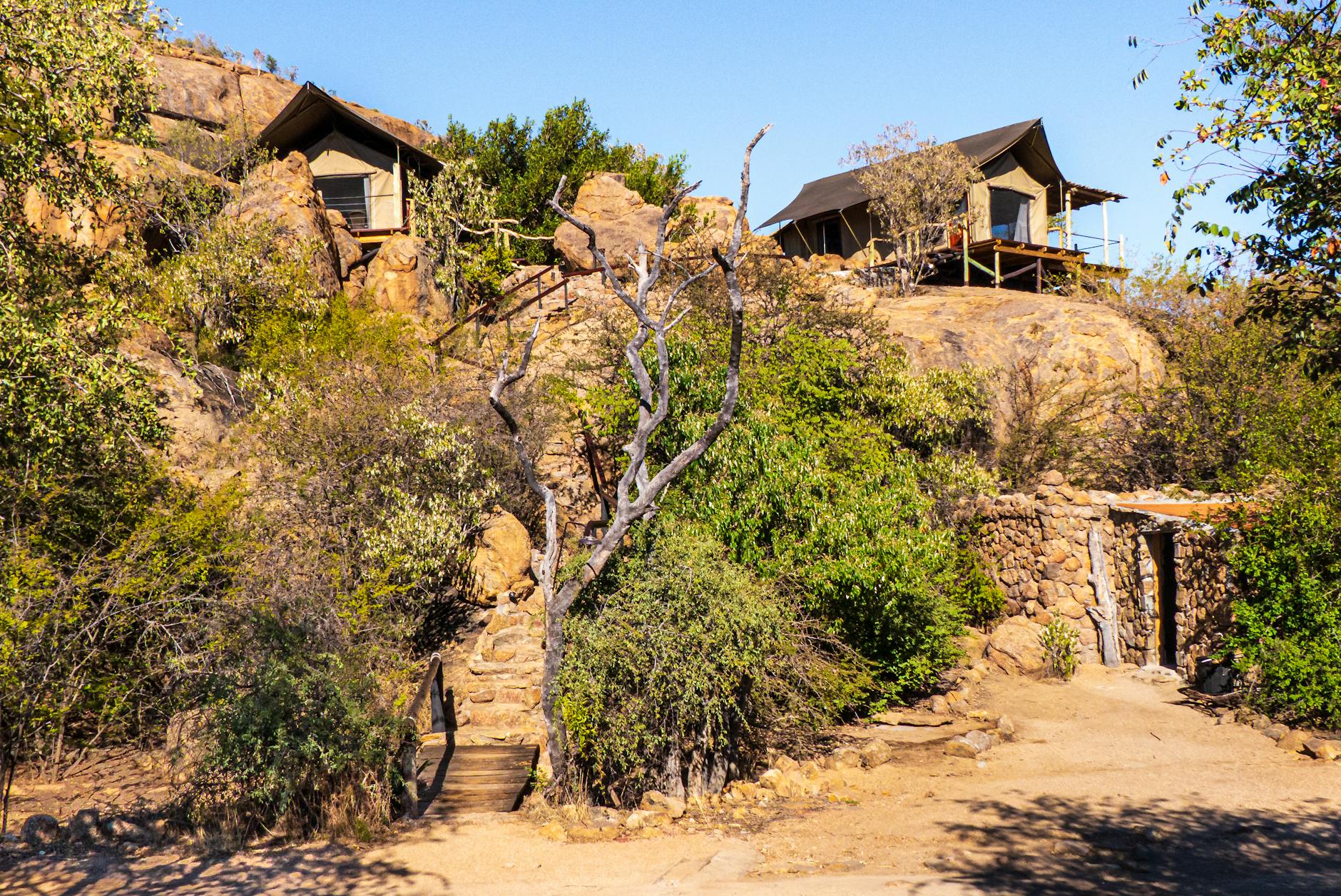
Hotels in town have private security; lodges outside town have 24-hour security teams. Theft from hotel rooms is uncommon but not unknown — use the room safe, don’t leave laptops or cameras visible.
Practical Safety Recommendations
Before Travel
Buy comprehensive travel insurance with explicit medical-evacuation coverage and trip-cancellation cover. Confirm your yellow fever vaccination status (and other recommended vaccinations) with a travel-medicine doctor. Register with your country’s overseas-citizens registration system if available (US State Department STEP, UK FCDO, Australian Smartraveller). Read the current foreign-government travel advisory for Kenya before booking.
What to Pack for Safety
A small medical kit (paracetamol, ibuprofen, oral rehydration salts, antihistamines, anti-diarrheal, plasters, antiseptic cream, your prescription medications, a few days’ worth of broad-spectrum antibiotic if your doctor agrees). Insect repellent with 30%+ DEET. Sunscreen SPF 50+. A photocopy of your passport and travel insurance documents stored separately from the originals.
On the Ground
Listen to your guide. Most Laikipia incidents occur when guests override professional advice. Don’t walk in camp at night without an escort. Don’t approach wildlife on foot unless your guide invites you to. Wear closed shoes outside the lodge buildings. Use bottled water for everything potable. Keep your hotel room and vehicle locked. Don’t display large amounts of cash or expensive electronics in public.
Emergency Numbers
Kenya Police: 999 (or 911 from international mobiles). AMREF Flying Doctors emergency: +254 20 6992299. Most major lodges and operators have direct AMREF activation procedures and dedicated emergency contacts.
Frequently Asked Questions
Is it safe to drive myself in Laikipia?
Possible but not optimal for first-time visitors. The A2 highway from Nairobi to Nanyuki is straightforward but Kenyan road conditions and driving culture take getting used to. Conservancy access roads usually require a 4×4. Most travellers benefit from using established transfer services and guided game drives.
Has any tourist been killed by wildlife in Laikipia?
Tourist fatalities from wildlife on Laikipia conservancies are extremely rare. The standard safety protocols work. Almost all serious wildlife incidents in East Africa involve self-driving travellers, people walking unescorted, or guests ignoring guide instructions.
Should I be worried about the 2017 land invasions happening again?
The 2017 crisis affected specific areas in northern Laikipia and was an exceptional event driven by drought and election-cycle politics. The conservancy security infrastructure has been strengthened substantially since. Mainstream tourism areas are operating normally. Periodic localised incidents in remote areas continue to occur but rarely affect tourism.
Do I need malaria pills for Laikipia?
Discuss with your travel-medicine doctor based on your medical history and the specific lodges on your itinerary. Many travellers skip prophylaxis for high-altitude Laikipia stays and rely on bite prevention. The decision is more nuanced for travellers with young children, pregnant travellers, or travellers visiting lower-altitude areas (the Ewaso valley, the northern lowlands).
Are the conservancy lodges secure?
Yes. Major conservancy lodges have 24-hour security teams, controlled access, escort protocols for night movement around camp, and emergency procedures for medical, wildlife and security incidents. The major lodges have decades of operating history and refined safety protocols.
What about civil unrest during Kenyan elections?
Kenyan general elections are held every five years (most recently 2022; next 2027). Election periods can produce localised political tension and occasionally violence. Laikipia tourism has historically been less affected than urban areas; nonetheless, most travel operators advise guests to plan around immediate post-election dates if the election timing falls during their planned travel.
Is solo female travel in Laikipia safe?
Yes, with standard precautions. Conservancy lodges are female-friendly environments with professional staff. Solo female travellers should follow the same precautions as anywhere else — don’t walk alone after dark in town, use registered taxis, dress conservatively in markets and rural areas, and trust your instincts.
What if I get sick during my stay?
Lodges have basic first-aid capabilities and direct relationships with Nanyuki hospitals and AMREF Flying Doctors. For serious illness, evacuation to Nairobi is fast (under an hour by air from most conservancy airstrips) and well-coordinated. Travel insurance with medical evacuation is the essential backup.
The Bottom Line
Laikipia is safe for tourists who travel with established operators, stay at conservancy lodges, follow guide instructions, take standard health and urban precautions, and carry proper travel insurance. The rare serious incidents that do occur involve specific risk profiles (self-driving travellers, off-the-beaten-track independent travel into restricted areas, ignoring guide protocols) that mainstream tourism doesn’t expose you to. The mainstream Laikipia conservancy experience is statistically among the safest forms of African travel, and the conservancy infrastructure — security, medical, evacuation, professional guiding — is mature and reliable. Plan well, follow professional advice, and you’ll come home with stories of wildlife and landscape rather than incidents.