Last updated: May 2026
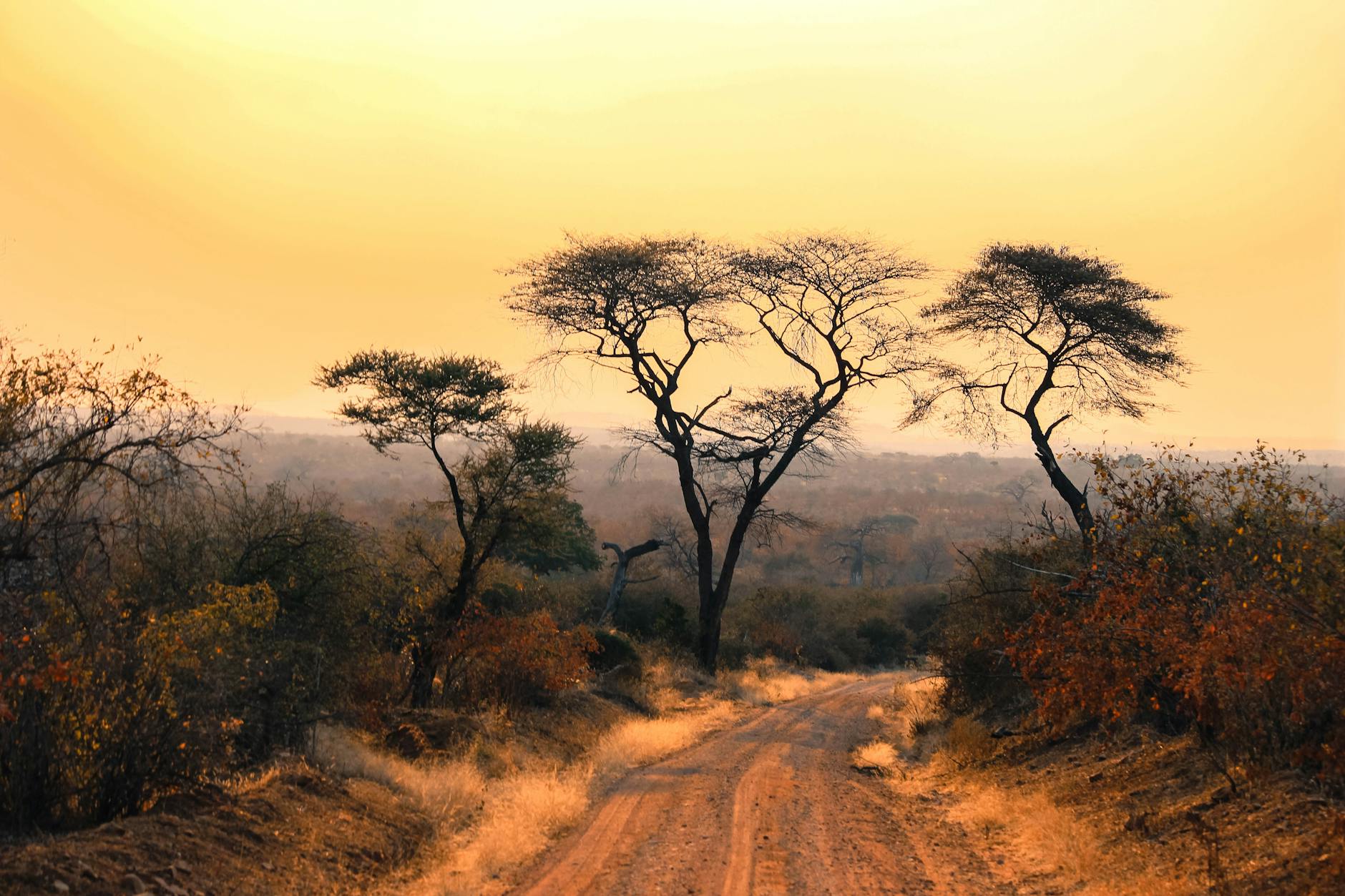
The wildlife you’ll see on a Laikipia safari isn’t a happy accident. It’s the product of an ecosystem with very specific characteristics — a high-altitude semi-arid plateau, two equatorial rainy seasons, the rain shadow of two big mountains, the Ewaso Ng’iro river system, and a habitat seam between Kenya’s wet Central Highlands and the dry Northern Frontier. Understanding the Laikipia ecosystem changes how you see what’s in front of you. Why are the wild dog packs here when they’re scarce elsewhere? Why does the bushland look different in the north than the south? Why do the rivers matter more than the rainfall? The answers are all in the structure of the ecosystem.
This guide covers the major habitat types, the vegetation zones, the wildlife corridors, the biodiversity numbers, and the practical implications for visitors who want to read the landscape rather than just look at it.
The Big Picture
Laikipia’s ecosystem is the second most diverse and abundant wildlife landscape in Kenya — after the Mara-Serengeti ecosystem and ahead of every other Kenyan landscape including Tsavo. The plateau supports the largest population of endangered megafauna in Kenya, including roughly half of the country’s black rhino, the world’s last northern white rhino, the largest African wild dog population in northern Kenya, and the majority global population of Grevy’s zebra.
The total documented species list across Laikipia is staggering: more than 800 vascular plants, 755 macro-invertebrate species, 477 bird species, 55 reptile species, 14 amphibian species, plus the standard megafauna lineup. By area-density measures, Laikipia has the largest diversity of large mammals of any region of comparable size in the world.
This biodiversity exists because of the ecosystem’s unusual structural features, not in spite of them.
The Habitat Seam
Laikipia’s defining ecological feature is its position at the seam between two huge African biomes:
The wet Central Highlands to the south — Mount Kenya forest, the Aberdares, the agricultural foothills around Nyeri and Karatina. This biome is wet (rainfall 1,500+ mm per year), cool, forested, and supports species like Hartlaub’s turaco, Mountain Buzzard, bongo, mountain reedbuck, melanistic leopard, suni, blue duiker, and elephants that move between the highland forests and the lower country.
The dry Northern Frontier to the north — Samburu, Isiolo, Marsabit, the lava deserts beyond. This biome is arid (rainfall under 300 mm in places), hot, savanna-grassland and acacia bushland, supporting the “Northern Five” specialities (reticulated giraffe, Grevy’s zebra, Beisa oryx, gerenuk, Somali ostrich), plus species like vulturine guineafowl, ground squirrels, gravel-loving sandgrouse, and the desert-adapted carnivores.
Laikipia sits exactly between the two biomes and contains elements of both. A morning game drive on a southern conservancy can produce highland species; an afternoon drive on a northern conservancy can produce arid-zone species. The biological richness is the direct product of this transition zone.
Vegetation Zones
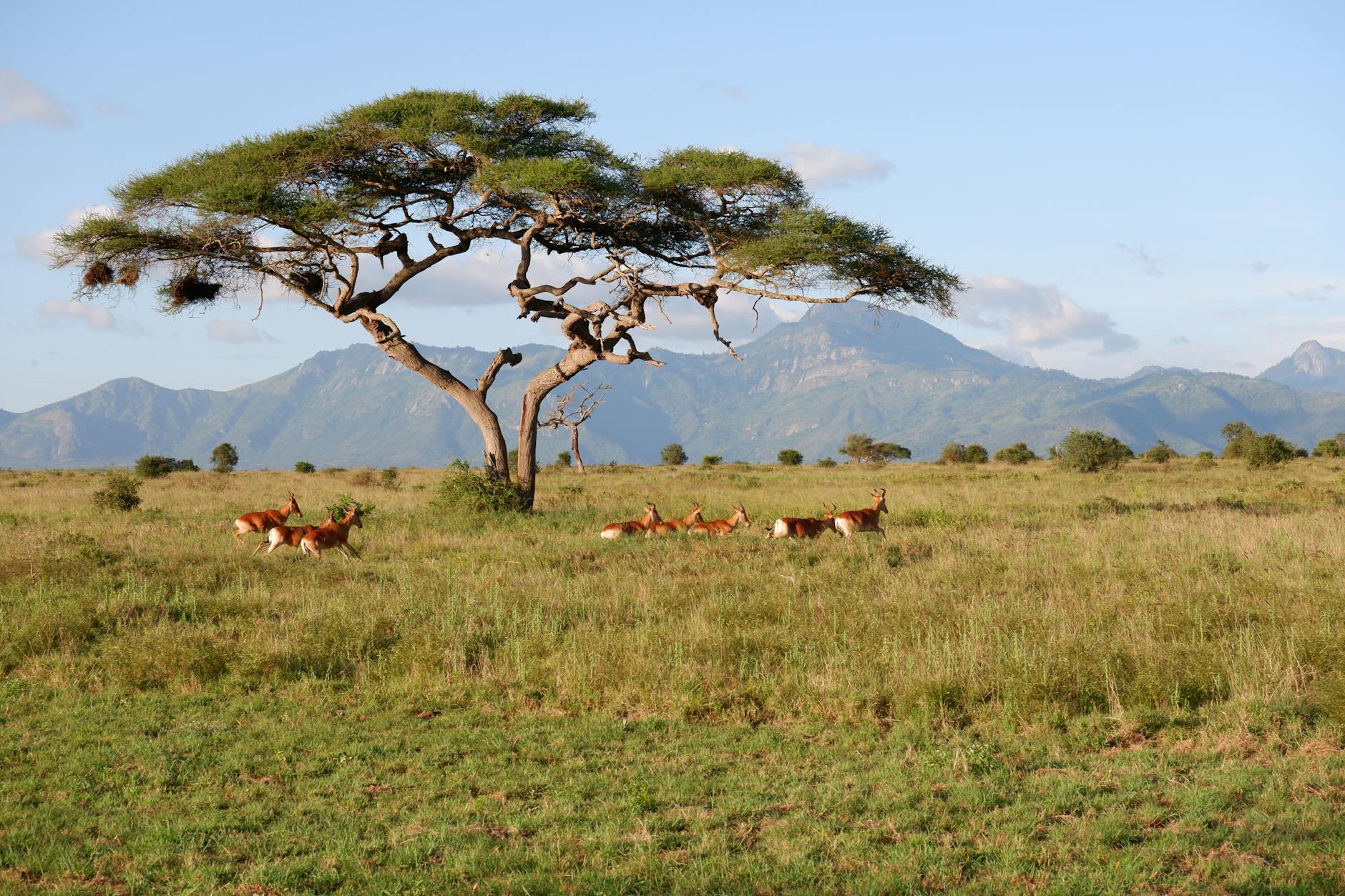
The Laikipia plateau ranges from around 1,260 m on its northern fringe to over 2,400 m at the southern border. The elevation gradient drives a vegetation gradient from arid bushland at the bottom to montane forest at the top. The major vegetation types:
Open Grassland
Dominated by grasses of the genera Themeda (red oat grass), Pennisetum and Panicum. The classic open savanna of southern Solio Ranch, parts of Ol Pejeta, and the central plains around Mpala. Best for grazing herbivores (zebra, hartebeest, eland, oryx) and the predators that follow them. Most photogenic in the green wet season; harshest in the late dry.
Acacia Bushland (Acacia drepanolobium)
The famous “whistling thorn” fields cover huge stretches of the plateau, particularly on the central conservancies (Mpala, parts of Loisaba, Ol Pejeta). Acacia drepanolobium has hollow swollen thorns that house ant colonies; the ants protect the tree from herbivores. The wind passing over the hollow thorns produces the soft whistling sound that gives the plant its English name. The whistling thorn fields support a unique invertebrate fauna and are excellent habitat for browsers (giraffe, eland, kudu) and for species like jackal that den among the bushes.
Acacia Bushland (Acacia mellifera and others)
Drier, more diverse acacia mixes characterise the northern bushland conservancies (Loisaba, Ol Malo, the community conservancies). Plant cover is denser, the species list is wider (including A. tortilis, A. seyal, A. xanthophloea along the rivers), and the bird community is correspondingly richer. Browsers and ant-eating species (aardvark, antbear, ground hornbill) thrive here.
Riverine Forest
Following the Ewaso Ng’iro and its tributaries, riverine forest provides shade, water, and microhabitat that the surrounding bushland cannot. Dominant trees include yellow-fever acacia (Acacia xanthophloea), wild olive (Olea europaea africana), Ficus species (sycamore figs and others), and Newtonia. The riverine corridor concentrates wildlife at midday, supports several species not found elsewhere on the plateau (including African fish eagles, riverine warblers and several primates), and is critical to the year-round survival of the larger mammals.
Montane Forest
On the southern fringe of Laikipia (the boundary with Mount Kenya forest reserve), the cooler, wetter highland conditions support patches of montane forest with cedar (Juniperus procera), podo (Podocarpus species), East African olive, and bamboo at higher elevations. The Ngare Ndare community forest and parts of Borana, Lewa and Mukogodo Forest contain important montane forest fragments. Bird communities here include Hartlaub’s Turaco, Cinnamon-chested Bee-eater, Mountain Wagtail and several forest-edge raptors.
Rocky Escarpments and Kopjes
The Loroghi escarpment in the north-west, the rocky outcrops along the Ewaso valley, and isolated granite kopjes across the plateau provide nest sites for raptors (Verreaux’s Eagle and Mackinder’s Eagle Owl on the cliffs), denning sites for predators (leopard particularly), and refuge for klipspringer and rock hyrax. The escarpments are also visually dramatic and culturally important — many Maasai and Samburu sacred sites are on rocky outcrops.
Wetlands and Riparian Areas
Permanent and seasonal wetlands (Solio dam, the Mugie dam, several conservancy waterholes, and the riparian fringes of the rivers) provide habitat for waterbirds, amphibians, and water-dependent mammals. Solio’s wet grassland in particular supports remarkable concentrations of crowned cranes, storks, ibises and other wetland birds.
Cultivated Land
The southern agricultural belt around Nanyuki, Naro Moru and Nyahururu is dominated by smallholder agriculture (maize, beans, vegetables, dairy) and large flower farms. This isn’t wildlife habitat but matters ecologically because it forms the southern edge of the conservancy landscape and creates a hard boundary between the wildlife area and the agricultural foothills.
Wildlife Corridors
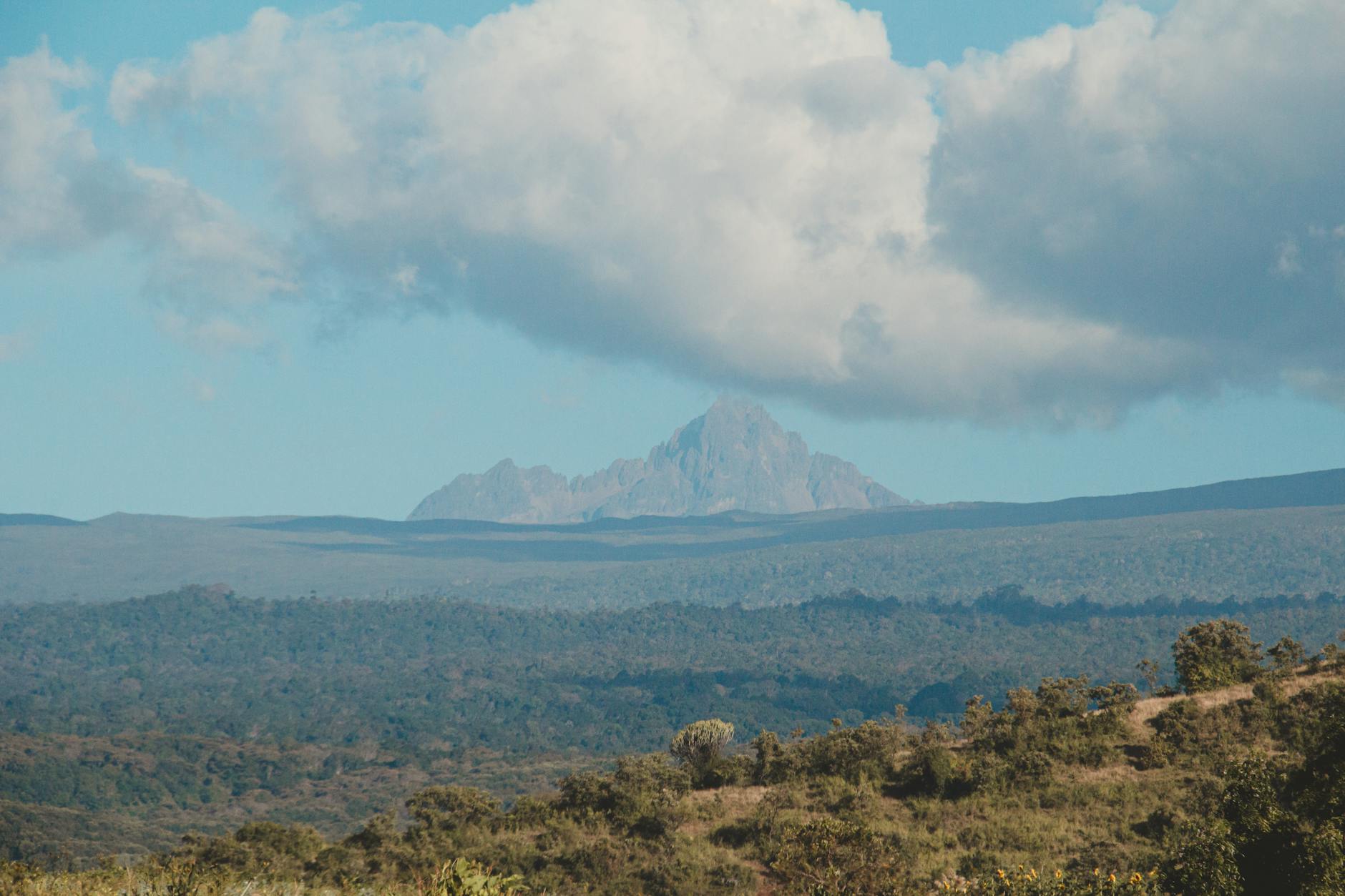
Wildlife in Laikipia depends on the ability to move across the landscape — between rivers and waterholes, between dry-season and wet-season grazing, between forest and savanna. The conservancy network has been deliberately structured around protecting these movement corridors.
The Ewaso Ng’iro corridor runs north-east across the plateau into Samburu County. Most of Laikipia’s elephant population uses this corridor seasonally; it’s also the primary movement axis for wild dog packs.
The Mount Kenya Elephant Corridor connects Mount Kenya forest with the lowland conservancies (Lewa, Borana, Ngare Ndare). The famous Mount Kenya Elephant Corridor underpass — built beneath the busy Nanyuki–Meru road in 2010 by the Mount Kenya Trust — allows elephants to move between the highland forest and the lower country without being killed by traffic or speared by farmers. Tracking data shows hundreds of elephant crossings per year through the underpass.
The Loroghi corridor runs along the western escarpment, connecting the higher western conservancies with the lower country to the east. Used by wild dog, lion and elephant.
The Mukogodo Forest connection links the eastern conservancies to the Mukogodo Forest Reserve and onward to the Samburu landscape. Used by elephant and the more elusive forest-edge species.
The corridors aren’t legally protected in the way national parks are; they depend on the goodwill of landowners and on the conservancy fees that fund the work of organisations like the Mount Kenya Trust, Save the Elephants and the Northern Rangelands Trust.
The Mammal Community
Laikipia hosts essentially every charismatic large mammal of East Africa, plus several species you won’t see elsewhere in Kenya:
Big Cats: Lion (resident, healthy populations across the plateau), Leopard (common, including the famous melanistic “black leopard” of southern Laikipia), Cheetah (less common, primarily on open conservancy land).
African Wild Dog: Multiple resident packs across the plateau; one of the strongest wild dog populations in East Africa. The Phoenix Pack is the most famous, having recovered from a 2017 distemper outbreak.
Spotted Hyena: Common on most conservancies. Striped hyena present in smaller numbers in the drier north.
Smaller Carnivores: Aardwolf, bat-eared fox, black-backed jackal, side-striped jackal, caracal, serval, African civet, several genet species, white-tailed mongoose, Egyptian mongoose, dwarf mongoose, banded mongoose.
Elephant: Over 7,000 across the plateau and adjacent landscape. Resident and migratory populations using the river corridors.
Black Rhino: Over 500 across Lewa, Borana, Ol Pejeta, Solio, Sera and a few smaller conservancies.
White Rhino: Substantial populations on Solio, Ol Pejeta and Lewa. The two surviving northern white rhinos are on Ol Pejeta.
Buffalo: Common across most conservancies. Large herds in the wetter southern country; smaller groups in the north.
Reticulated Giraffe: Replaces the Masai giraffe of southern Kenya. The geometric pattern of brown blocks separated by clear white lines is unmistakeable. Laikipia is one of the strongest reticulated giraffe populations.
Grevy’s Zebra: The larger, narrower-striped zebra of northern Kenya. Endangered. Lewa alone holds over 350 — one of the largest single-conservancy populations of this species.
Burchell’s Zebra: The common plains zebra. Co-occurs with Grevy’s zebra in much of central and northern Laikipia.
Antelope: Eland, hartebeest (Coke’s hartebeest), oryx (Beisa oryx in the north), gerenuk (in the drier north), greater kudu, lesser kudu (in the north), bushbuck, dik-dik (Kirk’s), klipspringer, mountain reedbuck (in the higher elevations), bohor reedbuck, oribi, Thomson’s gazelle, Grant’s gazelle, impala, suni, blue duiker, common duiker.
Primates: Olive baboon, vervet monkey, Sykes’s monkey, black-and-white colobus (in the riverine forest), greater galago and lesser galago (nocturnal).
The Bird Community
Laikipia’s bird list runs to over 477 documented species, including Kenya endemics (Hinde’s Babbler, Sharpe’s Longclaw), Kenya near-endemics (Jackson’s Hornbill), some of the highest densities of large eagles in East Africa, several Northern Frontier specialities, and major influxes of Palearctic and intra-African migrants November–April. The full picture is in our separate Laikipia birdwatching guide; the relevant point for the ecosystem story is that Laikipia’s bird diversity is a direct consequence of the habitat variety described above.
The Reptile and Amphibian Community
Laikipia hosts at least 55 reptile species (snakes, lizards, terrapins, tortoises) and 14 amphibian species. Notable presences: African rock python, black mamba, puff adder, Cape cobra, several agama species (the rainbow agama is the showy one on lodge walls), Nile monitor and Nile crocodile in the rivers, leopard tortoise, African helmeted terrapin. Most snake encounters are non-events — snakes avoid people and most are non-venomous. Lodges have proper protocols for venomous-snake removals.
The Plant Community
Over 800 vascular plant species are recorded for Laikipia. The plant community is dominated by the legume family (Acacia and related genera), grasses (Themeda, Pennisetum, Panicum), and the riverine forest assemblages noted above. Indigenous medicinal plants are a major resource for pastoralist communities; conservancies sometimes offer guided “ethnobotany walks” with knowledgeable local guides who can explain the traditional uses of plants you’ll see along the trails.
Threats to the Ecosystem
The Laikipia ecosystem isn’t stable — it’s actively managed against several long-term threats.
Drought. Increasingly frequent severe droughts (2017, 2022, others) have stressed the entire landscape. Pastoralist herds move onto conservancy land in unprecedented numbers; wildlife competes for diminished water and grazing.
Climate variability. Long-term rainfall trends are uncertain but inter-annual variability is clearly increasing.
Invasive species. The prickly pear cactus (Opuntia stricta) is an aggressive invader that displaces native vegetation across thousands of hectares. Multiple Laikipia conservancies are running active control programmes — biological control with the cochineal insect, mechanical removal, and chemical treatment.
Habitat fragmentation. Population growth on the agricultural southern belt and infrastructure expansion (roads, fences, settlements) are gradually fragmenting the wildlife corridors. The conservancy network and dedicated corridor work (the Mount Kenya elephant underpass, the Loroghi corridor protection) are responses to this threat.
Disease outbreaks. Canine distemper killed most of the Phoenix wild dog pack in 2017; rabies outbreaks have affected jackal populations; livestock diseases periodically affect both cattle and wildlife. Veterinary surveillance funded by conservancies is a major operation.
Poaching. Down dramatically from 1980s peaks but not eliminated. Anti-poaching units (ranger teams, K9 units, aerial surveillance, forensics) on major conservancies are the front line.
Land-use conflict. The 2017 land invasions exposed the fragility of the conservation model when pastoralist communities feel excluded. Continued community partnership investment is essential to long-term ecosystem stability.
What This Means for Visitors
The ecosystem story changes how you see your safari.
You’ll notice the vegetation transitions as you move across the plateau — the open grassland of Solio, the whistling thorn of Mpala, the denser bushland of the north, the riverine forest along the Ewaso. Each transition is a different mammal and bird community.
You’ll understand why some conservancies are stronger for some species. Lewa for Grevy’s zebra (specialised wet grassland habitat); Loisaba for vulturine guineafowl and aridity specials (drier northern country); Borana for rhino tracking on foot (well-established populations in optimal habitat); Solio for wetland birding (the dam ecosystem).
You’ll see why the rivers matter as much as they do. The Ewaso corridor is where you’ll find the densest game in the dry season; the riverine forest gives you bird species, primates and reptiles you wouldn’t see in the bushland.
You’ll appreciate why the conservation model has to be cross-property and cross-community. Ecosystems don’t respect property boundaries; wildlife corridors thread through private and community land alike. The Laikipia Wildlife Forum and Northern Rangelands Trust exist because the ecosystem requires coordination.
Frequently Asked Questions
Why is Laikipia’s wildlife density so high?
Three reasons: the habitat seam (variety creates niches for more species), the Ewaso river system (year-round water concentrates wildlife), and the conservancy model (active management keeps populations healthy and corridors open).
What’s the most diverse single conservancy?
Ol Pejeta, Lewa and Loisaba are the leading candidates depending on the metric. Ol Pejeta has the most species in a single area (over 400 birds, all Big Five, chimps); Lewa has the strongest Grevy’s zebra population; Loisaba has the highest aridity-zone diversity.
Why are wild dogs more numerous in Laikipia than elsewhere?
Several factors: large fence-free area allows the wide-ranging packs; relatively low livestock density (compared to the Mara) reduces conflict; active veterinary surveillance limits disease outbreaks; protected denning sites on multiple conservancies. The wild dog story is a Laikipia conservation success.
Are Laikipia’s elephants the same population as Mount Kenya’s?
Largely yes. The Mount Kenya Elephant Corridor underpass connects the highland forest population to the lowland conservancies, and tracking data shows substantial movement in both directions seasonally. The combined Mount Kenya–Laikipia elephant population is one of Kenya’s largest.
What’s the biggest ecological threat right now?
Probably climate variability — increasing drought frequency stresses every part of the system. The conservancy infrastructure (water storage, grazing management, drought-response programmes) is being upgraded but the threat is real and growing.
Can I do an “ecosystem-focused” safari rather than a “wildlife-focused” one?
Yes. Several lodges offer guides who specialise in ecology and ethnobotany rather than just animal-spotting. Mpala Research Centre’s involvement with several Laikipia properties means scientific-quality guiding is available. Ask when booking.
The Bottom Line
The Laikipia ecosystem is the second most biologically rich landscape in Kenya, supported by a habitat seam between the Central Highlands and the Northern Frontier, watered by the Ewaso Ng’iro river system, and protected by a 9,500 km² conservancy network that maintains the wildlife corridors traditional national parks cannot. Understanding the structure — the vegetation zones, the corridors, the seasonal rhythms, the threats — turns a Laikipia safari from a parade of charismatic species into a coherent story about how a contemporary African landscape works. The wildlife you see is the surface; the ecosystem is what makes the wildlife possible.