Last updated: May 2026
If you measure a birding destination by how many ecosystems it manages to compress into one drive, Laikipia is in a class of its own. The plateau sits at the meeting point of arid northern Kenya and the cooler, wetter Central Highlands, and that geographical seam is why birders come back with checklists 200 species long after a single week. Laikipia birdwatching reliably delivers more than 350 recorded species across an area smaller than a single national park — including Kenya endemics, near-endemics, raptors at extraordinary densities, and migratory traffic that swells the totals from November to April.
This guide covers what you’ll actually see, where to base yourself, when to come, and how to plan a birding-led safari that doesn’t sacrifice the big-game experience Laikipia is famous for. Whether you’re a list-ticker chasing Sharpe’s Longclaw or a photographer hoping for a Verreaux’s Eagle-Owl perched in good light, the practical detail you need is below.
Why Laikipia is Kenya’s Highland Birding Paradise
Kenya as a country has the second-highest country list in Africa — 1,134 species at last count. Laikipia plays an outsized role in pushing visitors toward big numbers because of three structural advantages no other Kenyan destination can match in combination:
Habitat collision. The plateau ranges from 1,700 m on its eastern lowlands up to 2,500 m at the foot of the Aberdares, and the rainfall gradient runs from semi-arid Acacia–Commiphora bush in the north to montane forest fragments in the south. A 90-minute drive can take you from sandgrouse country to forest-edge turacos. Add the rift escarpments to the west and the Ewaso Ng’iro river system threading the middle, and you’re moving through four distinct biomes without leaving the county.
Private conservancy access. Most of Laikipia’s 9,500 km² of conservation land is privately owned or community-managed, which means walking, off-road and night driving are permitted — three rules that make a measurable difference to what you see. National parks restrict you to a vehicle on a designated track; in Laikipia you can walk a riverbed at first light with a Maasai guide, which is when the secretive species (white-headed mousebird, slate-coloured boubou, scaly chatterer) actually show themselves.
Migrant overlap. Two migratory streams converge here. Palearctic migrants (warblers, wheatears, harriers, ortolan buntings, European bee-eaters) arrive between November and April, while intra-African migrants (Madagascar bee-eater, white-rumped swift, several cuckoo species) shift through on different timetables. The result: the November-to-April window can return resident-and-migrant lists 60–80 species higher than dry-July counts on the same property.
The Headline Numbers: 350+ Species and Counting
The published Laikipia checklist sits between 350 and 410 species depending on whose conservancy boundary you use. Ol Pejeta and Lewa each have property checklists above 400 once neighbouring conservancies and the Ngare Ndare forest belt are included. For comparison, the Masai Mara Reserve has roughly 470 species spread over a similar area, but its dry savanna and riverine habitat is more uniform — meaning Laikipia gives you more variety per kilometre even though the headline count is slightly lower.
Practical implication: a serious birder spending five days in Laikipia, splitting time between a southern conservancy (Solio, Ol Pejeta) and a more northern, drier property (Loisaba, Mugie or one of the community conservancies bordering Samburu), can realistically expect 220–280 species. A casual birder on a normal safari, doing two game drives a day with a guide who knows their birds, will tick 90–140 in a week.
Star Birds You Came to See


Endemics and Near-Endemics
Four Kenya endemics or near-endemics drive most of the targeted bird tours, and Laikipia is the most reliable single destination for three of them.
Hinde’s Pied Babbler (Turdoides hindei) — endemic to central Kenya and listed Vulnerable. Found in dense bushland and thicket margins, it’s a noisy, skulking babbler that moves in family groups. The Mukogodo forest reserve adjoining eastern Laikipia and the bushland on Ol Pejeta and Solio are reliable sites. Listen for the rolling, churring duet before you ever see the bird.
Sharpe’s Longclaw (Macronyx sharpei) — endemic to Kenya’s high-altitude tussock grasslands and listed Endangered. The grasslands on the Aberdare slopes that bleed into south-western Laikipia are one of the few accessible sites; some guides put visitors onto it on Mugie or El Karama’s higher pastures. This is a bird you target with a guide who has it staked out, not one you stumble into.
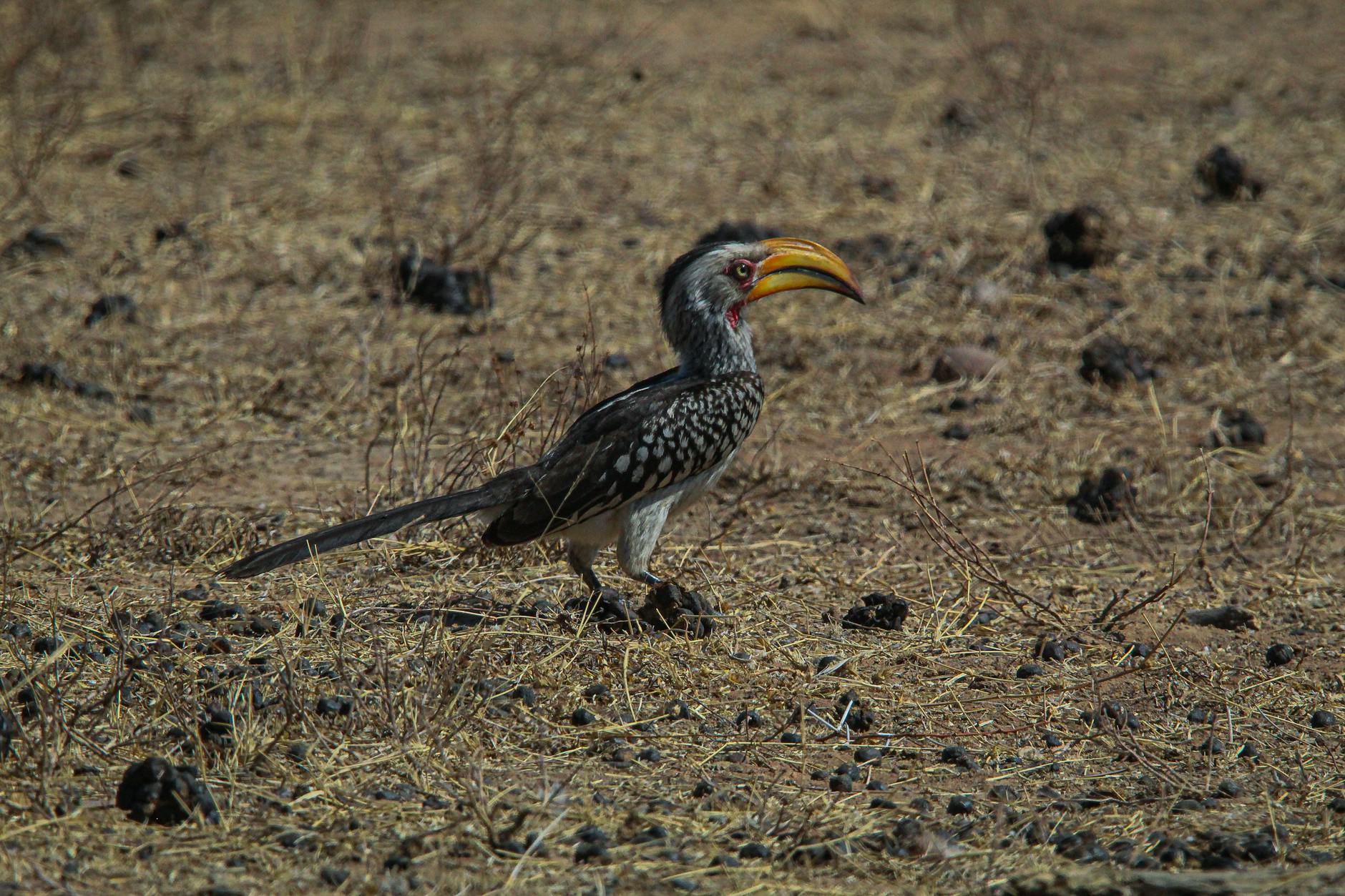
Jackson’s Hornbill (Tockus jacksoni) — near-endemic to northern Kenya’s arid country, where it replaces the more widely-known red-billed hornbill. Common in the bushlands of northern Laikipia conservancies (Loisaba, Mugie, Ol Maisor), it’s one of the easier “specials” to add to a Laikipia list.
Williams’s Lark (Mirafra williamsi) — endemic to lava-bed habitat in northern Kenya. You’ll usually need to travel beyond Laikipia (toward Marsabit) to get this one, but birding tour operators sometimes include a day trip out of a Loisaba base.
The Charismatic Big Birds
Verreaux’s Eagle-Owl — Africa’s largest owl, with a 1.7 m wingspan and pink eyelids you can see at twenty paces. Resident on most Laikipia conservancies; ask your guide for the day-roost trees they know.
Martial Eagle, Crowned Eagle, African Hawk-Eagle, Verreaux’s Eagle, Tawny Eagle — Laikipia carries one of the highest densities of large eagles in East Africa, in part because the rocky escarpments along the Ewaso valley provide nest sites and the open conservancies hold healthy prey populations. Five eagle species in a single morning is realistic on the right property.
Grey Crowned Crane — these tall, gold-crowned cranes pair for life and are commonly seen in the wet grasslands of Solio Ranch and the floodplains around Suyian. Listed Endangered globally; Laikipia holds a meaningful portion of Kenya’s remaining population.
Somali Ostrich — the bluer-necked, less common cousin of the Common Ostrich, found throughout northern Laikipia. Where the two species’ ranges overlap, look for the male’s grey-blue legs and neck.
Secretarybird — increasingly rare across its range, but the open grasslands of Ol Pejeta and Solio still produce regular sightings of this striding snake-killer.
Kori Bustard — the heaviest flying bird in Africa. Look for displaying males in the long-grass plains of Mpala and Loisaba during the December–March wet season.
Saddle-billed Stork, Yellow-billed Stork, Marabou Stork, African Openbill — the riverine pools along the Ewaso Ng’iro and the larger conservancy waterholes hold all four storks year-round.
The Colour Cabinet

For visual photographers, Laikipia’s “easy wins” — birds that are common and obliging — read like a portfolio brief.
Lilac-breasted Roller — the country’s unofficial national bird, perched on practically every other thornbush along the road. Famous for the dramatic display flight where the male tumbles through the air uttering a harsh “rak-rak-rak.”
Superb Starling, Hildebrandt’s Starling, Greater Blue-eared Starling — three iridescent starlings, all common, all photogenic, all easy to compare side-by-side at lodge bird feeders.
Northern Carmine Bee-eater (October–April migrant), White-fronted Bee-eater, Little Bee-eater, Madagascar Bee-eater — Laikipia’s bee-eater list is exceptional, with five or six species realistic in November.
Schalow’s Turaco — the green-and-crimson forest turaco of the southern conservancy forests; listen for its loud, cackling call from canopy fig trees.
White-bellied Go-away-bird — the dry-country relative of the turaco, found in pairs and trios calling their nasal “g’way, g’way” from the tops of acacias.
The Specialists
Birders chasing the harder species come for these:
Donaldson-Smith’s Sparrow-Weaver, Kenrick’s Starling, White-headed Mousebird, Black-faced Sandgrouse, Chestnut-bellied Sandgrouse (in dawn flight to waterholes), Heuglin’s Courser, Three-banded Courser, Slate-coloured Boubou, Pringle’s Puffback, Northern Pied-Babbler, Red-billed Pytilia, Black-faced Waxbill, Steel-blue Whydah, Eastern Paradise-Whydah, Beautiful Sunbird, Hunter’s Sunbird, Eastern Violet-backed Sunbird, Grey-headed Silverbill, and a long list of cisticolas, prinias and warblers that will keep a serious lister occupied for days.
The Best Conservancies for Birding


Laikipia’s conservancies vary meaningfully in habitat and bird emphasis. Here’s how to pick.
Solio Ranch — Cranes, Storks and Wetland Specials
Solio’s wet grasslands and reservoir attract herds of crowned crane, plus saddle-billed stork, African spoonbill, glossy ibis, hadada ibis and a long list of ducks and waders. It’s also one of the most reliable rhino conservancies, so birding is folded into a guaranteed Big Five day.
Ol Pejeta — Big-Numbers Day for Mixed Birders
The waterholes and Ewaso river course on Ol Pejeta give it a 400+ checklist. It’s the easiest conservancy to combine with chimps (Sweetwaters Sanctuary), rhinos and a dawn drive that picks up diurnal raptors plus owl species at dusk. Verreaux’s Eagle-Owl, Pearl-spotted Owlet and Spotted Eagle-Owl are all resident.
Lewa Wildlife Conservancy — Forest-Edge and Highland Diversity
Lewa borders the Ngare Ndare forest, which adds montane species (Hartlaub’s Turaco, Cinnamon-chested Bee-eater, Mountain Wagtail, Yellow-whiskered Greenbul) to a savanna list. The Lewa Marathon route in late June drives even non-birders past wetland species they wouldn’t otherwise see.
Loisaba — Northern Aridity Specials
Loisaba’s drier, more northern aspect adds Donaldson-Smith’s Sparrow-Weaver, Vulturine Guineafowl, Heuglin’s Bustard, Pringle’s Puffback and excellent sandgrouse flights. The escarpment edges give raptor density that has to be seen to be believed — the lodge balcony’s lunchtime kettle of vultures is a famous sight.
Mugie Conservancy — Highland Grassland Targets
Mugie’s high-altitude grasslands and the dam attract Sharpe’s Longclaw at the right time of year, along with Jackson’s Widowbird in display, plus African Snipe, ducks and the occasional Lesser Flamingo on the dam.
Mpala Research Centre — Scientific Birding
Mpala isn’t a tourist conservancy but it’s worth flagging because the long-running ornithological research there has produced one of the most thoroughly documented Laikipia checklists. Ask guides in nearby lodges if they’ve birded with Mpala researchers; many of them have, and they’ll know the obscure species.
Borana, Ol Jogi, Sosian, Suyian — Birding-Friendly Lodges
Most established Laikipia lodges have a birder-knowledgeable guide on staff. Sosian and Suyian in particular are run by people who actively maintain bird checklists and are happy to tailor a stay around target species. Borana has the elevation and forest fragments to add Hartlaub’s Turaco and Mountain Buzzard to a southern conservancy list.
When to Go: A Seasonal Birding Calendar
December to March — The Peak
Migrants in, residents in breeding plumage, rains greening the landscape, insect explosions feeding everything from bee-eaters to nightjars. December–March is the window for big lists. Carmine Bee-eaters, Eurasian Rollers, several harrier species (Pallid, Montagu’s, Marsh) are all present. The trade-off: short rains can make tracks slippery and conservancies green up enough to obscure ground species.
April to Early June — The Long Rains
Breeding peaks for many residents. Whydahs and widowbirds are in full breeding plumage; weavers are nest-building; wet-season specialists like Madagascar Bee-eater pass through. Some lodges close for a week or two in May for renovations, but committed birders get the lowest rates and the freshest landscape.
July to October — The Dry Season
The classic safari window. Bird activity remains high around water sources and resident raptor and large-bird viewing is excellent because the foliage thins out. Migrants are absent, so list totals are lower, but visibility is better and photography conditions are reliable. This is the best window for a “big game first, birds second” itinerary.
November — The Sleeper Hit
The first migrants are pouring in but the worst of the short rains hasn’t started. Many local guides quietly say November is their favourite month: green flush, returning migrants, new foals and calves, and the first proper carmine bee-eater colonies. Lodges are not yet at peak holiday rates.
How a Laikipia Birding Day Actually Runs


A birding-focused day on a Laikipia conservancy looks slightly different to a standard game drive. Plan on:
5:30 a.m. — Coffee and biscuits at the camp. First light is the most productive birding window of the entire 24 hours. Aim to be in your vehicle (or on foot, if you’re at a lodge that walks) by 6:00.
6:00 to 9:30 a.m. — Active birding. Mixed-species flocks form along forest edges; raptors are low and visible; nightjars haven’t quite gone to roost; doves and sandgrouse fly to water. A guide who’s actually a birder will let you sit at a productive flock for twenty minutes rather than driving past — which is the single most important difference between a “birding guide” and a general safari guide.
9:30 to 11:00 — Bush breakfast. Often by a river or waterhole, which means birds drink while you eat. The wagtails, weavers, kingfishers and occasional raptor will line up for you.
11:00 to 14:00 — Slow return to camp. Heat-of-day birding shifts to the canopy and shade. This is when raptors thermal up, so look up a lot. Lunch and a siesta back at camp.
15:30 to 18:30 — Afternoon drive. Bird activity rebuilds from about 16:30. Aim to be near a productive water point at last light for sandgrouse, doves and the first nightjar emergence.
18:30 to 19:30 — Sundowners and night drive. Owls (three species), nightjars (Slender-tailed, Plain, Donaldson-Smith’s), Verreaux’s Eagle-Owl day-roosting in fig trees becoming active. Most Laikipia conservancies allow night drives, which is a major birding advantage over national parks.
Walking Birding in Laikipia
Walking is where Laikipia leaves the rest of Kenya behind. National park rules forbid walking; private conservancy rules allow it with an armed guide. For birders, walking is non-negotiable for a serious list — many forest, riverine and grassland species simply will not show themselves to a vehicle.
The premier walking-birding setup in northern Laikipia is Karisia Walking Safaris, a camel-supported multi-day operation in Tumaren that allows you to traverse country no road reaches. Guides walk at birder pace, the camels carry your gear, and fly camps are pitched in productive thicket or beside a riverbed. Multi-day Karisia walks routinely produce 180+ species in a week, including specials like Heuglin’s Courser, Pringle’s Puffback and Donaldson-Smith’s Sparrow-Weaver.
Sosian Lodge offers half-day to full-day walks across its 24,000-acre ranch, and is a strong base for combining walks with the standard game-drive experience. Ol Malo walks the Loroghi Hills above the Ewaso Ng’iro, which is excellent for cliff-edge raptors and the more secretive starlings. Laikipia Wilderness Camp in the Ol Donyo Lemboro hills runs walks pitched at families but easily adapted for birding interest.
Photography: Lighting, Lenses and the Right Lodges
Laikipia’s photographic advantages are altitude, dust and access. The plateau sits at 1,800–2,200 m, which gives clearer light than coastal Kenya. Dust seasons (late dry season, August–October) produce extraordinary “rim light” on backlit birds at the day’s first and last hour. And conservancy off-road permission means a guide can position the vehicle properly for the angle you want.
Lens recommendations: a 100–500 mm or 200–600 mm zoom is the practical workhorse. Fixed 600 mm primes get the magazine cover, but a versatile zoom catches the unexpected bee-eater that lands close to the vehicle. Bring a wide-angle for landscape-with-bird shots — the open plains and dramatic kopjes of Laikipia are unusually generous to environmental bird portraits.
Lodges with photography hides include Ol Pejeta’s “Morani” hide and several private conservancies that have built waterhole hides for exclusive use. Ask when booking — these aren’t always advertised on lodge websites.
Combining Birding with the Standard Safari
The wisdom of combining Laikipia with another Kenya destination depends on what kind of birding trip you want.
For a pure highland-birding focus, pair Laikipia with the Aberdares and Lake Naivasha for forest and rift-lake species. Naivasha alone adds 100+ wetland species; the Aberdares’ bamboo zone holds species you won’t find on the plateau.
For a maximum-list trip, combine Laikipia with Samburu (further north and drier — adds Vulturine Guineafowl, Reticulated Giraffe-country specials, Donaldson-Smith’s Nightjar) and the Masai Mara (riverine forest, savanna and the wildebeest-following raptor traffic). A 14-day Mara–Naivasha–Aberdares–Laikipia–Samburu loop can produce 400+ species easily.
For a family or general-interest safari with serious birding folded in, Laikipia plus Ol Pejeta plus a Mara extension is the standard winning combination — you get Big Five, you get the chimpanzees at Sweetwaters, you get the highland forest birds and the savanna specialists.
Practical Planning
Getting There
Most birding visitors fly into Nairobi (Jomo Kenyatta International), then take a 45-minute scheduled flight from Wilson Airport to Nanyuki, Lewa Downs, Loisaba, or one of the conservancy airstrips. Driving is possible (about four hours from Nairobi) and gives you a chance to bird the highlands route via Karatina and the Aberdares. SafariLink and AirKenya operate the daily Nairobi–Laikipia routes.
What to Pack
Binoculars in the 8×42 or 10×42 range — anything brighter is overkill, anything dimmer is frustrating in early-morning forest light. A field guide: the Birds of East Africa (Stevenson and Fanshawe) is the standard. Merlin Bird ID with the East African pack downloaded is invaluable for sound ID. Layered clothing — Laikipia mornings can be 8 °C and afternoons 28 °C. A wide-brimmed hat. Sunscreen at altitude is more important than at sea level.
Guide Choice
A general safari guide will identify the obvious birds and miss everything else. Specialist birding guides exist on every major Laikipia conservancy but you have to ask for one specifically when booking. Names worth asking for: Edwin Selempo (Loisaba area), George Tinga (Solio/Ol Pejeta), and the Karisia walking-guide team. Tour operators specialising in birding (Bird Quest, Rockjumper, Rockjumper East Africa) have established relationships with these guides and can sequence them into a multi-conservancy itinerary.
Costs
A serious birding-led private safari with specialist guides runs USD 600–1,200 per person per day, fully inclusive, depending on lodge category. A mixed birding-and-game-drive safari at standard conservancy lodges is USD 450–900 per person per day. Karisia walking safaris are USD 650–950 per person per day depending on group size. Self-drive birding is possible only on a few conservancies and is strongly discouraged because of access permissions and the safety of moving through Big Five country.
Conservation Birding: How Your Visit Helps
Several Laikipia properties have direct bird-conservation programmes you should know about. Mugie manages habitat for Sharpe’s Longclaw on its high pastures and your conservancy fee directly funds that work. Ol Pejeta contributes to vulture monitoring across northern Kenya — vulture populations have crashed 80%+ continent-wide and conservancy-based monitoring is one of the few conservation tools showing measurable returns. Lewa partners with the National Museums of Kenya on long-term ornithological survey work. Birding tourism is a meaningful funding stream for these programmes; book lodges that channel revenue into bird-specific conservation if it matters to you.
Common Mistakes to Avoid
The single biggest mistake birders make in Laikipia is treating it as a single habitat. Three days in one conservancy will leave 100+ species you could have seen on the table; even a one-night transfer to a contrasting conservancy doubles your daily new-species rate.
The second most common mistake is failing to walk. Birders who only do drives will miss approximately 30% of the achievable list — and most of the rarer species.
The third mistake is travelling without a serious birding guide. Conservancy guides are world-class on mammals; their bird knowledge varies enormously. Ask before booking. If a lodge can’t name three resident eagle species when asked, book a specialist guide separately.
Sample 7-Day Birding Itinerary
Day 1: Fly Nairobi–Lewa Downs. Afternoon drive in Lewa. Evening birding around camp. Target: forest-edge species.
Day 2: Full day Lewa with a Ngare Ndare forest extension. Target: Hartlaub’s Turaco, Schalow’s Turaco, Cinnamon-chested Bee-eater, Mountain Buzzard.
Day 3: Morning transfer to Ol Pejeta (drive or short flight). Afternoon waterhole birding. Target: rhinos, Verreaux’s Eagle-Owl roost.
Day 4: Full day Ol Pejeta. Long morning drive, hide session. Target: 100+ species in the day.
Day 5: Fly Ol Pejeta–Loisaba. Afternoon escarpment drive. Target: aridity specials, Vulturine Guineafowl, sandgrouse to water.
Day 6: Full day Loisaba walking. Target: Pringle’s Puffback, Donaldson-Smith’s Sparrow-Weaver, courser species.
Day 7: Final morning Loisaba, fly out late afternoon to Nairobi. Realistic week total: 240–280 species, including 4–6 specials.
Frequently Asked Questions
How many bird species can I realistically see in Laikipia in a week?
A casual birder doing two safari drives a day with a competent guide will record 90–140 species. A serious birder with a specialist guide, splitting time between two contrasting conservancies and walking some of each day, will record 220–280 species. The all-time week record on a guided Laikipia tour is around 320 species.
Is Laikipia better for birding than the Masai Mara?
For variety per kilometre and access to highland and aridity specials, yes. For total species count in a single area and for raptor density during the wildebeest migration, the Mara wins. Most serious birders combine the two.
Do I need a specialist birding guide?
If you’re targeting endemics or want a list above 200 in a week, yes. If you’re a general traveller who enjoys birds, the standard conservancy guides are good enough.
What’s the best month for Laikipia birding?
December to March for sheer numbers (migrants present, residents in breeding plumage). November for the best balance of arriving migrants, fresh landscape and shoulder-season pricing. July to October for clean photography conditions and fewer logistical headaches.
Can I bird Laikipia on a tight budget?
Less easily than other Kenyan birding destinations. The conservancy model funds itself through high-end tourism. Budget options exist around Nanyuki town (you can bird the foothills of Mount Kenya and the Ngare Ndare belt without staying inside a conservancy), and a few community-tourism camps offer rates under USD 250 per person per day. A Naivasha and Lake Bogoria itinerary will give you bigger numbers for less money if budget is the dominant constraint.
Are there organised birding tours?
Yes — Bird Quest, Rockjumper Birding Tours, Wings Birding Tours and several Kenyan operators (Origins Safaris, Cheli & Peacock, Wild Frontiers) run scheduled or bespoke Laikipia birding itineraries. Group tours typically run 8–14 days and combine Laikipia with another Kenyan birding region.
Is malaria a concern for early-morning birding?
Most of Laikipia is at altitude and considered low-malaria-risk, but mosquitoes are present along river valleys at lower elevations. Standard precautions (DEET, long sleeves at dawn and dusk, prophylaxis if your doctor recommends) apply.
The Bottom Line
Laikipia birdwatching delivers numbers, specials, and a setting that almost no other African birding destination can match — Big Five wildlife, walking access, night driving, and a habitat seam that compresses arid northern Kenya, Central Highlands montane forest, riverine wetland and rocky escarpment into a single 9,500 km² county. For serious birders, it’s a reliable 250+ species week. For travellers who happen to like birds, it’s the destination where you’ll come home with a mental gallery of lilac-breasted rollers, eagle-owls and crowned cranes that will rearrange your sense of what an African safari is.
Plan two contrasting conservancies, demand a birding guide, walk every day you can, and come in November or February if you can choose. Everything else is detail.


