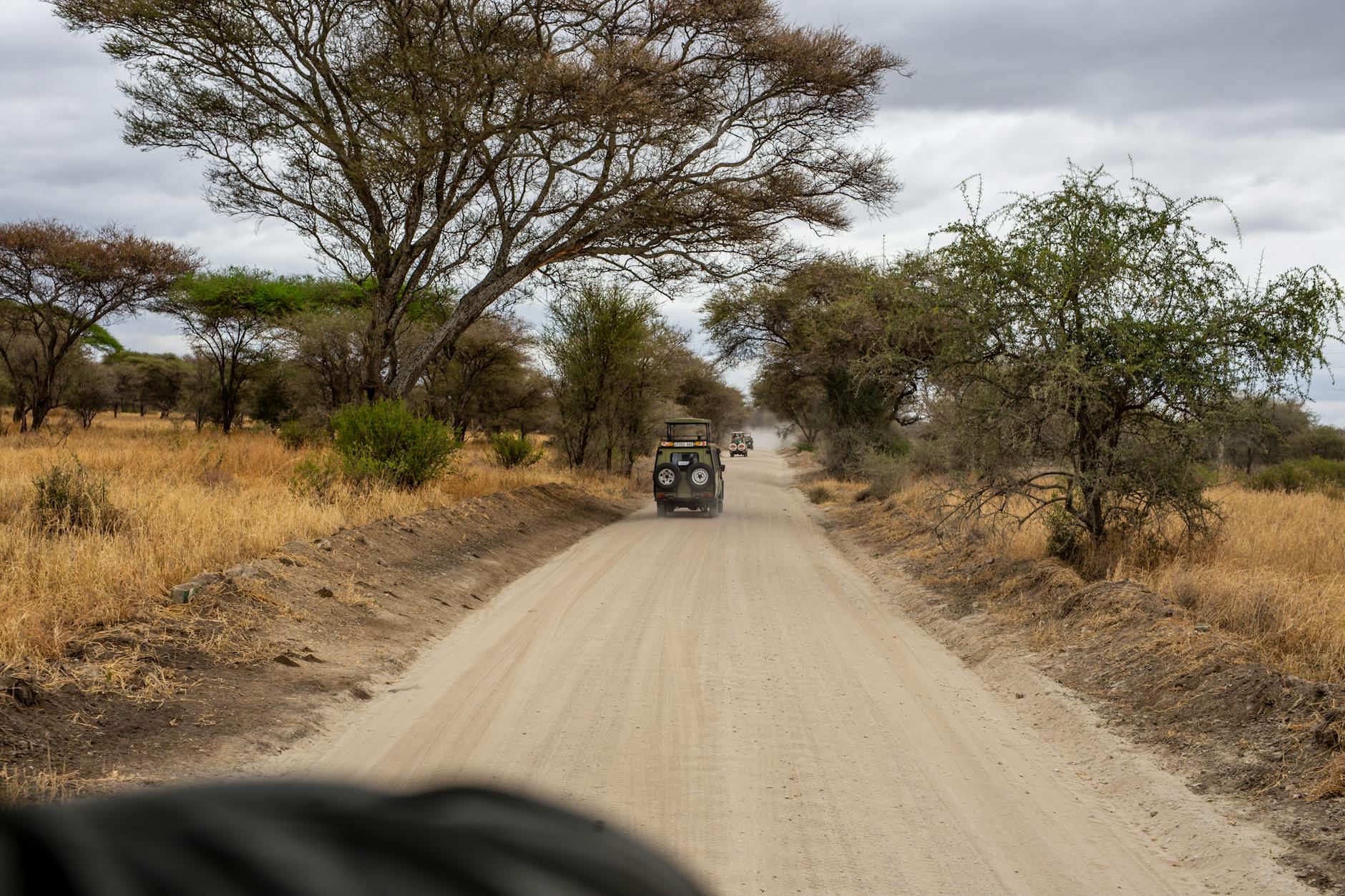
A Laikipia safari does not feel like the rest of Kenya, and that is the whole point. The Masai Mara pulls in hundreds of thousands of people a year for the wildebeest crossing; Amboseli sells the elephants-under-Kilimanjaro postcard. Laikipia trades all of that for something scarcer — a quiet, close-up safari across a plateau that holds more endangered species per square kilometre than almost anywhere on the continent, with a fraction of the vehicles.
This is the part of Kenya where, uniquely, wildlife numbers have gone up over the past 25 years. The private-conservancy system behind that recovery is also what lets you do things here that the national parks forbid: drive off the track, walk among the animals, head out after dark, ride a horse or a camel through the herds. What follows covers the wildlife you will meet, the kinds of safari on offer, the conservancies to base yourself in, how a day runs, what it costs, and how to put the trip together.
Why Laikipia Works as a Safari
“Safari” is just the Swahili word for journey, and on this plateau the journey runs through a working conservation story as much as a landscape. Across 9,500 square kilometres between Mount Kenya and the Rift Valley, Laikipia carries the second-largest wildlife population in Kenya and a species list the southern parks can’t match.
The conservancy model is the difference. In a national park your vehicle stays on the track and the day ends with the light; on private conservancy land your guide can follow a leopard into the bush, take you out on foot with armed Samburu trackers, put you on a horse among the giraffe at dawn, or drive after dark for the animals nobody on the standard circuit ever sees.
Then there is the space. The Mara in peak season can mean twenty or thirty cars around one pride; most Laikipia properties cap themselves at a dozen or twenty guests across thousands of acres. You might share a rhino with one other vehicle, or have a whole valley to yourself for the afternoon. It is the opposite of mass tourism.
The Big Five, and Where to Find Them
Every serious Laikipia safari puts the Big Five within reach — lion, leopard, elephant, buffalo and rhino — but the encounters here tend to run longer, closer and quieter than in the busy parks. Our full guide to the Big Five in Laikipia breaks down the best conservancy for each; here is the short version.
Lion
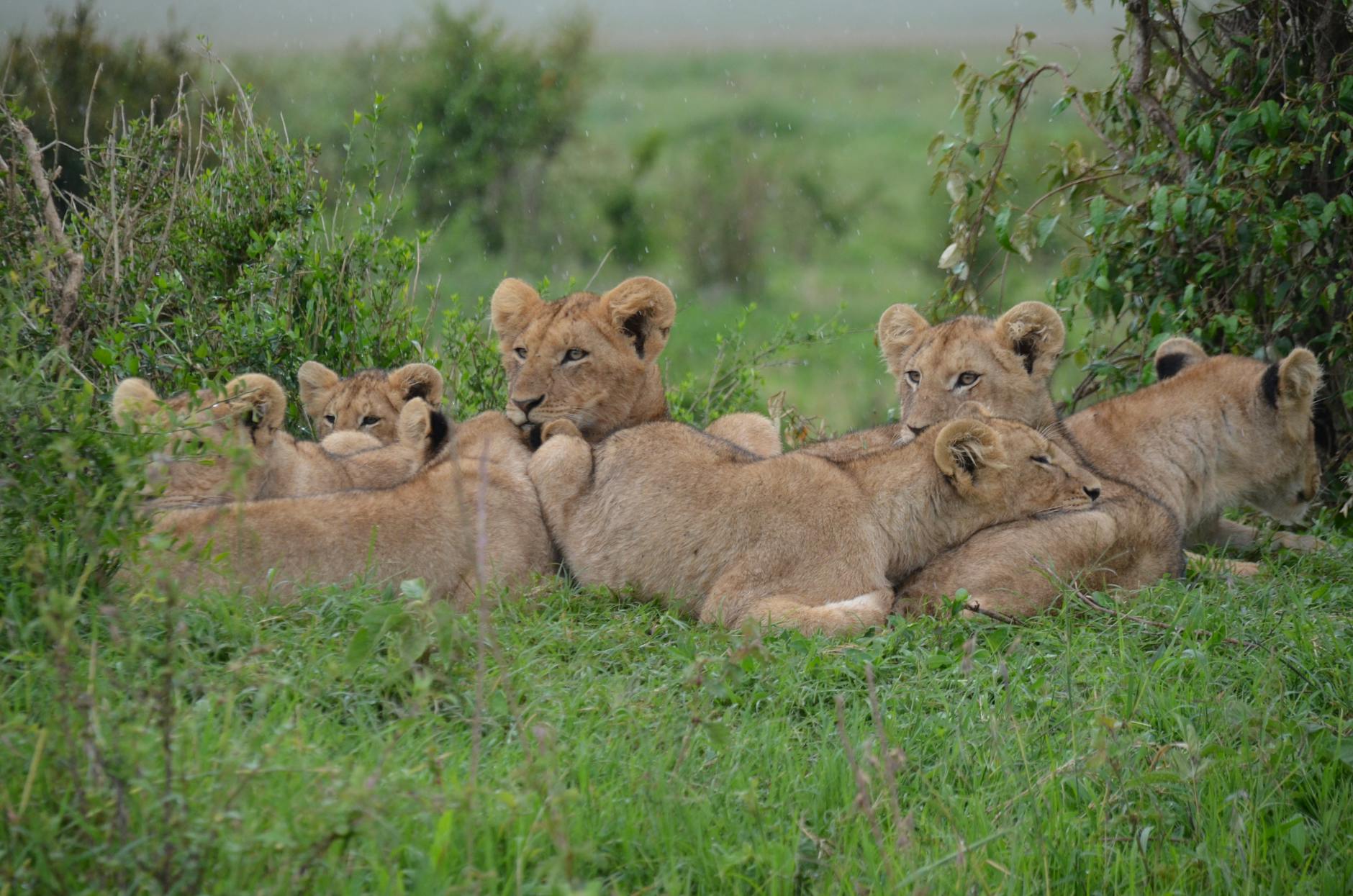
Several prides hold the central and northern conservancies. Ol Pejeta runs a GPS-collar tracking programme, so a guide can find a known pride reliably rather than hoping to stumble on one, and the open grass of Ol Pejeta and Lewa makes for classic hunting-ground viewing. Up in Loisaba and the north the country is rougher and wilder. Either way you can watch a pride at a kill with no other car in sight — rare in the Mara.
Leopard
Leopard are hard to find almost everywhere, but several conservancies here report them often, and Laikipia became famous in 2019 when a melanistic — black — leopard was photographed near Laikipia Wilderness, one of only a handful confirmed in Africa in a century. A direct sighting of the black leopard is a long shot, but ordinary leopard turn up consistently at Loisaba, Borana and around Laikipia Wilderness, and night drives lift your odds considerably. The story of that animal is worth reading on its own in our guide to the black leopard of Laikipia.
Elephant
More than 2,000 elephant use the linked conservancies, part of a population that moves between Mount Kenya’s forests, the plateau and Samburu to the north. You meet them in big herds out on the plains or along the Ewaso Nyiro in the dry season, and collaring data helps guides put you in the right place. These are among the most relaxed elephant in East Africa — there is more on the herds and their movements in our guide to Laikipia’s elephants.
Rhino
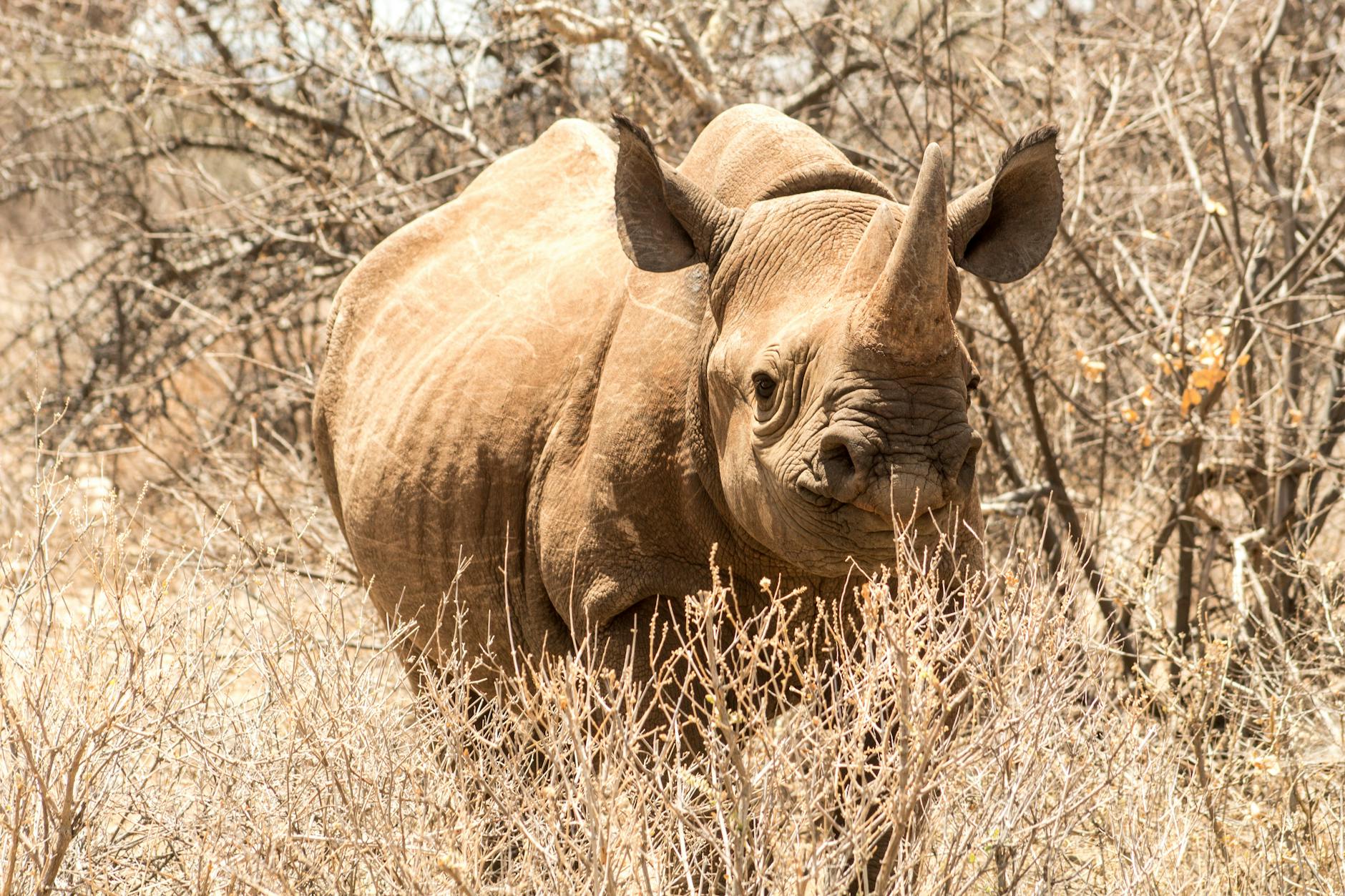
If any animal defines the place, it is the rhino. Eight sanctuaries here protect more than half of Kenya’s black rhino. Ol Pejeta runs the largest black rhino population in East Africa and is the last home of the world’s two northern white rhino, Najin and Fatu, now dependent on IVF work on site — a story we follow in detail in our guide to the last northern white rhinos. Solio, in the south, has the highest rhino density in East Africa, and the Borana–Lewa corridor forms one of the continent’s key rhino habitats. In the right conservancy you can expect rhino on every drive.
Buffalo
Cape buffalo are everywhere here, from solitary old “dagga boys” in the riverine thickets to herds several hundred strong moving across the open. They lack the marquee appeal of lion or rhino, but the thunder and dust of a big herd — and the flat stare of the bulls working out whether you are a threat — is one of the most physical things you’ll feel on safari. Ol Pejeta and the Ewaso Nyiro corridor are reliable.
The Northern Five: Animals the Mara Doesn’t Have
One of the better arguments for Laikipia over the southern parks is the “Northern Five” — dry-country species of northern Kenya you simply won’t see in the Mara or Amboseli, here because the plateau sits where their range meets the savanna’s.
Reticulated giraffe
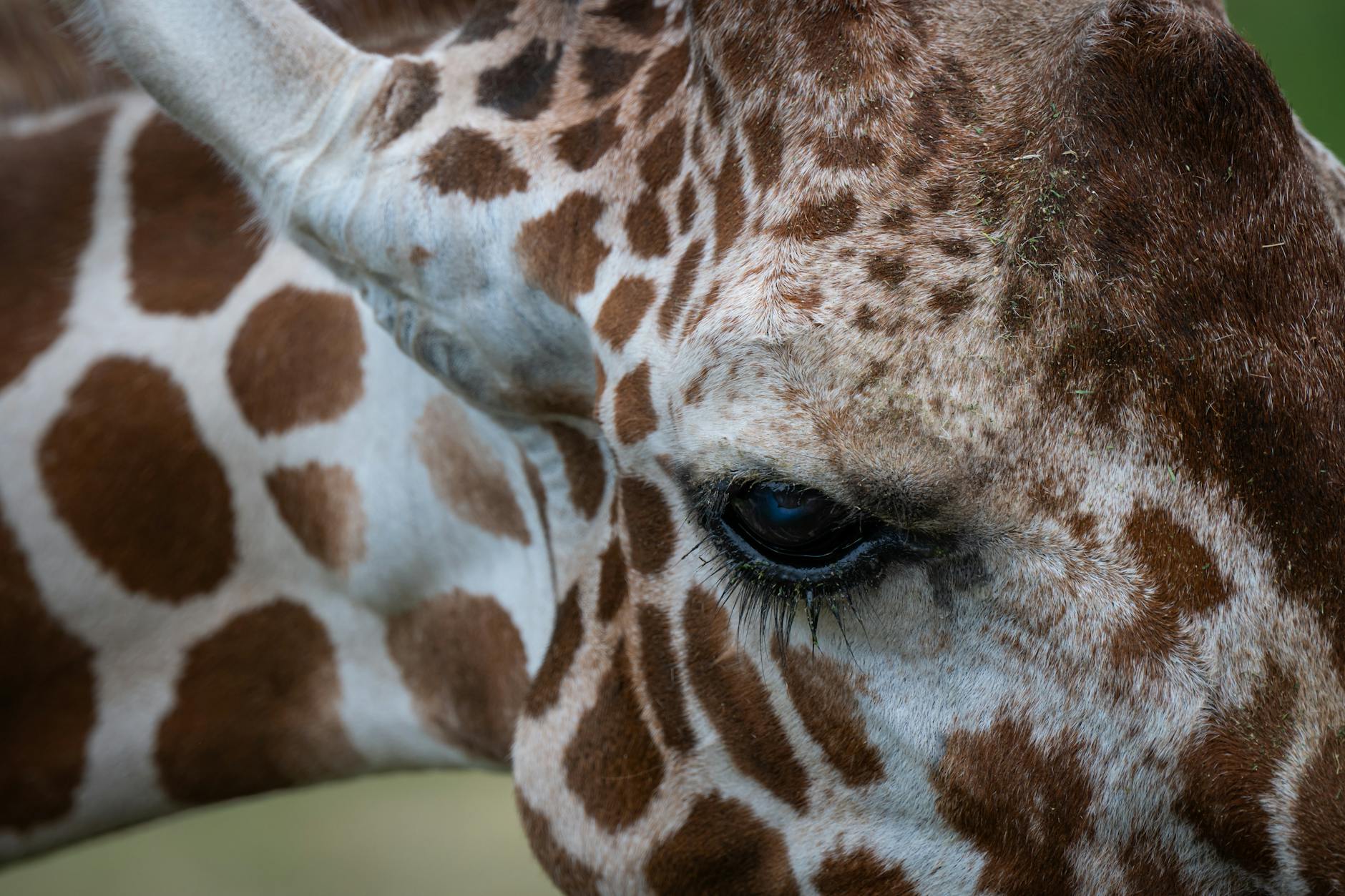
The reticulated giraffe wears a coat of dark chestnut polygons split by crisp white lines — markings that look ruled rather than splashed, unlike the ragged patches of the Masai giraffe down south. Sightings are all but guaranteed on a multi-day trip, and a tower of them crossing the grass against Mount Kenya is one of the images you come here for.
Grevy’s zebra
The largest wild equid and one of Africa’s most endangered large mammals, the Grevy’s zebra has finer stripes, a white belly and big rounded ears, and Laikipia holds over 70 percent of the world’s remaining population, with Lewa running one of the leading conservation programmes. You’ll often see Grevy’s and common zebra side by side — a neat snapshot of the region’s overlap.
Gerenuk
The “giraffe gazelle” stands on its hind legs to browse acacia other antelope can’t reach, all impossible neck and big liquid eyes. It’s common in Laikipia’s drier north and in the conservancies bordering Samburu.
Somali ostrich
Now treated as its own species, the Somali ostrich has blue-grey neck and legs rather than the southern bird’s pink, and Laikipia is about the southern edge of its range — an unusual tick for the list.
Beisa oryx
Geometric face markings and long straight horns, built for arid country; herds range the northern conservancies, often alongside Grevy’s zebra and reticulated giraffe in scenes that read unmistakably as northern Kenya.
The Rare Ones: Wild Dog, Black Leopard and More
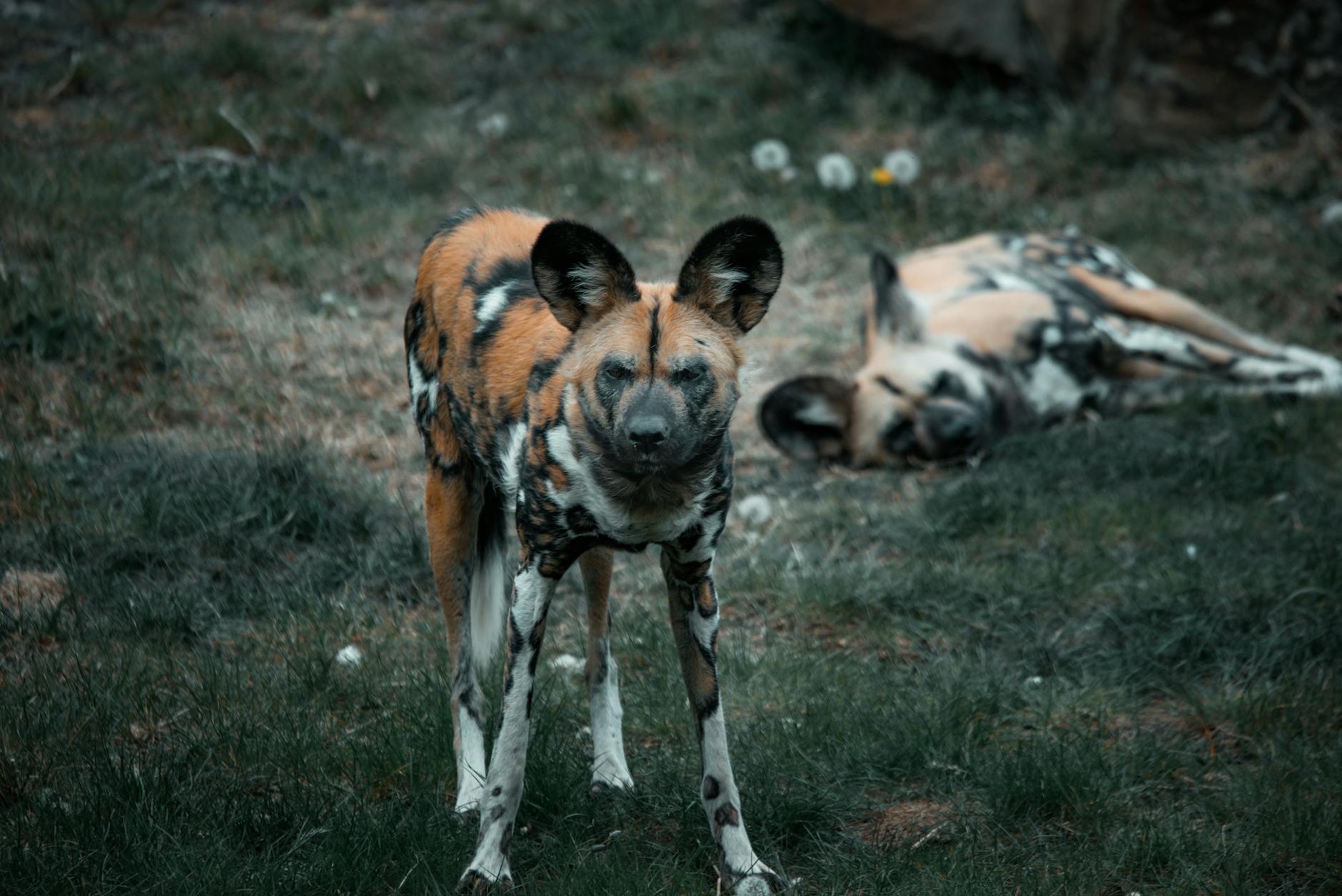
Beyond the headline animals, Laikipia gives access to some of the rarest species in Africa — the kind people plan whole trips around. The full picture is in our guide to Laikipia’s endangered species.
The African wild dog, or painted wolf, is among the continent’s most endangered carnivores, with fewer than 7,000 left in all of Africa — and Laikipia is now the second most important area for them anywhere, with several packs across the linked conservancies. Nothing is guaranteed; dogs cover huge distances on a hunt. But your odds here beat almost anywhere in East Africa, and watching a pack run is one of the great wildlife spectacles.
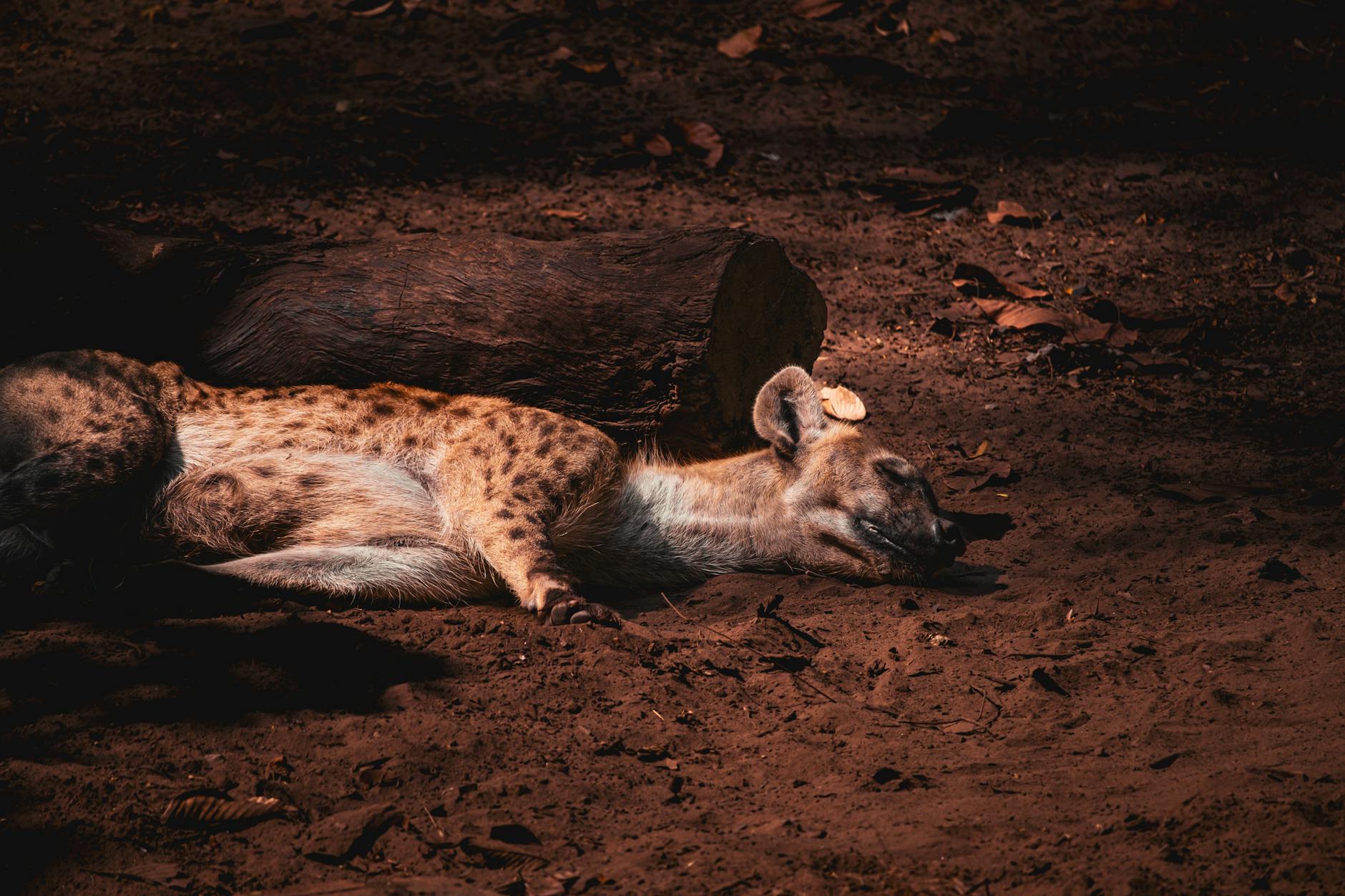
The black leopard called Giza put Laikipia on photographers’ maps in 2019, and camera traps keep documenting melanistic leopard in the region, which means a resident population rather than a one-off. Add aardvark (a night-drive prize), bat-eared fox, aardwolf, serval, striped hyena and the occasional pangolin, plus 500-plus bird species including vulturine guineafowl, martial eagle and Verreaux’s eagle.
The Kinds of Safari You Can Do Here
The range of activities is the real luxury of a Laikipia trip, because private land permits what parks forbid. Our guide to things to do in Laikipia covers the lot; the core options are below.
Game drives, day and night
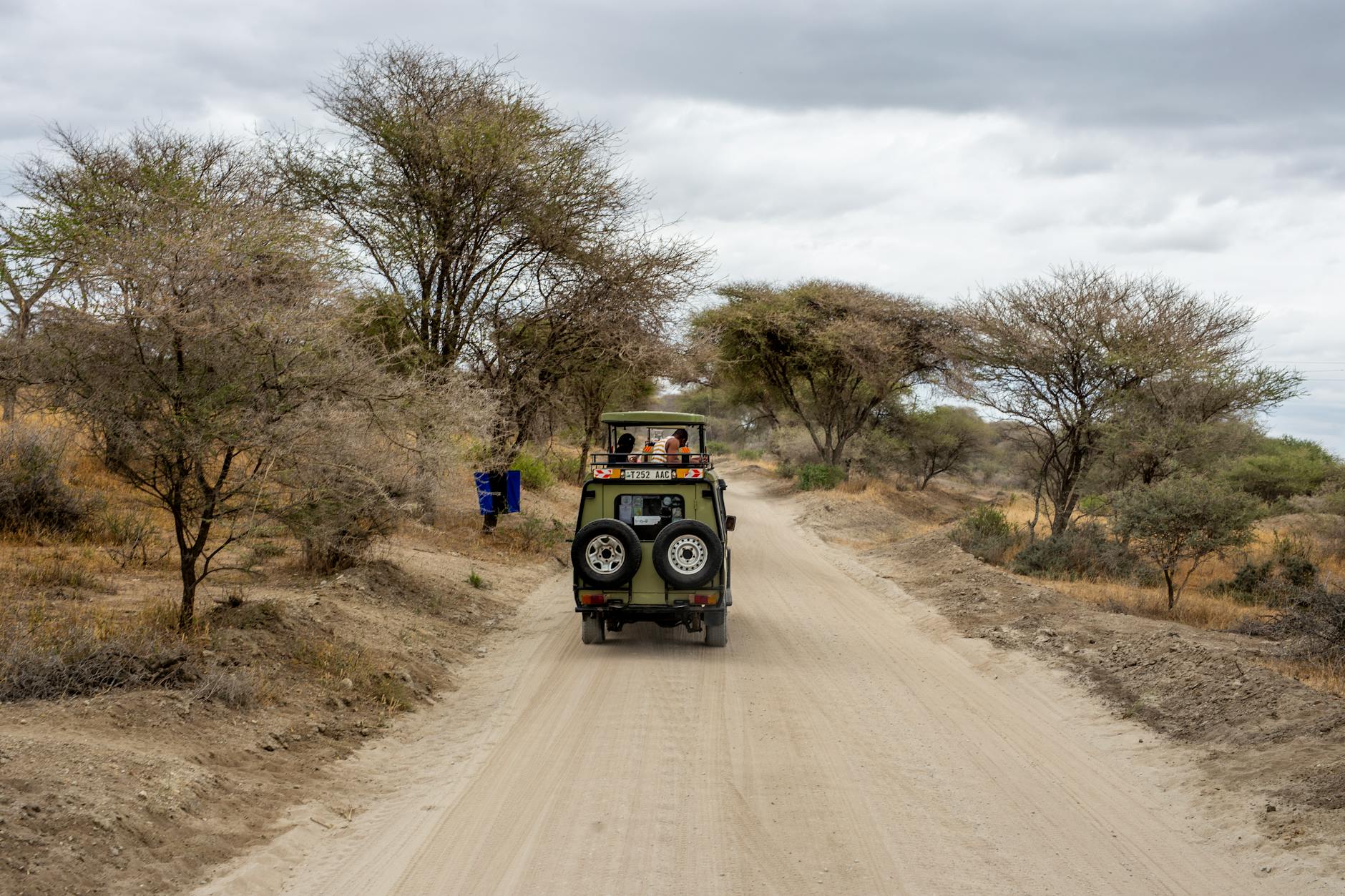
The vehicle drive is still the backbone, with two Laikipia advantages: guides can go off-road to follow a hunt or line up a shot, and night drives add a whole second safari. Our guide to game drives in Laikipia covers the daytime version in detail.
Night drives usually leave after dinner with a handheld spotlight, and the nocturnal world up here is rich: aardvark between the termite mounds, porcupine in the undergrowth, bushbabies’ eyes flaring in the beam, spring hares, genets, civets, the huge Verreaux’s eagle owl, and — with luck — a leopard on the hunt. For many guests it’s the surprise highlight; our guide to night safaris in Laikipia explains where they run. A typical day pairs a first-light drive (around 6:30am) with an afternoon one from about 4pm that slides into dark, and full-day drives with a bush lunch are usually an option.
Walking safaris
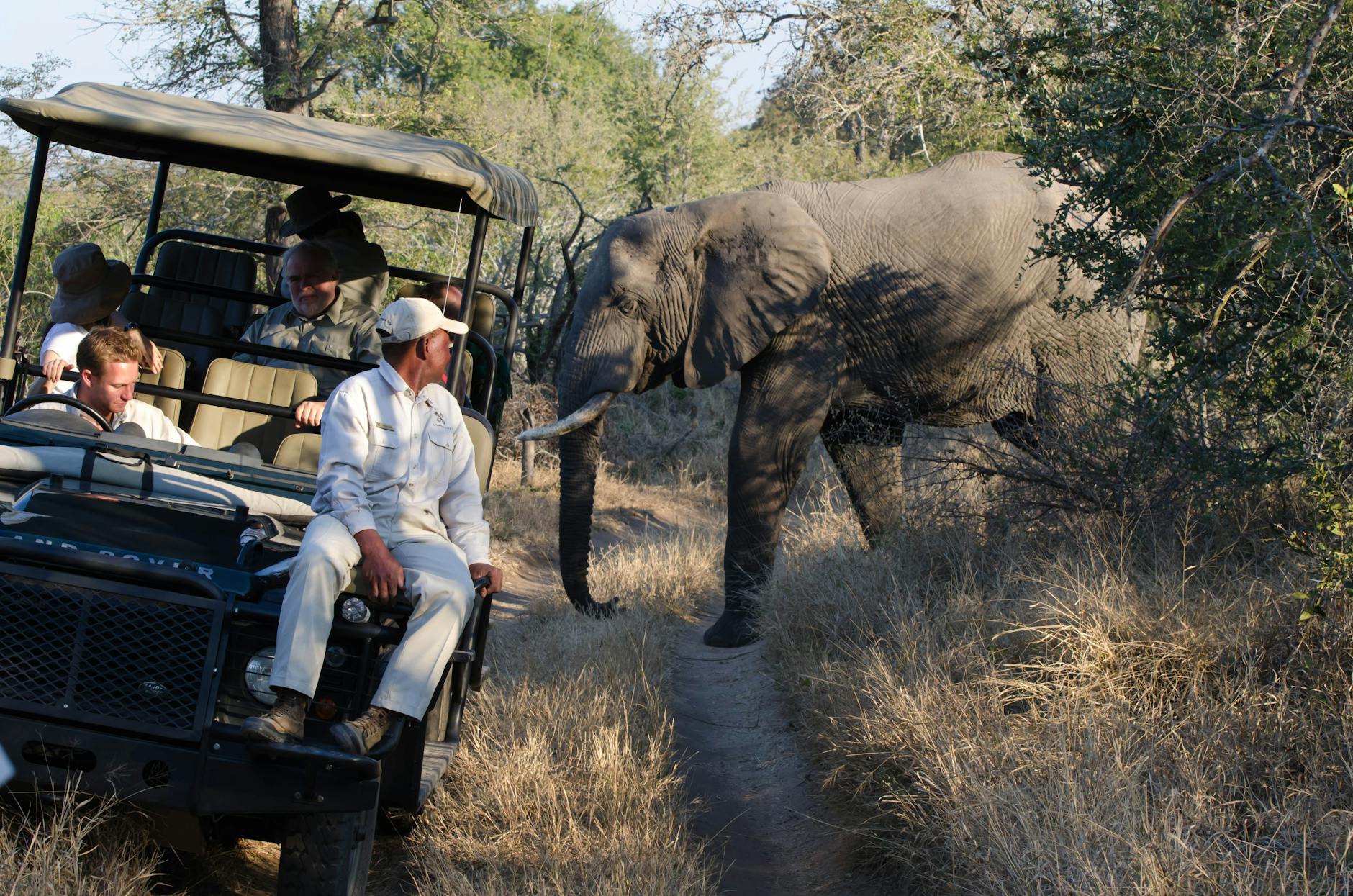
Going out on foot is one of the most distinctive things you can do here, led by armed guides — often ex-Kenya Wildlife Service — with Samburu or Maasai trackers whose bush knowledge runs back generations. You learn to read the ground: the three-toed press of a rhino, the paired crescents of impala, the dinner-plate pad of an elephant; which plants are medicine, which trees mean water, why a bird is alarm-calling. Being on foot among animals that could hurt you sharpens every sense in a way no drive can. Walks usually run two to four hours — our guide to walking safaris in Laikipia has the detail.
Horseback safaris
Laikipia is one of East Africa’s best places to ride: the terrain suits it, the game tolerates horses at close range, and the open grass makes for proper cantering. Sosian, Ol Malo and Lewa Wilderness run everything from a morning out to multi-day expeditions, and the animals accept mounted riders with a calm they rarely show a car. Point-to-point riding safaris, your kit moved ahead by vehicle, are among the most sought-after experiences in African travel.
Camel trekking and fly camping
Led by Samburu herders whose families have kept camels for centuries, a camel trek is the slow option through the drier north — single file, a high seat for spotting, game unbothered by the familiar shape. Multi-day treks at Loisaba and the community conservancies follow old trading routes and camp in simple fly camps each night. Fly camping strips things back to canvas, a fire and a bucket shower; Loisaba’s star beds — a bed wheeled to a cliff edge over a waterhole — are the same idea at its most inventive.
Conservation up close
Plenty of properties open the back rooms: a guided walk to Ol Pejeta’s northern white rhino enclosure and its IVF programme, the Sweetwaters chimpanzee sanctuary (the only chimps in Kenya), or a patrol alongside Lewa’s anti-poaching rangers. It’s the clearest way to see what your trip pays for.
Where to Base Yourself
Laikipia is a mosaic, not a park, and the conservancy you choose shapes the whole trip. A quick orientation follows; the full directory is in our Laikipia conservancies guide.
Ol Pejeta
At 364 square kilometres, the most famous and most visited conservancy: the largest black rhino sanctuary in East Africa, the last two northern white rhino, the only chimp sanctuary in Kenya, lion tracking, night drives, walking — and, unusually, self-drive access, which makes it the budget entry point. Beds run from Ol Pejeta Bush Camp and Kicheche Laikipia to the cheaper Sweetwaters Serena.
Lewa
A UNESCO World Heritage Site over 250 square kilometres in Mount Kenya’s foothills, protecting about 12 percent of Kenya’s black rhino, famous for Grevy’s zebra work and the Lewa Safari Marathon, and the builder of Kenya’s first elephant underpass. Expect excellent guiding and a strong sense of purpose.
Loisaba, Borana and Solio
Loisaba’s 57,000 northern acres mix cattle, a wildlife corridor, big adventure (riding, camels, biking) and the original star beds, over rugged, dramatic country with a chance of wild dog. Borana, joined to Lewa by a corridor, offers big scenery, fine rhino viewing and the much-rated Borana Lodge. Solio, usually a day trip, runs the highest rhino density in East Africa, both black and white grazing in the open.
Community conservancies
Some of the most meaningful stays are on community land. Il Ngwesi, run by the Laikipiak Maasai, was among Kenya’s first community conservancies; Ol Lentille offers 40,000 unfenced acres and high-end lodging under neighbouring Samburu and Maasai ownership; and the remote Lekurruki and Naibunga conservancies put your money straight into schools, clinics and anti-poaching.
How a Safari Day Runs
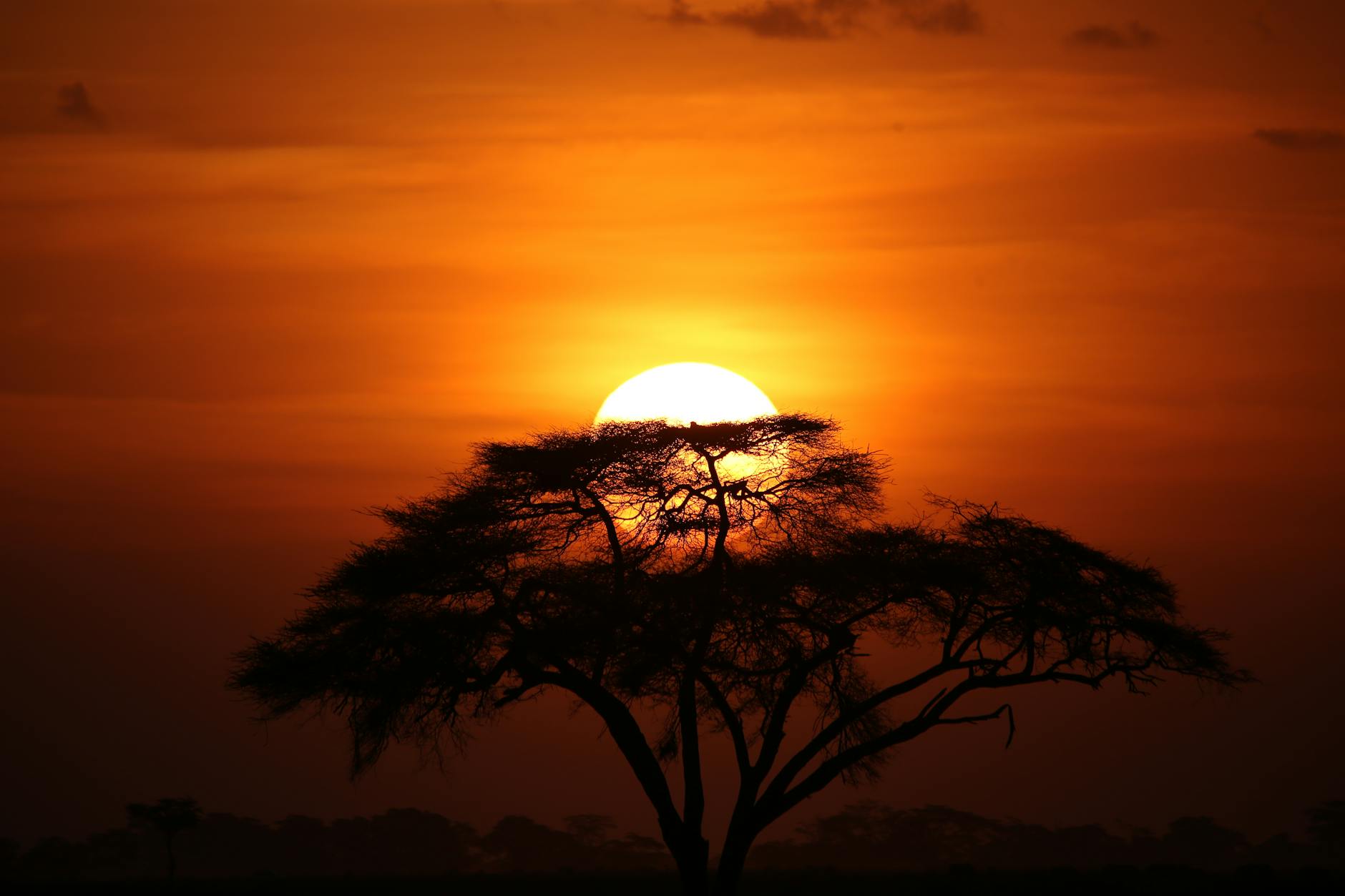
Every camp varies, but the day follows the animals. A wake-up around 5:30–6:00am comes with tea or coffee at your tent; it’s properly cold at this altitude, so layer up. The morning drive leaves about 6:30am for the most productive, best-lit hours, your guide already working the camp’s radio reports. Breakfast follows around 9–10am, in camp or set out under a tree. The middle of the day — roughly 10am to 3:30pm — is for resting, a walk, the pool or a community visit while the animals lie up. The afternoon drive goes out around 4pm as things cool and the light turns gold, pauses for a sundowner around 6:30pm at some good vantage, and rolls into a night drive at 7pm if the property offers one. Dinner is about 8pm, often around a fire. If you want it mapped across several days, our Laikipia safari itineraries lay out 3-, 5- and 7-day plans.
What It Costs
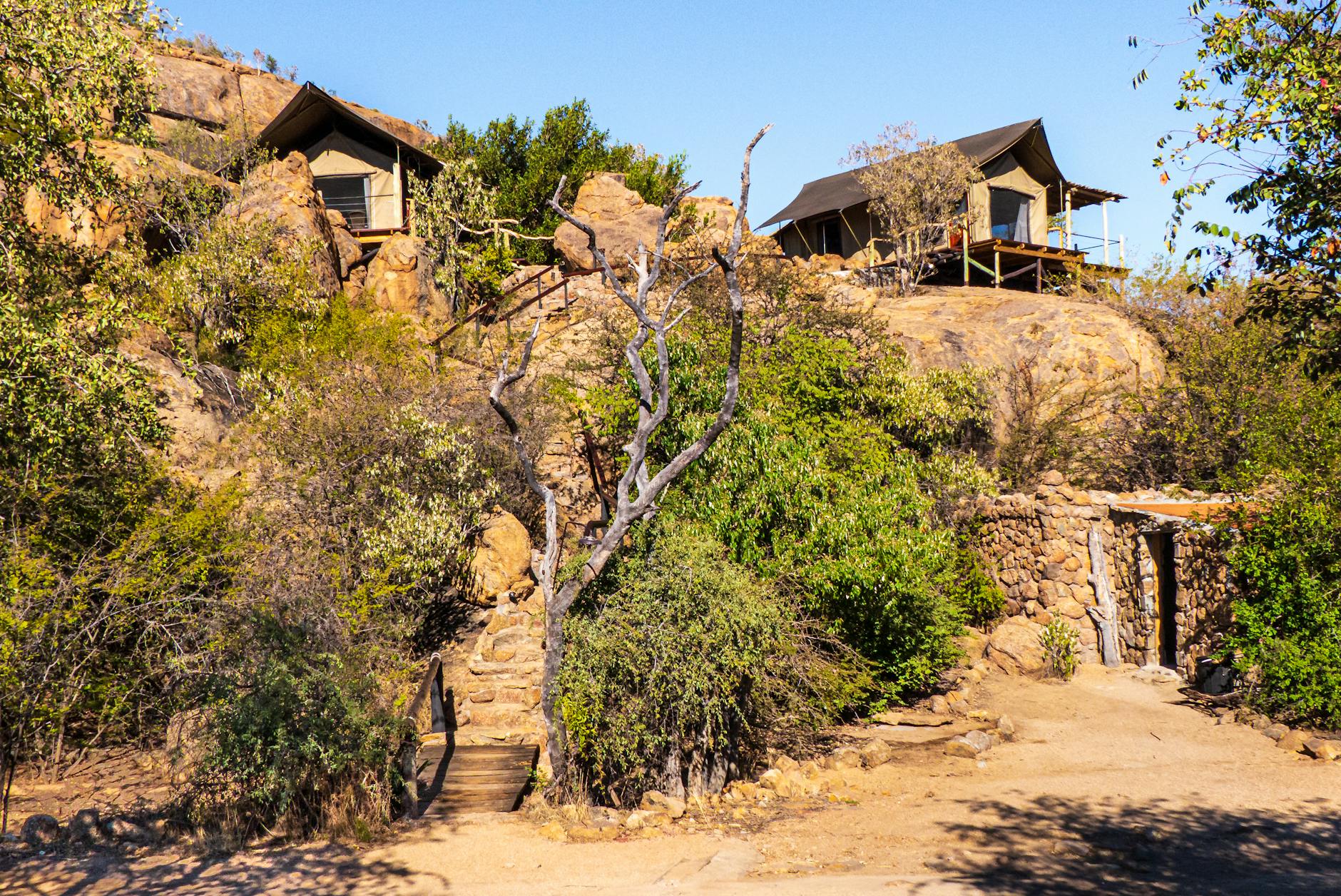
Laikipia runs mid-range to luxury, with a budget door at Ol Pejeta. For the full breakdown see our Laikipia safari cost guide; in summary:
Budget, about $250–$400 per person per day. Built around Ol Pejeta, the one conservancy allowing self-drive. Ol Pejeta Bush Camp, Sweetwaters Serena and El Karama next door give full-board comfort at a fraction of the top rates, and self-drive day visits run on a conservancy fee of roughly $90 per adult.
Mid-range, $500–$800. The value sweet spot — Kicheche Laikipia, Lewa Safari Camp, Loisaba Tented Camp — with roomy tents, strong guiding, full board, most drinks, activities and usually conservancy fees included.
Luxury, $1,200–$1,600+. Segera, Sirai House, Borana Lodge, Ol Lentille: plunge pools, fine food and wine, private guide and vehicle, everything included, often down to the internal flights. Conservancy fees of $80–$150 per person per day are a real line item, but that money goes straight to conservation and community work.
When to Come
Laikipia is a genuine year-round destination — steady temperatures (20–28°C by day, down to 5°C at night) with rain as the only real variable. The dry stretches (June–September and January–February) are prime: thin bush, animals on the permanent water, clean light, lowest mosquito risk — and June–September overlaps the Mara migration, which makes a combined trip easy. The wet months (March–May, October–December) bring lower prices, fewer people, green country and excellent birding. The shoulder weeks — June, November, early December — often give near-peak viewing at rates 20–30 percent below high season. Our best time to visit guide goes month by month.
Booking, and Combining with the Mara
Book through an East Africa specialist or directly with the camps; peak season often goes 6–12 months out, though the shoulder and wet months can come up last-minute. Three to four nights lets you use the full range of activities without rushing. Many people pair Laikipia with the Mara — a classic three-and-three — and our guide to combining Laikipia with other Kenya destinations covers how to route it. Flights from Nairobi’s Wilson Airport to Nanyuki, Lewa and Loisaba take 45 minutes to an hour on Safarilink or AirKenya; by road it’s about three hours to Nanyuki, then 20–30 minutes to Ol Pejeta or longer to the remote properties. Take a 4×4 off the main roads.
Laikipia or the Masai Mara?
The question every first-timer asks. Both are world-class; they’re just different trips. The Mara takes over 300,000 visitors a year and its migration — two million animals on the move — has no equal here, but in peak season the popular spots get crowded and the park charges $200 per person per 24 hours. Laikipia caps numbers, lets you walk, ride and drive at night, and offers the Northern Five, wild dog and the last northern white rhino. The honest answer is usually not to choose: three nights here for the exclusivity and rare species, three in the Mara for the migration and big-cat density. Our combined-safari guide shows how to stitch them together.
Practical Notes
Packing: warm layers for cold mornings, neutral safari clothing, binoculars (the one accessory that matters most), a 300mm-plus lens, SPF 50+, DEET repellent, a wide-brimmed hat and closed walking shoes. Kenya bans single-use plastic bags outright.
Health: take malaria prophylaxis — altitude lowers the risk but doesn’t remove it — and see a travel doctor four to six weeks out. Hepatitis A and B, typhoid and tetanus are advised; yellow fever cover is required if you arrive from an endemic country.
Entry and tipping: apply for Kenya’s eTA at least 72 hours before you fly, with six months’ passport validity and two blank pages. Budget roughly $15–$25 per person per day for your guide and $10–$15 for camp staff.
For detailed accommodation recommendations across every conservancy and budget level, see our Laikipia Accommodation Guide.
To learn more about each individual conservancy, explore our detailed Laikipia Conservancies Guide.
Start Planning
A Laikipia safari buys you more than game viewing: a front-row seat at one of Africa’s few genuine conservation recoveries, set in some of its finest country. Come for the Big Five, the Northern Five, the wild dogs, the riding or the chance to walk among elephant with a Samburu tracker — and know that your bed-night is paying the rangers and the communities who keep it all standing. For the wider region — geography, history, culture — start with our complete guide to Laikipia Kenya.
Leave a Reply