Last updated: June 2026

There’s a particular thrill, on the Laikipia plains, in looking up. The plateau’s open country, rocky kopjes and big skies make it one of the finest places in Kenya to watch birds of prey — and these are not distant specks but often close, perched and magnificent. A martial eagle the size of a small child surveying its domain; a Verreaux’s eagle riding the updraughts along a cliff; the deep, echoing call of a Verreaux’s eagle-owl at dusk. This guide to the raptors of Laikipia covers the eagles, hawks, falcons, vultures and owls you can find here, how to identify them, and where to look — a feast for anyone who loves the drama of the hunters.
Raptors reward the patient, observant traveller, and Laikipia serves them up generously. Here’s what to watch for in the skies and on the crags of the plateau.
Why Laikipia Is Superb for Raptors
Birds of prey thrive where there’s open country to hunt over, prey to hunt, perches to watch from, and minimal disturbance — and Laikipia has all four in abundance. The open plains and grasslands give hunting eagles and harriers room to work; the rocky outcrops and cliffs provide nesting and perching sites for cliff-loving species; the healthy prey base of rodents, hyrax, hares, reptiles and smaller birds sustains them; and the protected conservancies keep persecution low. The result is a high density and diversity of raptors, often seen perched and approachable rather than as distant silhouettes. For raptor enthusiasts, Laikipia’s combination of habitat and protection makes it a genuine highlight of Kenyan birding, rooted in the healthy ecosystem the conservancies sustain.
The Big Eagles
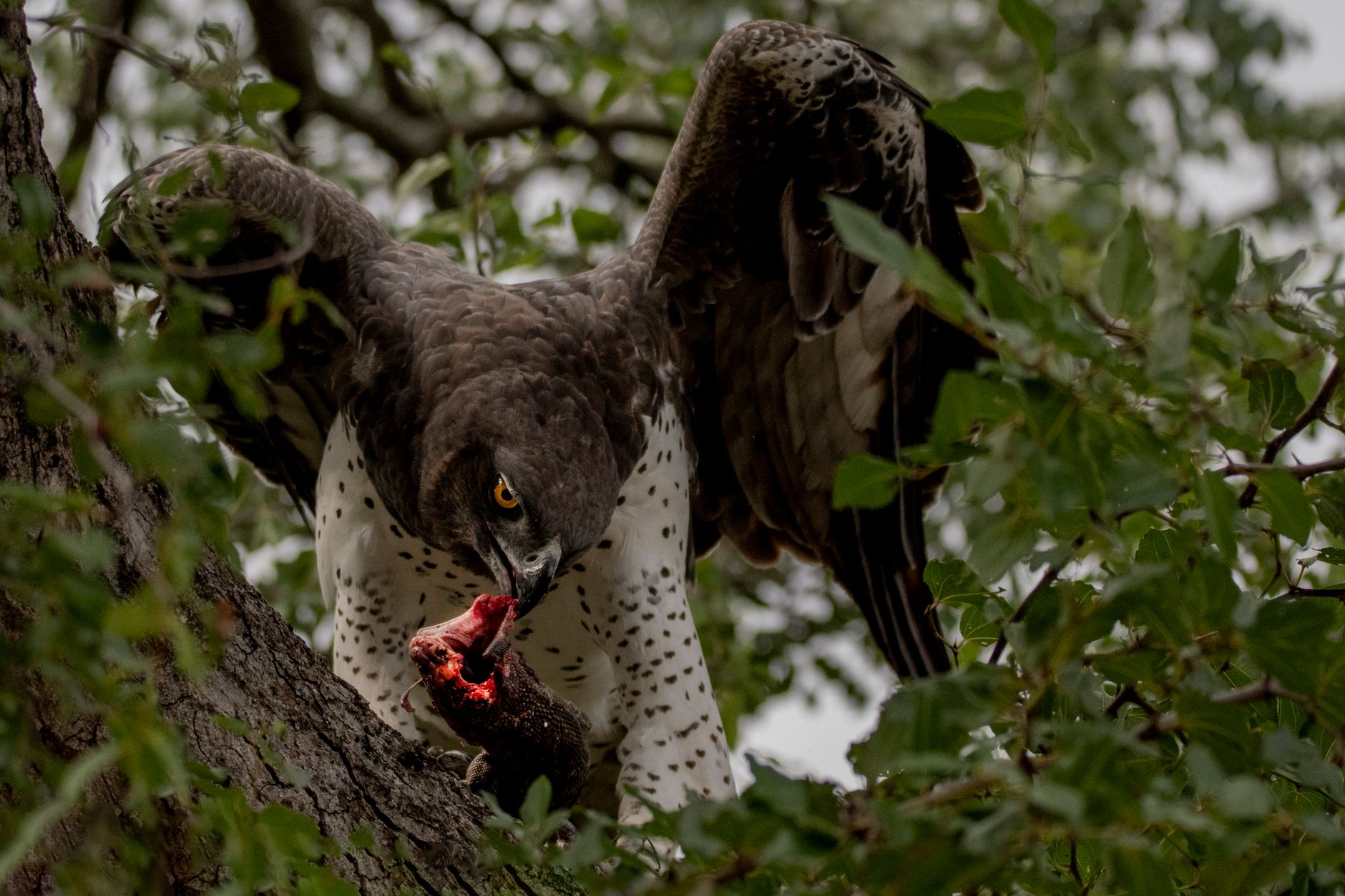
Laikipia’s eagles are the headline raptors. The martial eagle is the giant — Africa’s largest eagle, a true apex predator with a dark hood, spotted belly and a wingspan that casts a real shadow, capable of taking prey from small antelope to game birds. The Verreaux’s eagle (or black eagle) is a specialist of rocky country, jet-black with a white “V” on its back, hunting rock hyrax along the kopjes and cliffs with breathtaking aerial agility. The tawny eagle and steppe eagle (a migrant) are common over the plains, while the dramatic bateleur — short-tailed, red-faced, rocking from side to side in flight — is one of Africa’s most distinctive raptors. Spotting these big eagles is a Laikipia highlight.
Hawks, Buzzards and Harriers
The mid-sized raptors are abundant and rewarding. The augur buzzard is a Laikipia favourite — a handsome highland buzzard with a striking rufous tail, often seen perched on poles and trees or hanging in the wind. Harriers (pallid, Montagu’s and African marsh) quarter low over the grasslands, especially migrants in season. Various goshawks and sparrowhawks hunt birds through the woodland, the African harrier-hawk (gymnogene) clambers about cliffs and trees raiding nests with its double-jointed legs, and the black-shouldered kite hovers over open ground. These everyday raptors offer constant interest and good views as you travel the conservancies.
Falcons and Kestrels
The falcons bring speed and agility to Laikipia’s skies. The common kestrel and the migrant lesser kestrel hover and hunt over open country, while the tiny pygmy falcon — Africa’s smallest raptor, often living in sociable weaver nests — is a delightful find. Larger falcons like the lanner and the spectacular peregrine (the fastest animal on Earth in its hunting stoop) hunt birds at high speed, and the African hobby chases insects and small birds with dashing flight. Falcons can be trickier to spot than the big perched eagles, but their speed and hunting prowess make them a special sighting for the attentive birder.
Vultures: Nature’s Clean-Up Crew
Often overlooked but ecologically vital, Laikipia’s vultures are impressive birds and important to see while you still can — many African vulture species have declined alarmingly. Look for the white-backed vulture, the huge lappet-faced vulture (the dominant species at a carcass), the Rüppell’s vulture, and the white-headed and hooded vultures, all riding the thermals on broad wings or gathering at kills. Watching vultures descend on a carcass and sort out their pecking order is a fascinating, if visceral, wildlife spectacle, and a reminder of their crucial role in the ecosystem. Their conservation is increasingly urgent, making every Laikipia sighting meaningful.
Owls: The Night Hunters
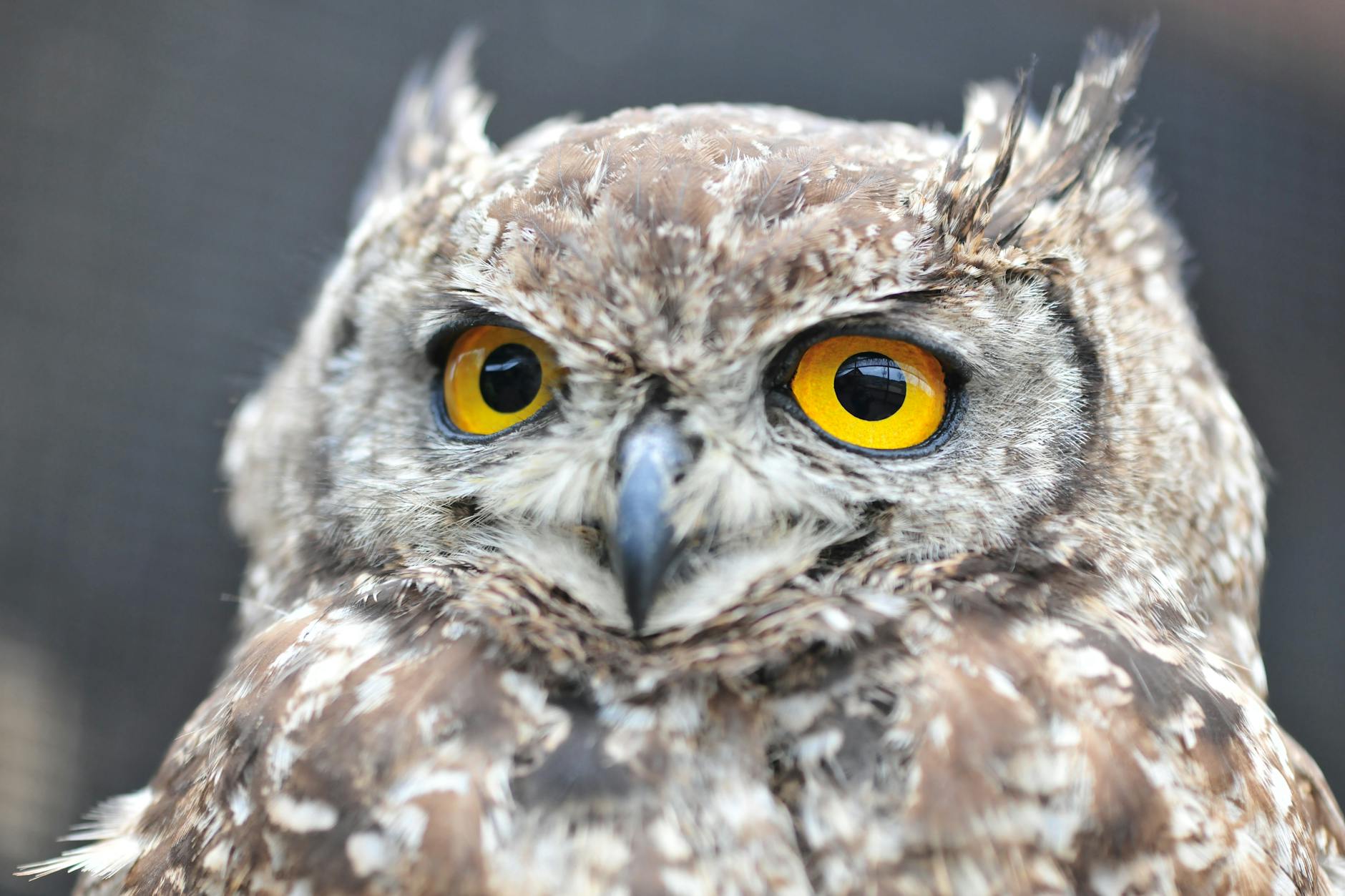
As day birds give way to night, Laikipia’s owls take over, and they’re a special treat — often best found on a night drive. The magnificent Verreaux’s eagle-owl is the star: one of Africa’s largest owls, with a wingspan approaching 1.7 metres, huge dark eyes with distinctive pink eyelids, and a deep, far-carrying call. The spotted eagle-owl is smaller and common, while African scops owls (tiny, superbly camouflaged), Verreaux’s and pearl-spotted owlets, and the long-legged marsh owl round out the cast. Owls are elusive by day but a guide who knows their roosts and calls can find them — a memorable addition to any Laikipia bird list.
Where to Find Raptors
Knowing where to look transforms your raptor sightings. Rocky outcrops and cliffs are prime for Verreaux’s eagle, harrier-hawk and roosting owls. Open plains and grasslands are best for the big hunting eagles, harriers, kestrels and the secretary bird (a raptor relative). Tall trees and poles serve as perches for buzzards and many eagles — scan them as you drive. Carcasses and kills draw vultures and opportunist eagles. And night drives are the way to find owls. The conservancies’ varied terrain — explored in our birding locations guide — means a day’s travel can sample all these raptor habitats.
Identifying Raptors: A Beginner’s Approach
Raptor identification daunts many birders, but a methodical approach helps. Note the size and shape (huge and broad-winged like an eagle, or slim and pointed like a falcon?), the flight style (soaring, hovering, quartering low, or the bateleur’s distinctive rock), the perching posture and location, and key plumage features (the augur buzzard’s rufous tail, the Verreaux’s eagle’s white back-V, the bateleur’s red face). A good field guide or app and a knowledgeable guide accelerate learning enormously. Don’t be discouraged by tricky immatures and similar species — even experts puzzle over some. Start with the distinctive, obvious species and build from there, and Laikipia’s frequent, close raptor sightings make it an ideal place to learn.
Migratory Raptors
Laikipia’s raptor list swells in the migrant season. From around November to April, Palearctic birds of prey arrive from Europe and Asia, joining the residents: steppe eagles in numbers, lesser kestrels, pallid and Montagu’s harriers quartering the grasslands, Eurasian hobbies, and various migrant buzzards and falcons. These visitors can dramatically increase both the diversity and the abundance of raptors on the plateau, sometimes gathering in impressive numbers where prey or thermals concentrate. For raptor enthusiasts, timing a visit to the migrant season (covered in our seasonal birding guide) adds a whole extra dimension to the resident raptor spectacle. Distinguishing the migrants from similar residents is a satisfying challenge, and the sheer numbers in a good year are a memorable sight.
Watching Raptors Hunt
The real drama of raptors is in the hunt, and Laikipia’s open country offers front-row seats. Watch an augur buzzard or kestrel hovering, then stooping onto prey; a martial eagle launching from a tree in a powerful, committed dive; a harrier quartering low and slow before dropping into the grass; or a Verreaux’s eagle sweeping along a cliff to surprise a hyrax. Vultures descending on a carcass and jostling for position is a different but equally gripping spectacle. These hunting behaviours reward patience — finding a perched raptor and simply watching often pays off with action. A guide can help you anticipate when a hunt is imminent. Witnessing a successful raptor hunt is one of the most thrilling sights in birding, and Laikipia’s healthy raptor populations and open terrain make it genuinely achievable.
Raptors and the Food Chain
Raptors sit at the top of the avian food chain, and their abundance in Laikipia is a sign of a healthy ecosystem. As predators and scavengers, they control populations of rodents, small mammals, reptiles and birds, and the vultures perform the vital service of cleaning up carcasses, limiting the spread of disease. A landscape rich in raptors is a landscape with a healthy prey base and intact habitat — which is exactly what the conservancies protect. This is why raptor numbers are watched as an indicator of ecosystem health, and why their decline elsewhere (particularly vultures) is so alarming. Appreciating the ecological role of Laikipia’s birds of prey, as our ecosystem guide explores, deepens the pleasure of watching them and underlines the importance of the conservation that sustains them.
Raptor Conservation
Africa’s raptors, especially vultures, face serious threats — poisoning (often unintentional, from poisoned carcasses meant for predators), habitat loss, electrocution on power lines, and persecution have caused steep declines across the continent. Laikipia’s protected conservancies offer these birds a relative refuge, with secure habitat, a healthy prey base and reduced persecution, making the plateau an increasingly important stronghold. Organisations work to monitor and protect Kenya’s birds of prey, and the conservancies’ broader conservation work benefits raptors alongside the rhino and elephant. As a visitor, seeing healthy raptor populations here is both a privilege and a reminder of what’s at stake — and your conservancy fees help fund the protected habitat these magnificent birds depend on.
The Best Time and Way to Watch Raptors
To maximise your raptor sightings, a few pointers help. The migrant season (November–April) offers the greatest diversity, adding Palearctic species to the residents. The dry season’s sparse vegetation and concentrated prey can make hunting raptors easier to see. Mid-morning, once thermals develop, is good for soaring raptors and vultures; early and late for perched birds and hunting. Scan the tops of trees, poles and rocky outcrops as you travel, and check the skies regularly. A knowledgeable guide and a good field guide accelerate identification enormously. And night drives unlock the owls. Combining the right season, time of day and habitats — across the varied terrain detailed in our locations guide — turns a general safari into a rewarding raptor-watching experience.
The Secretary Bird: A Raptor on Legs
No raptor guide to Laikipia is complete without the secretary bird — a bird of prey that hunts on foot. With the body of an eagle, the long legs of a crane, and a crest of quill-like feathers behind its head (said to resemble the pens a Victorian clerk tucked behind his ear), it’s utterly distinctive. Striding across the grasslands, it hunts snakes, rodents and other prey, dispatching them with powerful, precise stamps of its feet. Watching a secretary bird stalk and strike is one of the more unusual and memorable raptor sightings on the plains. Though declining across Africa, it’s still seen in Laikipia’s grasslands, and it’s a favourite of birders and general safari-goers alike — proof that a “bird of prey” need not soar to be spectacular.
Owls and Night-Drive Birding
Because so many of Laikipia’s raptors — the owls — are nocturnal, a night drive is the key to a complete raptor list, and a wonderful experience in itself. Under the spotlight you might find the giant Verreaux’s eagle-owl, the common spotted eagle-owl, tiny scops owls frozen in the beam, or the long-legged marsh owl hunting over grassland. Nightjars (relatives, if not true raptors) flush from the track. A guide who knows the owls’ calls and favoured roosts dramatically improves your chances. Beyond the owls, the night drive reveals a whole nocturnal world — and pairs beautifully with the dark-sky astrophotography Laikipia is famous for. For raptor enthusiasts, adding a night drive to find the owls is well worth doing.
A Raptor-Watching Day
To picture a great day for birds of prey: you set out early, scanning the perches as the plains warm — an augur buzzard on a pole, a martial eagle in a lone tree. As thermals build through mid-morning, eagles and vultures rise to soar, and you might catch a hunt or a gathering at a carcass. You check a rocky outcrop for a Verreaux’s eagle quartering the cliffs for hyrax. Harriers and kestrels work the grassland through the day. As dusk falls, you head out again, this time for the owls, the spotlight picking out a Verreaux’s eagle-owl’s huge silhouette. In a single day, attentive raptor-watching across Laikipia’s habitats can turn up a dozen or more species — a thrilling tally for anyone who loves the hunters, and a highlight of birding the plateau.
Frequently Asked Questions
When is the best time to see raptors in Laikipia?
The migrant season (November–April) offers the greatest diversity, adding Palearctic species to the residents, while the dry season’s sparse vegetation and concentrated prey can make hunting raptors easier to see. Mid-morning suits soaring raptors and vultures once thermals develop; early and late for perched and hunting birds; and night drives for owls.
What’s the difference between an eagle and a buzzard?
Broadly, eagles are larger and more powerful, with bigger bills and fully feathered legs, taking larger prey; buzzards are smaller, more compact soaring raptors. In Laikipia, the martial and Verreaux’s eagles are the giants, while the augur buzzard (with its rufous tail) is the common mid-sized soarer. Size, shape, flight style and plumage all help tell them apart — a good field guide and guide accelerate the learning.
What raptors can you see in Laikipia?
A rich variety — big eagles (martial, Verreaux’s/black, tawny, bateleur), buzzards (notably the augur buzzard), harriers, goshawks, falcons and kestrels (including the tiny pygmy falcon), several vulture species, and owls such as the giant Verreaux’s eagle-owl. Laikipia’s open country, rocky outcrops and protected habitat make it one of Kenya’s best raptor destinations.
What is the largest eagle in Laikipia?
The martial eagle, Africa’s largest eagle and a true apex predator, with a dark hood, spotted belly and a huge wingspan, capable of taking prey up to the size of small antelope. The Verreaux’s (black) eagle is another large, spectacular species, specialising in hunting hyrax around rocky cliffs.
Where is the best place to see birds of prey in Laikipia?
Rocky outcrops and cliffs for Verreaux’s eagle and roosting owls; open plains for the big hunting eagles, harriers and kestrels; tall trees and poles for perched buzzards and eagles; and carcasses for vultures. Night drives are best for owls. The conservancies’ varied terrain offers all these habitats.
Can you see owls in Laikipia?
Yes — Laikipia has several owl species, including the magnificent Verreaux’s eagle-owl (one of Africa’s largest, with a near 1.7m wingspan), the spotted eagle-owl, tiny African scops owls and owlets, and the marsh owl. Owls are best found on night drives or by a guide who knows their roosts and calls.
Are vultures worth seeing in Laikipia?
Very much so — and increasingly meaningful, as African vultures have declined alarmingly. Laikipia hosts white-backed, lappet-faced, Rüppell’s, white-headed and hooded vultures. Watching them gather at a carcass and sort their pecking order is a fascinating spectacle and a reminder of their vital ecological role.
Eyes to the skies — then explore further with our guides to the top 50 birds of Laikipia, the best birding locations, and the complete Laikipia birdwatching guide.