Laikipia Kenya is one of Africa’s most extraordinary safari destinations — a vast, wildlife-rich plateau stretching 9,500 square kilometers between the snow-capped slopes of Mount Kenya and the dramatic escarpment of the Great Rift Valley. Yet despite harboring the second-largest wildlife population in Kenya (surpassed only by the Masai Mara), Laikipia remains refreshingly under the radar, offering visitors an exclusive, uncrowded safari experience that most of East Africa’s famous parks simply cannot match.
This complete guide covers everything you need to know about Laikipia Kenya — from its dramatic geography and remarkable conservation story to the wildlife you will encounter, the conservancies you can visit, where to stay, what to do, and how to plan your trip. Whether you are a first-time safari traveler or a seasoned Africa hand looking for something beyond the well-trodden circuit, Laikipia delivers an experience that is as authentic as it is unforgettable.
Where Is Laikipia? Geography and Landscape
Laikipia County sits on the equator in central Kenya, occupying a high-altitude plateau that ranges from 1,700 meters to over 2,600 meters above sea level. The region is bounded by Mount Kenya to the southeast — Africa’s second-highest peak at 5,199 meters — and the Aberdare Range to the south. To the west, the land drops away into the spectacular Rift Valley, while to the north it fades into the arid frontier lands of Samburu and Isiolo counties.
The Ewaso Nyiro River, fed by glacial meltwater from Mount Kenya, is the ecological lifeline of the region. It flows northwest through the heart of the plateau before continuing into the Samburu lowlands and eventually disappearing into the Lorian Swamp. During the dry season, this river and its tributaries become critical gathering points for elephants, buffalo, and predators — creating some of Laikipia’s most dramatic wildlife viewing.
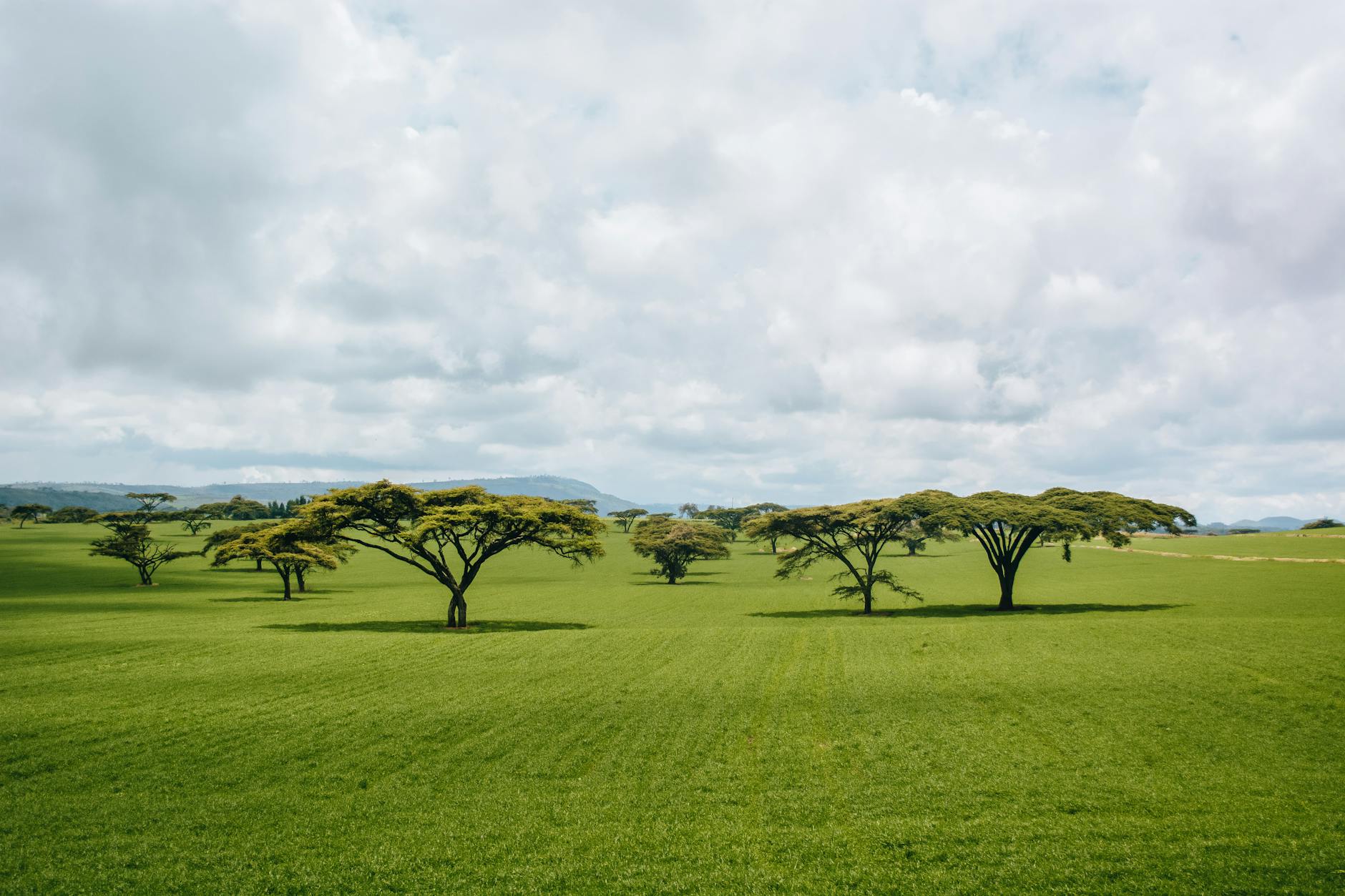
The landscape itself is remarkably varied. In the southeast, fertile highlands support dense cedar and olive forests. The central plateau is characterized by open grasslands dotted with whistling thorn acacia, while the northern reaches transition into the dry, rugged bushland that characterizes Kenya’s northern frontier. This diversity of habitat — from riverine forest to semi-arid scrubland, from highland meadow to rocky gorge — is what gives Laikipia its extraordinary biodiversity.
Two major urban centers anchor the region: Nanyuki, the bustling gateway town on the southeastern edge of the plateau, and Nyahururu to the southwest, home to the impressive Thomson’s Falls. Nanyuki, situated directly on the equator, serves as the primary entry point for tourists heading to Laikipia’s conservancies and is well connected to Nairobi by road (approximately three hours) and daily scheduled flights.
A Brief History of Laikipia: From Maasai Homeland to Conservation Pioneer
The name “Laikipia” derives from the Ilaikipiak, a now-dispersed section of the Maasai people who once roamed these highlands with their cattle. For centuries, the plateau served as grazing land for Maa-speaking pastoralists — the Maasai and their Samburu cousins — who lived alongside the abundant wildlife in a balance shaped by seasonal movement and traditional land management.
The colonial era upended this balance entirely. In the early 1900s, British colonial authorities relocated the Maasai from the Laikipia Plateau to reserves in the south, converting the land into large-scale cattle ranches and mixed farms. For much of the twentieth century, Laikipia was defined by these sprawling European-owned ranches — vast properties that raised cattle on land that had once supported both pastoralists and wildlife.
The transformation from ranching to conservation began gradually in the 1980s and accelerated through the 1990s. Visionary landowners recognized that wildlife could coexist with, and eventually surpass, cattle as an economic proposition. Fences came down. Cattle were reduced or managed alongside wildlife. Ranches evolved into conservancies. The creation of Lewa Wildlife Conservancy from the former Lewa Downs cattle ranch in 1983 — initially to protect black rhinos — became a template that others followed.
Today, Laikipia is widely regarded as Africa’s most successful model of private and community conservation. The region’s wildlife is entirely sustained by private and communal landowners rather than government-managed parks — a distinction that makes Laikipia unique in Kenya and, arguably, in all of Africa. This model has produced remarkable results: Laikipia is the only area in Kenya where wildlife populations have increased over the past 25 years.
Wildlife in Laikipia: What You Will See
Laikipia contains a higher density and diversity of large mammals than any other landscape in Kenya outside the Masai Mara. The region supports all of the Big Five — lion, leopard, elephant, buffalo, and both black and white rhinoceros — along with an exceptional array of species that are rare or absent in southern Kenya’s more famous parks.
Rhinos: Africa’s Greatest Stronghold
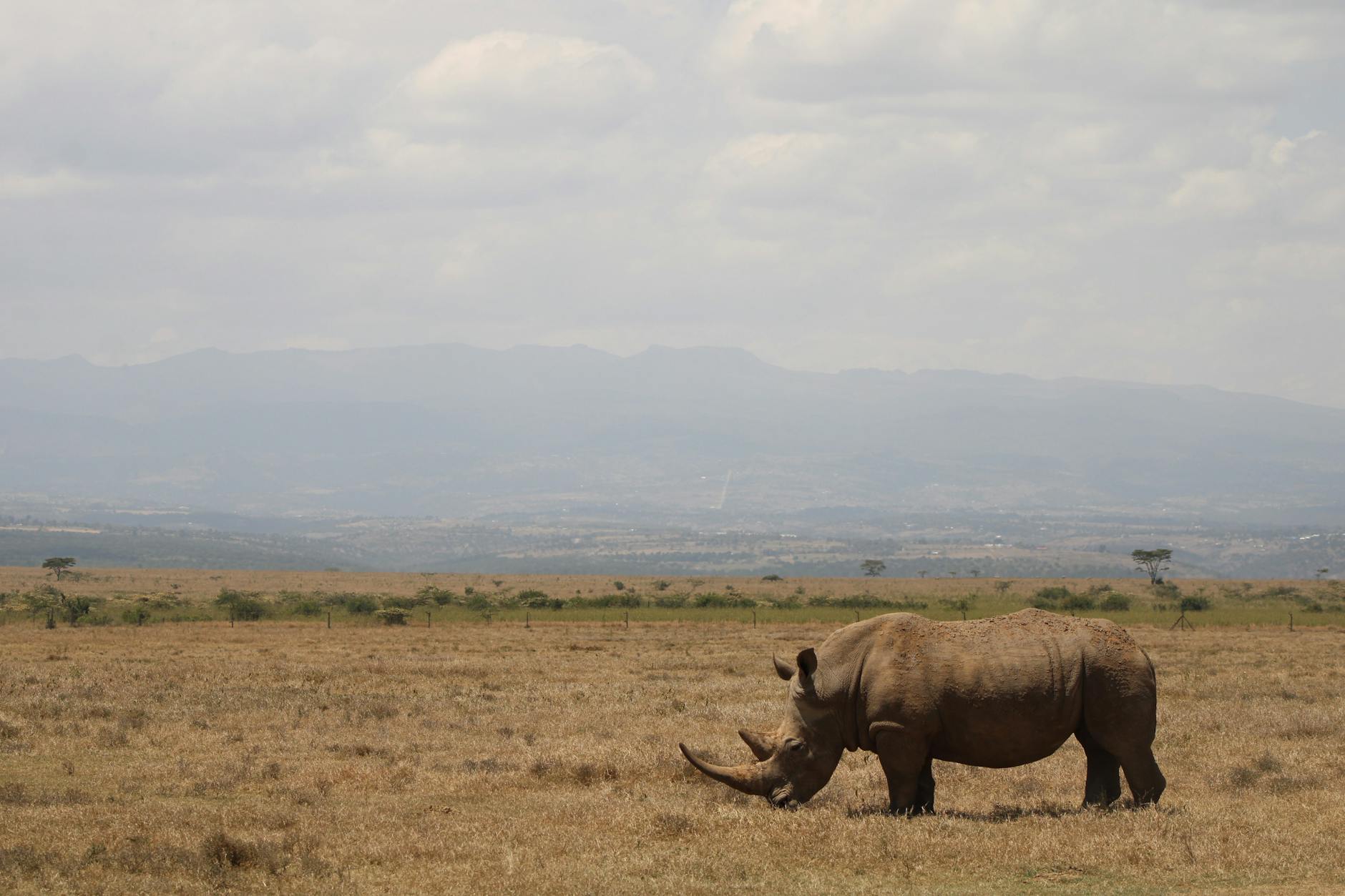
If there is one animal that defines Laikipia’s conservation triumph, it is the rhinoceros. The plateau hosts eight rhino sanctuaries that collectively protect more than half of Kenya’s entire black rhino population. Ol Pejeta Conservancy alone holds the largest population of black rhinos in East Africa — and the fastest growing. But the rhino story in Laikipia goes even further: Ol Pejeta is also the last refuge of the planet’s two remaining northern white rhinos, Najin and Fatu, whose survival depends on cutting-edge IVF science being conducted on-site.
Solio Ranch, in southern Laikipia, has the highest density of rhinos anywhere in East Africa, with both black and white rhino grazing openly on its rolling grasslands. Borana Conservancy and Lewa Wildlife Conservancy — now connected by a wildlife corridor — together form one of the continent’s most important rhino habitats. For visitors, rhino sightings in Laikipia are not a matter of luck but of where you choose to go.
Elephants: The Northern Giants
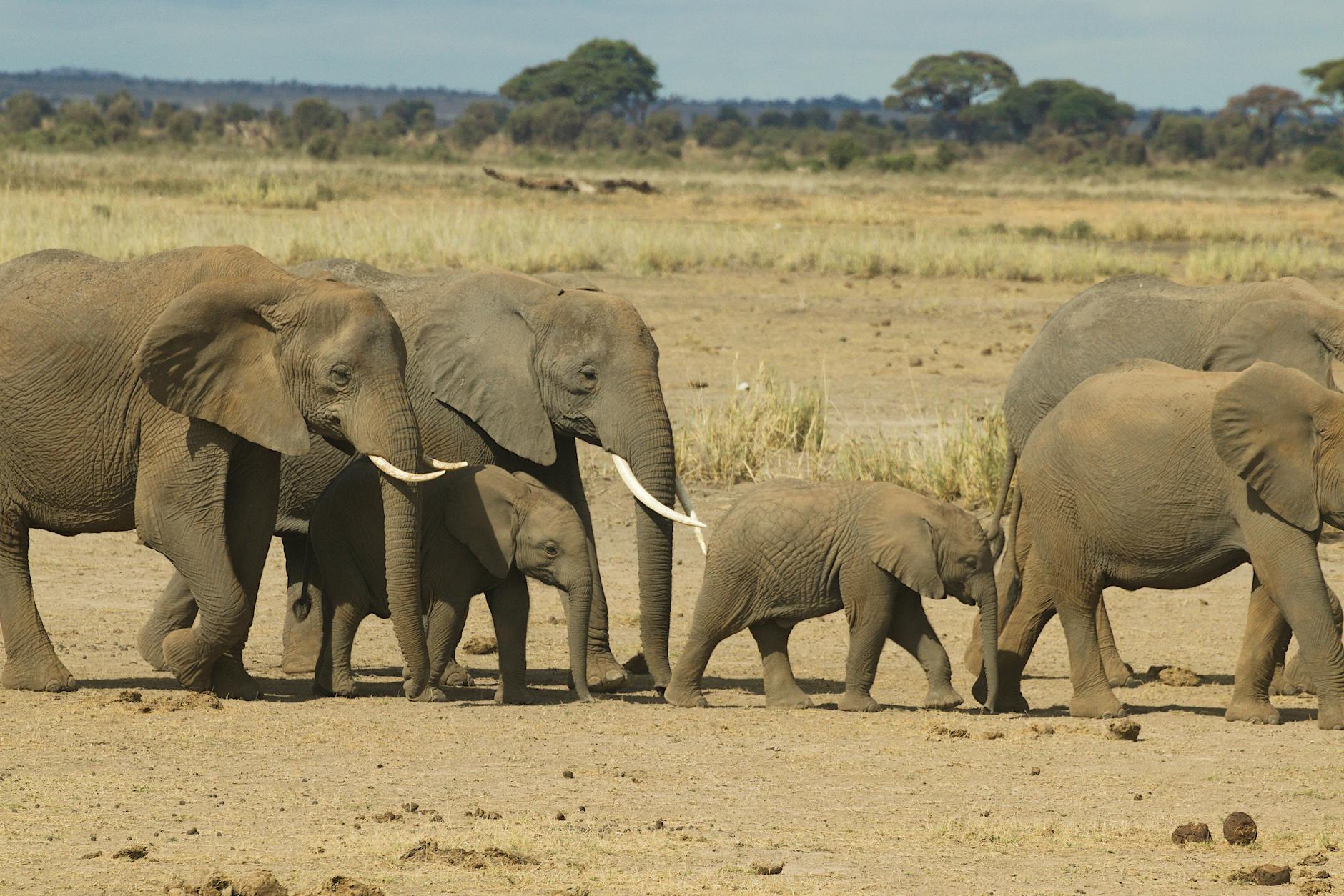
More than 2,000 elephants roam Laikipia’s conservancies, forming part of a larger population that migrates between Mount Kenya’s forests, the Laikipia Plateau, and the Samburu ecosystem to the north. These are the elephants of northern Kenya — often seen in large herds crossing the open plains or congregating along the Ewaso Nyiro River during the dry months. Several conservancies, including Ol Pejeta and Lewa, have invested heavily in elephant research, using GPS collaring and satellite tracking to understand movement patterns and reduce human-wildlife conflict.
Predators: Big Cats and Wild Dogs
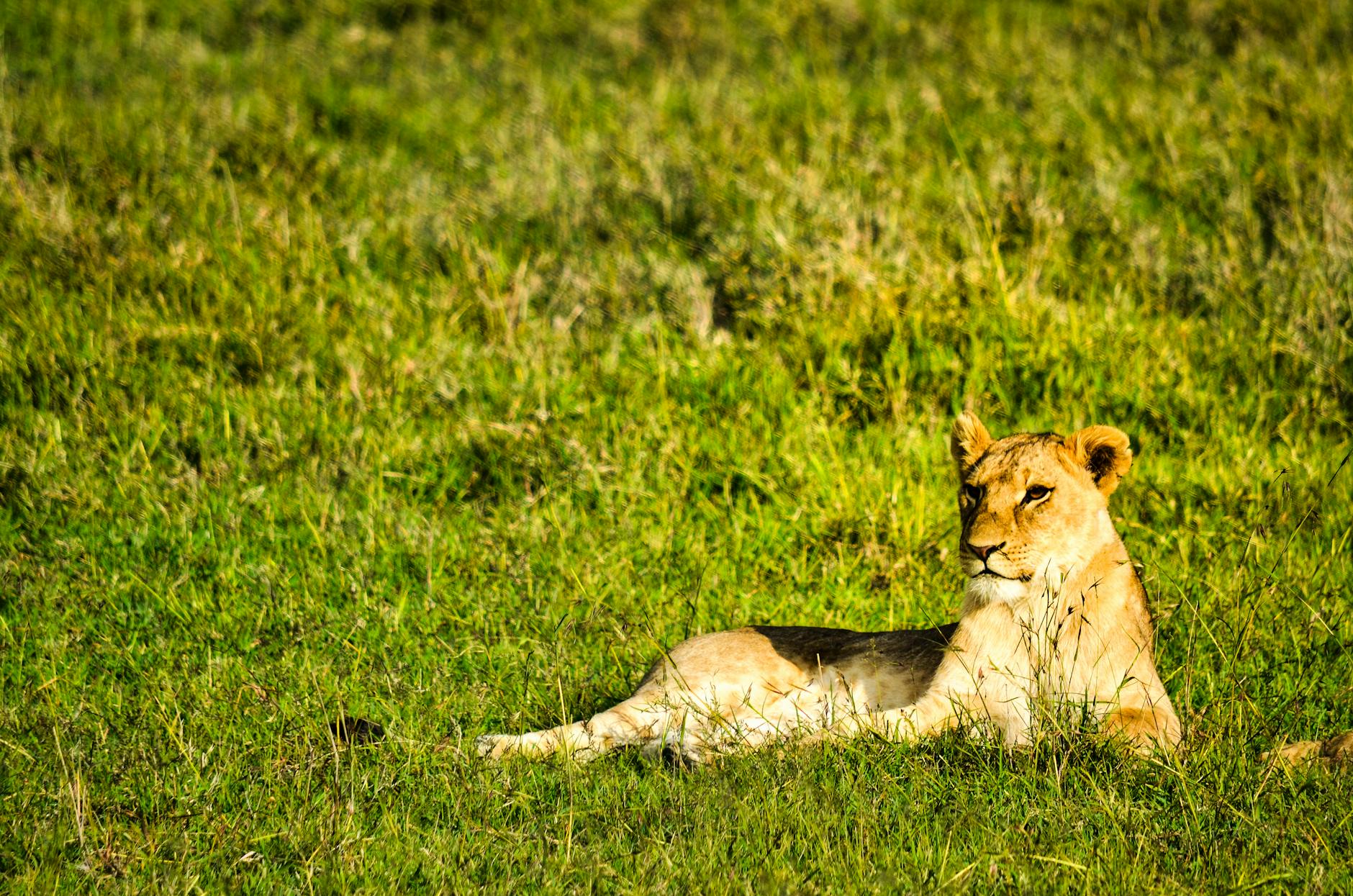
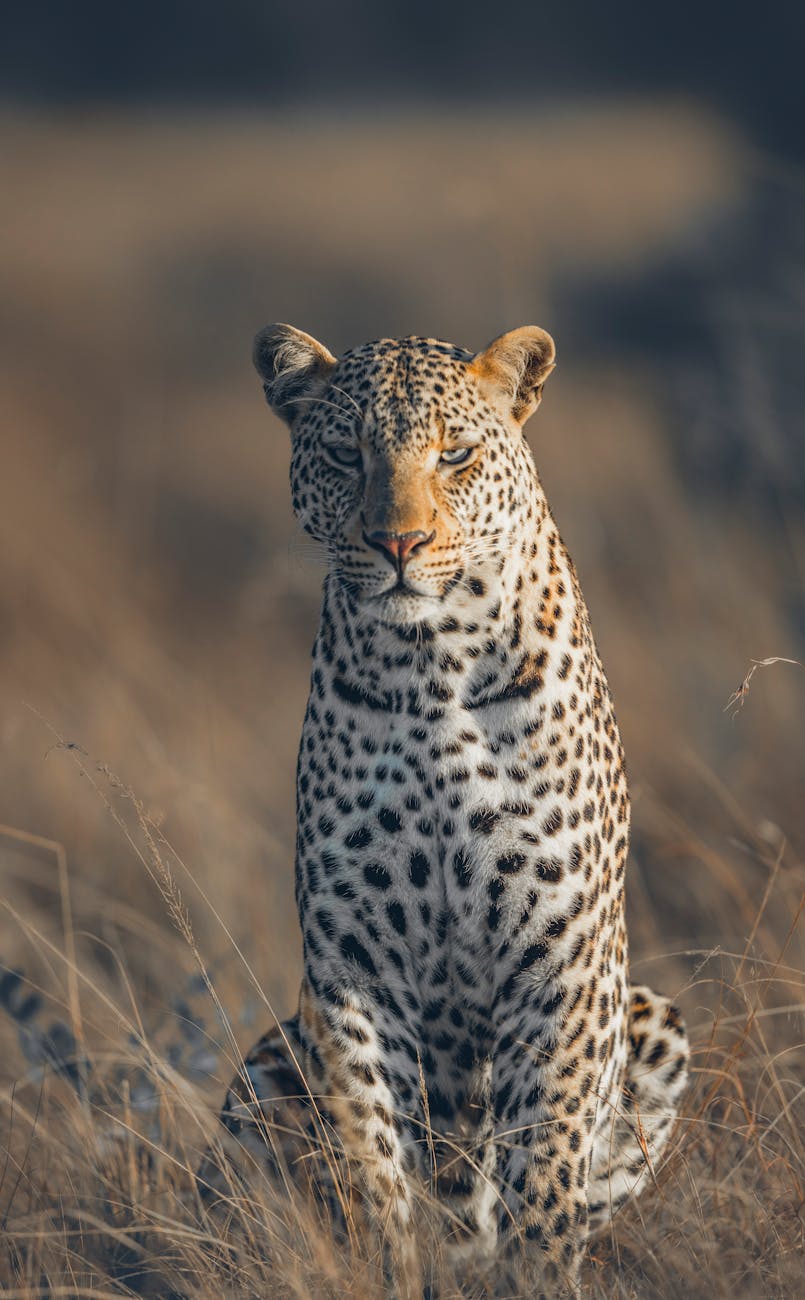
Laikipia supports healthy populations of all three major African predators: lion, leopard, and cheetah. Lion prides hunt across the open grasslands, particularly in Ol Pejeta, Lewa, and Loisaba. Leopards, typically elusive, are seen with remarkable frequency in several conservancies — and Laikipia gained global fame when a melanistic (black) leopard, named Giza, was photographed in the region in 2019, one of the rarest big cat sightings ever documented in Africa.
Spotted hyenas and smaller predators like serval cats, bat-eared foxes, and aardwolves round out the carnivore community. But it is the African wild dog — one of the continent’s most endangered carnivores — that makes Laikipia truly special for wildlife enthusiasts. The plateau is one of the few places in Kenya where wild dogs still maintain viable populations, and sightings, while never guaranteed, are more likely here than almost anywhere else in East Africa.
Rare and Endemic Species
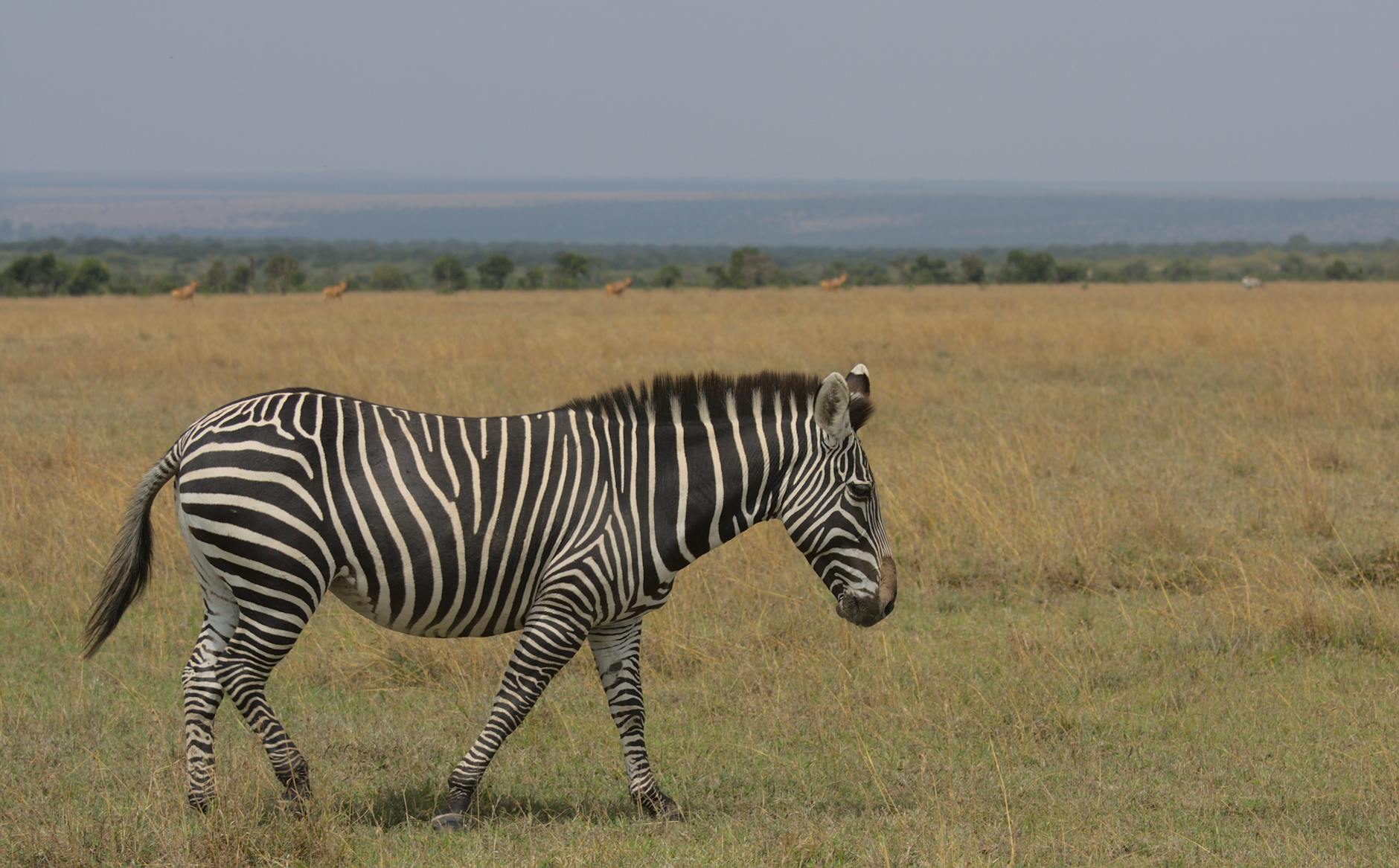
Laikipia’s position at the ecological crossroads between Kenya’s humid highlands and arid north gives it access to species found nowhere else in the country’s southern safari circuit. The Grevy’s zebra — distinguished from the common plains zebra by its narrower stripes and larger body — finds one of its last strongholds here, with Laikipia supporting over 70 percent of the world’s remaining population. Reticulated giraffes, with their sharp geometric coat pattern, replace the Masai giraffe of southern Kenya. Beisa oryx, gerenuk, Jackson’s hartebeest, and the bizarre-looking lesser kudu are all part of the Laikipia fauna. For birders, more than 500 species have been recorded across the region, including northern Kenya specialties like the vulturine guineafowl, Somali ostrich, and golden-breasted starling.
The Conservancies of Laikipia: A Complete Overview
Unlike the Masai Mara or Amboseli, Laikipia is not a single national park or reserve. It is a mosaic of private conservancies, community-owned group ranches, and commercial livestock operations that together form one of Africa’s largest integrated conservation landscapes. The Laikipia Conservancies Association coordinates efforts across more than 20 member conservancies, ensuring landscape connectivity and collective conservation impact.
Understanding this structure is key to planning a Laikipia trip, because each conservancy has its own character, wildlife strengths, activities, and accommodation options.
Ol Pejeta Conservancy
Covering 364 square kilometers between Mount Kenya and the Aberdares, Ol Pejeta is Laikipia’s most visited and most famous conservancy. It is the largest black rhino sanctuary in East Africa, home to the last two northern white rhinos, and the only place in Kenya with a chimpanzee sanctuary (the Sweetwaters Chimpanzee Sanctuary). Ol Pejeta offers Big Five game viewing, walking safaris, lion tracking, and night drives. It is also one of the few conservancies allowing self-drive visits, making it accessible to budget travelers.
Lewa Wildlife Conservancy
A UNESCO World Heritage Site since 2013, Lewa spans 250 square kilometers in the foothills of Mount Kenya and protects approximately 12 percent of Kenya’s total black rhino population. Lewa is equally famous for its Grevy’s zebra conservation and as the home of the annual Lewa Safari Marathon — described as the world’s wildest marathon, run through a rhino and elephant sanctuary. The conservancy pioneered Kenya’s first elephant underpass (beneath the Nanyuki-Meru highway) and maintains extensive community outreach programs.
Loisaba Conservancy
At 57,000 acres in northern Laikipia, Loisaba is both a working cattle ranch and a critical wildlife corridor connecting Laikipia’s central highlands with the Samburu ecosystem. It is particularly renowned for its “star beds” — open-air sleeping platforms that can be wheeled out under the night sky — and for its adventure activities including horseback safaris, camel treks, and mountain biking.
Borana Conservancy
Borana lies adjacent to Lewa and is connected to it by a wildlife corridor that effectively doubles the contiguous habitat available to rhinos, elephants, and other species. The conservancy is known for its striking scenery, excellent rhino viewing, and the award-winning Borana Lodge, which has been recognized as one of the finest safari lodges in Kenya.
Community Conservancies: Il Ngwesi, Ol Lentille, and Beyond
Some of Laikipia’s most meaningful experiences come from its community-owned conservancies. Il Ngwesi, managed by the Laikipiak Maasai community, was one of Kenya’s first community-owned conservancies and its eco-lodge has won numerous awards for sustainable tourism. Ol Lentille, owned by neighboring Samburu and Maasai communities, offers 40,000 acres of unfenced private wilderness and ultra-luxury accommodation. These community conservancies ensure that tourism revenue flows directly to local people — funding schools, clinics, water projects, and anti-poaching patrols.
Other notable conservancies include Solio Ranch (the premier rhino breeding sanctuary), Mugie (an emerging destination with wild dogs and a golf course frequented by giraffes), Segera (a Zeitz Foundation retreat focused on art, conservation, and sustainability), and the remote Lekurruki and Naibunga conservancies in the north, which offer truly off-the-beaten-track safari experiences managed by local communities.
Things to Do in Laikipia: Activities and Experiences
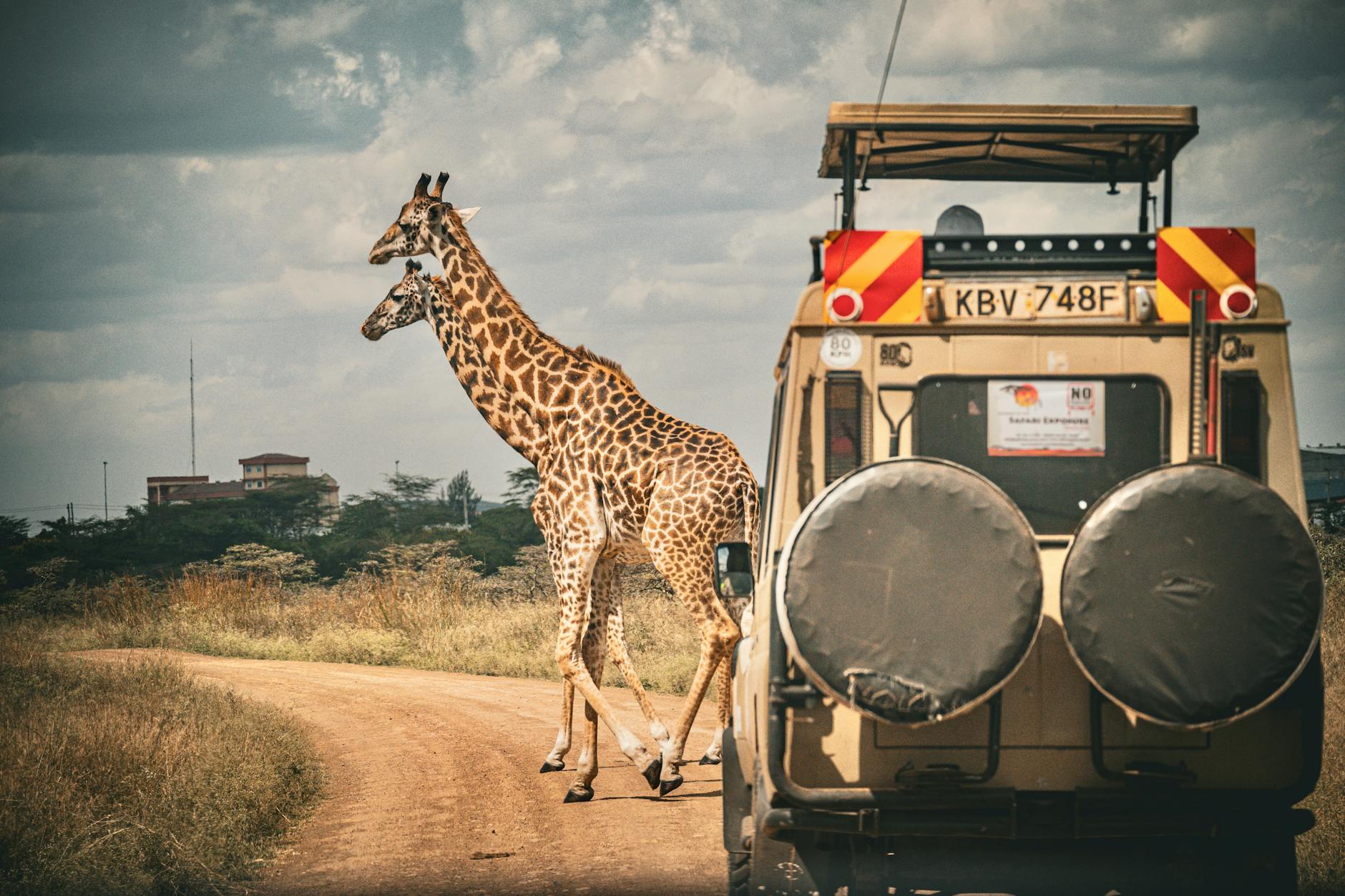
One of Laikipia’s greatest advantages over Kenya’s national parks is the extraordinary range of activities available. Because the land is privately managed, conservancies can offer experiences that are prohibited in government-run parks — night drives, walking safaris, horseback riding, and off-road driving among them.
Game Drives: Day and Night
Classic vehicle-based game drives remain the backbone of any Laikipia safari, but here they come with advantages you will not find in the Mara or Amboseli: off-road driving is permitted (meaning your guide can follow wildlife into the bush rather than staying on established tracks), and night drives open up an entirely different world of nocturnal wildlife — aardvarks, bush babies, porcupines, and leopards on the hunt.
Walking Safaris
Exploring Laikipia on foot is one of the region’s defining experiences. Accompanied by armed guides and Samburu or Maasai trackers, walking safaris let you engage with the landscape at ground level — reading animal tracks, identifying birds by song, understanding the medicinal uses of plants, and feeling the genuine thrill of encountering large animals without the protective shell of a vehicle.
Horse Riding and Camel Trekking
Laikipia is one of East Africa’s premier destinations for horseback safaris. Lodges like Sosian, Ol Malo, and Lewa Wilderness offer rides ranging from morning canters to multi-day riding expeditions, with wildlife largely unconcerned by the presence of horses. Camel trekking — guided by Samburu pastoralists — provides a slower, more meditative way to explore the drylands of northern Laikipia, with multi-day treks traveling from camp to camp under the stars.
Conservation Encounters
Many conservancies offer behind-the-scenes conservation experiences: tracking rhinos with rangers, joining anti-poaching patrols, visiting the northern white rhino enclosure at Ol Pejeta, or spending time at the Sweetwaters Chimpanzee Sanctuary. These experiences provide a deeper understanding of the challenges and triumphs of wildlife conservation in East Africa.
Cultural Experiences
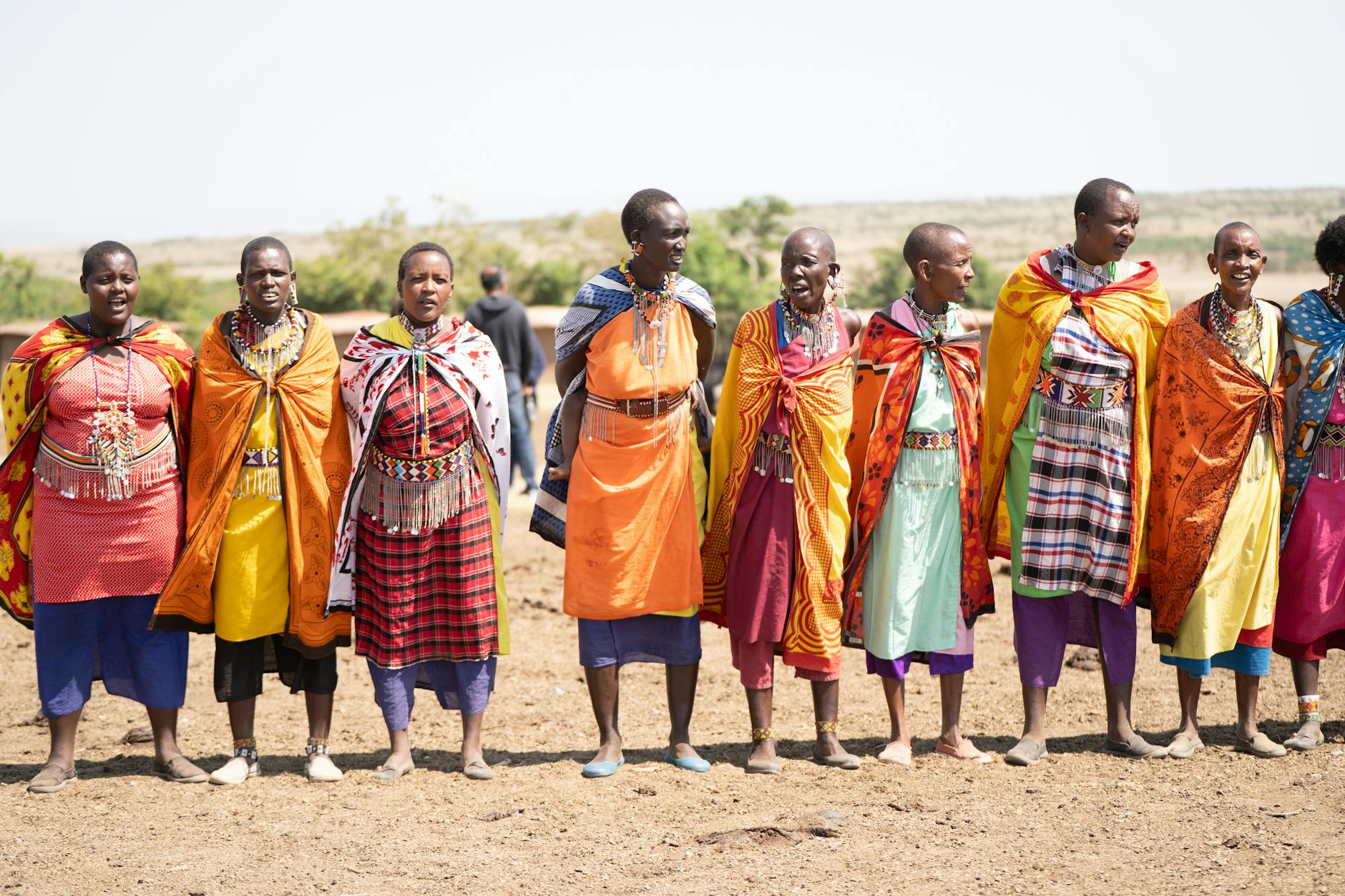
Laikipia’s cultural landscape is as rich as its wildlife. Community conservancies offer authentic interactions with Maasai and Samburu communities — village visits, traditional dancing, beadwork workshops, and the extraordinary “singing wells” ceremony, where Samburu warriors form human chains to draw water from deep wells, singing in hypnotic unison as they work. These are not staged performances but genuine glimpses into traditions that have shaped this landscape for centuries.
Hiking and Nature Walks
Ngare Ndare Forest, on the boundary between Laikipia and Meru counties, offers one of Kenya’s most remarkable outdoor experiences: East Africa’s longest canopy walkway, a 450-meter elevated bridge through the treetops at 10 meters above the forest floor. Below, ancient olive and cedar trees shelter colobus monkeys, while crystal-clear blue pools and waterfalls provide swimming opportunities. Mount Kenya itself is accessible from Nanyuki for day hikes to the lower slopes or multi-day summit attempts.
Where to Stay in Laikipia: Accommodation Overview
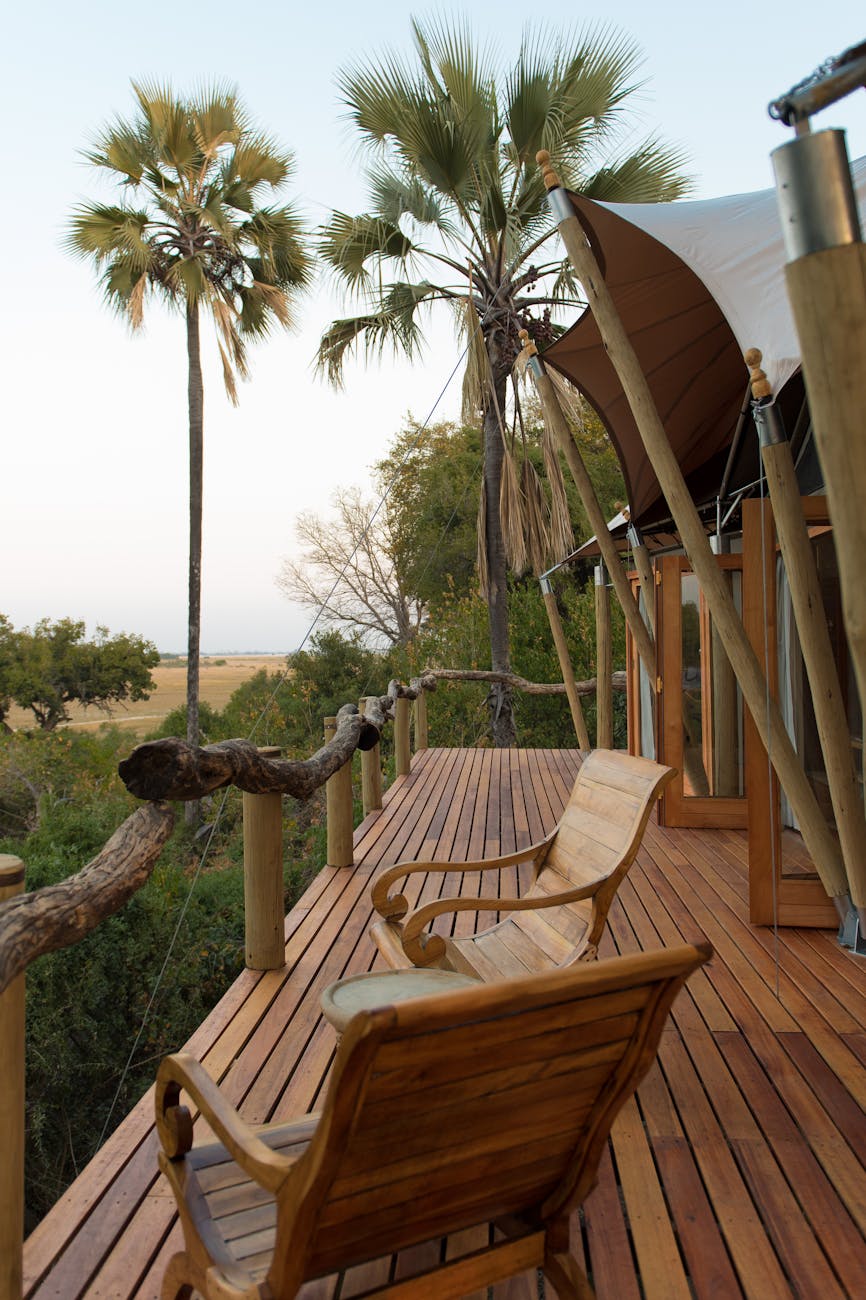
Laikipia’s accommodation ranges from some of Kenya’s most exclusive luxury lodges to community-owned eco-lodges and even budget-friendly tented camps. What unites them all is an ethos of low-impact, high-quality tourism — small guest numbers, intimate settings, and a genuine connection to the landscape and its conservation.
Luxury Lodges
Properties like Segera Retreat, Sirai House, and Ol Lentille cater to travelers seeking exceptional comfort in a wilderness setting. Expect private plunge pools, gourmet dining, extensive wine lists, spa treatments, and highly personalized safari experiences with dedicated guides and vehicles. Nightly rates at this tier typically run from $1,200 to $1,600+ per person sharing, fully inclusive of meals, drinks, activities, and conservancy fees.
Tented Safari Camps
The tented camp is the quintessential East African safari accommodation, and Laikipia has some of the best. Kicheche Laikipia Camp, Ol Pejeta Bush Camp, and Loisaba Tented Camp offer spacious canvas tents with proper beds, en-suite bathrooms, and verandas overlooking the bush. The “star beds” at Loisaba — where your bed is wheeled onto an open platform under the Milky Way — are among the most iconic safari sleeping experiences anywhere in Africa.
Community and Eco-Lodges
For travelers seeking meaningful impact alongside their safari experience, Laikipia’s community lodges offer an unbeatable proposition. Il Ngwesi Lodge (Maasai-owned), Tassia Lodge (community-run in Lekurruki), and camps within the Naibunga conservancies return tourism revenue directly to the communities that manage the land and protect the wildlife.
Budget Options
Laikipia is primarily a mid-range to luxury destination, but budget options do exist. Ol Pejeta is the most accessible conservancy for budget travelers, with affordable camping options and the relatively modest Ol Pejeta Bush Camp. El Karama Lodge offers an exciting safari experience on a working cattle ranch at a fraction of the cost of the premium conservancies. In Nanyuki itself, a range of hotels and guesthouses provide affordable bases for day trips to nearby conservancies.
Best Time to Visit Laikipia
Laikipia sits on the equator, so temperatures remain remarkably consistent year-round — typically in the mid-twenties Celsius (mid-seventies Fahrenheit) during the day, dropping to single digits at night due to the altitude. It is the rainfall, not the temperature, that defines Laikipia’s seasons.
The long rains fall from March to May, with April and May being the wettest months (189mm and 287mm respectively). The short rains arrive from October to December, typically lighter and less disruptive. The dry seasons — June to September and January to February — are considered the best times for wildlife viewing, as animals congregate around permanent water sources and vegetation thins, making them easier to spot.
That said, Laikipia is a year-round destination. The green season (wet months) brings lower prices, fewer visitors, lush landscapes, spectacular lightning storms, and an influx of migratory birds. Many experienced safari travelers deliberately time their visits to the shoulder months (January-February, June, December) for the sweet spot of good wildlife viewing, pleasant weather, and better value.
How to Get to Laikipia
Laikipia is one of Kenya’s most accessible safari destinations, with multiple transport options from Nairobi.
By Air
Scheduled flights operate daily from Nairobi’s Wilson Airport to Nanyuki Airport and directly to several conservancy airstrips. Safarilink and AirKenya connect Nairobi with Nanyuki, Lewa Downs, and Loisaba, with flight times of approximately 45 minutes to one hour. Most lodges and camps arrange transfers from the nearest airstrip as part of your stay.
By Road
The drive from Nairobi to Nanyuki takes approximately three hours on good tarmac roads via the A2 highway. From Nanyuki, onward journeys to specific conservancies vary — Ol Pejeta is just 20-30 minutes away, while more remote properties like Tassia in Lekurruki can take up to six hours of driving on rough tracks. A 4×4 vehicle is strongly recommended for exploring Laikipia beyond the main highways.
The People and Cultures of Laikipia
Laikipia’s human story is as compelling as its wildlife. Three main communities shape the cultural landscape: the Laikipiak Maasai, the Samburu, and the Pokot. All three are pastoralist peoples whose lives revolve around cattle, and whose traditional knowledge of the landscape — water sources, seasonal grazing patterns, wildlife behavior — has proved invaluable to modern conservation efforts.
The Samburu, closely related to the Maasai, maintain a particularly strong cultural identity in northern Laikipia. Their warriors (moran) still undergo traditional rites of passage, and their women are renowned for their elaborate beadwork, each color carrying specific cultural significance. The “singing wells” ceremony — where warriors sing in polyphonic harmony while drawing water for their livestock — is one of East Africa’s most mesmerizing cultural experiences.
Community conservancies have become a bridge between traditional culture and modern economics. By managing and benefiting from tourism on their ancestral lands, communities like Il Ngwesi, Ol Lentille, and Naibunga have found a way to protect wildlife while preserving their cultural heritage and improving livelihoods through schools, clinics, and infrastructure funded by tourism revenue.
Why Choose Laikipia Over Other Kenya Safari Destinations?
Kenya has no shortage of world-class safari destinations, from the Masai Mara’s wildebeest migration to Amboseli’s elephant herds beneath Kilimanjaro. So why should Laikipia be on your radar? Here are the key differentiators.
Exclusivity and low visitor numbers. Laikipia’s conservancies operate on a model of low volume, high value. Where the Masai Mara can feel crowded during peak season — with dozens of vehicles clustered around a single lion pride — Laikipia’s private land means strict limits on guest numbers. You might share a rhino sighting with one other vehicle, or have an entire valley to yourself.
Activity diversity. National parks in Kenya restrict visitors to vehicle-based game drives on established roads. Laikipia’s private conservancies allow walking safaris, night drives, horseback riding, camel treks, mountain biking, and off-road driving — experiences that are simply unavailable in the Mara, Amboseli, or Tsavo.
Conservation impact. Every dollar spent in Laikipia directly funds conservation. The private conservancy model means your accommodation fees pay for ranger salaries, anti-poaching technology, wildlife monitoring, and community development programs. This is not abstract corporate social responsibility — it is the operating model of every conservancy in the region.
Rare species. Laikipia is the only place in East Africa where you can see the last two northern white rhinos, a melanistic (black) leopard, and healthy populations of wild dogs, Grevy’s zebra, and reticulated giraffe — all in the same landscape. For wildlife enthusiasts who have “done the Mara,” Laikipia offers a completely different species portfolio.
Year-round destination. Unlike the Masai Mara, which peaks dramatically during the July-October migration and can feel quiet outside that window, Laikipia’s resident wildlife provides consistently excellent game viewing throughout the year.
Planning Your Laikipia Safari: Practical Information
Visa and Entry Requirements
Kenya now uses an electronic travel authorization (eTA) system, which has replaced the traditional visa. Apply online at least 72 hours before departure. Your passport must have at least six months’ validity and two blank pages. Citizens of most Western countries are eligible for the eTA.
Health and Vaccinations
Yellow fever vaccination is required if arriving from an endemic country. Hepatitis A and B, typhoid, and tetanus vaccinations are strongly recommended. Malaria prophylaxis is essential — Laikipia’s altitude reduces (but does not eliminate) mosquito risk, and you should take antimalarials and use DEET-based repellent.
What to Pack
Laikipia’s altitude means mornings and evenings can be surprisingly cold — pack warm layers alongside your safari neutrals. Key items include binoculars, a camera with a telephoto lens (300mm minimum), sunscreen (SPF 50+), a wide-brimmed hat, and sturdy closed-toe walking shoes. Remember that Kenya bans plastic bags entirely — pack accordingly.
Safari Costs
Laikipia is primarily a mid-range to luxury destination. Budget-level safaris start around $300 per person per day (Ol Pejeta, self-drive or joining options), mid-range runs $500-$800, and luxury properties range from $1,200 to $1,600+ per person per day, fully inclusive. These rates typically cover accommodation, all meals, drinks, game activities, and conservancy fees.
Currency and Tipping
Kenya’s currency is the Kenyan Shilling (KES), but US dollars are widely accepted at lodges and camps. ATMs are available in Nanyuki. Tipping is customary on safari — typical guidelines are $15-$25 per person per day for your safari guide and $10-$15 per person per day for general camp staff, usually pooled into a communal tip box.
Laikipia’s Climate and What to Expect
Understanding Laikipia’s climate is essential for packing appropriately and choosing the right time for your visit. The plateau’s equatorial location combined with its significant altitude (1,700 to 2,600 meters) creates a climate that surprises many first-time visitors.
Daytime temperatures hover between 20 and 28 degrees Celsius throughout the year, but the real variable is what happens after sunset. At altitude, temperatures can plummet to 5 degrees Celsius or lower at night — a dramatic shift that catches many travelers unprepared. This is not the hot, sticky Africa of coastal Kenya or the lowland savannas. Laikipia mornings demand fleece jackets and warm layers, even when the afternoon sun is strong enough for shirtsleeves.
Annual rainfall averages around 700-900mm across most of the plateau, though this varies significantly from east to west. The southeastern areas near Mount Kenya receive considerably more moisture than the arid northern reaches. The long rains (March to May) can make some dirt roads challenging but transform the landscape into a lush green paradise. The short rains (October to December) are generally lighter and less disruptive to travel. During the dry seasons (June to September, January to February), the grass is short, the bush is thin, and wildlife viewing is at its most productive as animals cluster around permanent water sources.
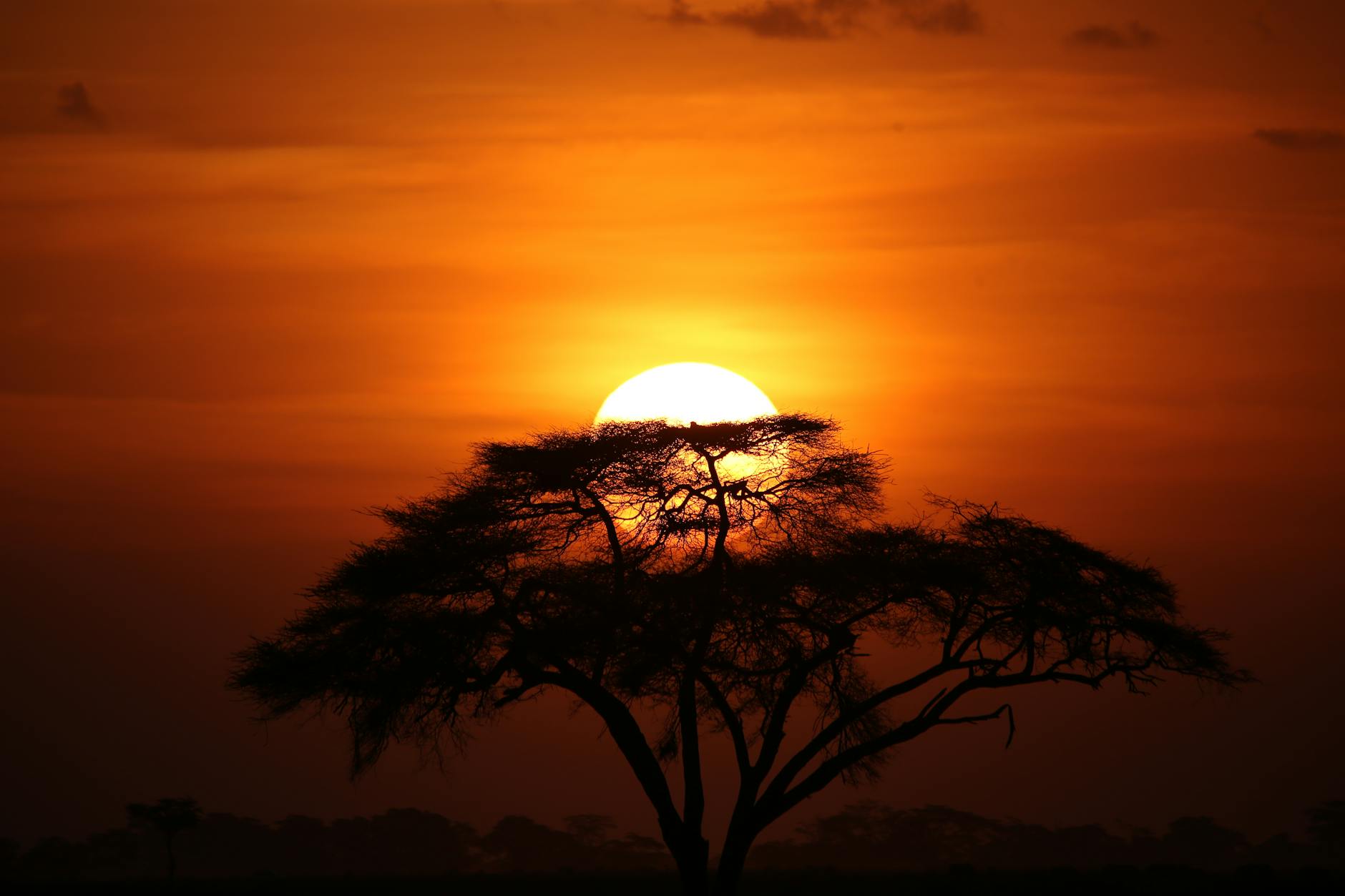
One of Laikipia’s great advantages is that it receives less rainfall than the Masai Mara, meaning that even during “wet” months, entire days of rain are uncommon. Morning showers typically clear by mid-morning, and afternoon thunderstorms, when they occur, are short-lived and spectacular — the kind of dramatic African sky that photographers dream about.
Birdwatching in Laikipia: A Hidden Paradise
While Laikipia’s large mammals rightly dominate the headlines, the region is also one of Kenya’s finest birdwatching destinations. More than 500 species have been recorded across the plateau’s varied habitats, making it a treasure trove for both casual birders and serious ornithologists.
The mix of highland, savanna, riverine, and semi-arid habitats within a relatively compact area means that a single day’s birding in Laikipia can yield an astonishing variety of species. On the open plains, look for secretary birds striding through the grass, martial eagles circling overhead, and the extraordinary vulturine guineafowl — often described as the most beautiful gamebird in Africa — with their cobalt-blue breast feathers and elegant bearing. Near water, African fish eagles, goliath herons, and saddle-billed storks patrol the riverbanks.
The Ngare Ndare Forest and cedar woodlands of southern Laikipia support forest specialists including Hartlaub’s turaco, Narina trogon, and several species of sunbird. Rocky outcrops across the plateau are home to Verreaux’s eagle — one of Africa’s most powerful raptors — and the magnificent Verreaux’s eagle owl, the continent’s largest owl species.
For migrant birders, the period from November to April is particularly rewarding, as European and Palearctic migrants swell the resident populations. Warblers, flycatchers, and raptors from northern Europe pass through or overwinter on the plateau, and many resident species come into breeding plumage during the wet months, adding brilliant splashes of color to the bush.
Photography in Laikipia: Capturing the Perfect Safari Image
Laikipia has earned a growing reputation as one of East Africa’s premier wildlife photography destinations. The combination of rare species, dramatic landscapes, intimate game viewing (with fewer vehicles to obstruct your shot), and the freedom to go off-road creates conditions that photographers find irresistible.
The region’s most famous photographic subject is undoubtedly the melanistic leopard — the black leopard — first captured on camera near Laikipia Wilderness in 2019. While sightings of this extraordinary animal remain exceptionally rare, the camera trap images from Laikipia sparked global fascination and put the region firmly on the wildlife photography map.
Beyond the headline species, Laikipia offers superb opportunities for elephant portraiture (particularly at water crossings on the Ewaso Nyiro), rhino close-ups (Solio and Ol Pejeta allow remarkably close approaches), and dramatic predator-prey interactions on the open plains. The quality of light on the plateau — at altitude, with clear skies and low dust — produces the warm, golden tones that define classic African wildlife photography, particularly during the “golden hours” shortly after sunrise and before sunset.
Several lodges and camps cater specifically to photographers, with dedicated photography vehicles featuring swivel seats, beanbag supports, and specialized guides who understand composition and animal behavior. Laikipia Wilderness Camp and Lewa’s Kifaru House are among the most popular choices for serious wildlife photographers.
Laikipia for Families: A Safari Destination for All Ages
Laikipia is increasingly recognized as one of Kenya’s best safari destinations for families with children. The private conservancy model offers several advantages for traveling families: flexible scheduling (no need to conform to rigid park gate opening times), a wide range of activities beyond vehicle-based game drives (which can test the patience of younger children), and properties that genuinely welcome families with connecting rooms, children’s programs, and dedicated family guides.
Ol Pejeta’s Chimpanzee Sanctuary is a guaranteed hit with children of all ages, while junior ranger programs at camps like Lewa Safari Camp and El Karama teach children to track animals, identify birds, and understand the bush in hands-on ways that create lasting memories. Many camps offer “bush breakfasts” and picnic lunches that turn meals into adventures, and the chance to sleep under the stars at Loisaba’s star beds is the kind of experience that children remember forever.
For families with older children and teenagers, the more adventurous activities — horseback safaris, camel treks, mountain biking, and the Ngare Ndare canopy walk — provide the active, experiential element that keeps teenagers engaged and off their phones. Safety standards across Laikipia’s conservancies are excellent, with experienced guides who are accustomed to adapting their approach for younger guests.
The Laikipia Ecosystem: A Conservation Success Story
Perhaps Laikipia’s most important story is not what visitors see on safari, but the conservation model that makes those sightings possible. In a continent where wildlife is declining almost everywhere, Laikipia stands as proof that a different approach can work.
The region’s conservation model is built on three pillars. First, private landowners who have converted cattle ranches into wildlife conservancies, finding that tourism generates more revenue than livestock while supporting far greater biodiversity. Second, community conservancies where indigenous communities own and manage the land, receiving direct tourism revenue in exchange for protecting wildlife and habitat. Third, the Laikipia Conservancies Association, which coordinates efforts across the landscape, manages wildlife corridors, and ensures that conservation planning happens at a scale that matches the movement of elephants, wild dogs, and other wide-ranging species.
The results speak for themselves. Laikipia’s elephant population has stabilized and is growing. Black rhino numbers have increased dramatically under intensive protection. Wild dogs, once nearly extirpated from the region, are slowly recovering. And the economic model has proved sustainable — tourism revenue funds ranger salaries, anti-poaching technology, community development, and scientific research across a landscape of nearly one million acres.
This is not conservation imposed from above by government decree. It is conservation driven from below by the people who live on the land — and that is what makes Laikipia not just a great safari destination, but one of the most important conservation landscapes in Africa.
For detailed accommodation recommendations across every conservancy and budget level, see our Laikipia Accommodation Guide.
For an in-depth look at every conservancy in the region — including wildlife, accommodation, activities, and conservation impact — see our Complete Guide to Laikipia Conservancies.
For a deeper dive into the safari experience itself — including detailed guides to game drives, walking safaris, night drives, horseback riding, and all the wildlife you can expect to see — explore our comprehensive Laikipia Safari Guide.
Laikipia Kenya: Your Safari Starts Here
Laikipia is not just another Kenya safari destination — it is a fundamentally different approach to wildlife tourism. Here, conservation is not a marketing slogan but the economic engine that sustains an entire landscape. Here, communities are not spectators to tourism but its owners and operators. Here, the safari experience is defined not by the number of vehicles around a sighting but by the intimacy of the encounter — a walking guide pointing out elephant tracks in the red earth, a Samburu warrior explaining the stars over a campfire, a black rhino grazing peacefully within arm’s reach of your vehicle.
Whether you come for the rhinos, the wild dogs, the horseback safaris, the star beds, or the chance to see one of Africa’s rarest melanistic leopards, Laikipia will reward you with experiences that linger long after you leave. This is Kenya’s best-kept secret — but it will not stay secret forever.
Start planning your Laikipia adventure today, and discover why this extraordinary corner of Kenya is fast becoming the destination of choice for travelers who want their safari to mean something more.
Leave a Reply