Last updated: June 2026
Here is a fact that surprises almost everyone: chimpanzees are not native to Kenya. There are no wild chimps anywhere in the country — and yet, on the plains of Ol Pejeta Conservancy in Laikipia, you can sit a few metres from a troop of more than forty of them. The Ol Pejeta Chimpanzee Sanctuary, originally known as Sweetwaters, is the only place in Kenya you’ll ever see a chimpanzee, and it exists for a heartbreaking and hopeful reason: it is a permanent refuge for great apes rescued from the illegal pet and bushmeat trade. Visiting is one of the most moving things you can do in Laikipia, and this guide tells you everything you need to plan it.
What Is the Ol Pejeta Chimpanzee Sanctuary?
The sanctuary was established in 1993 as a partnership between the Kenya Wildlife Service, the Ol Pejeta Conservancy and the Jane Goodall Institute. Its purpose has never been tourism — it is, first and foremost, a sanctuary for chimpanzees that can never be returned to the wild. The residents arrive having been confiscated from smugglers, rescued from grim captivity as pets or entertainment props, or orphaned by the bushmeat trade, many of them from war-torn parts of Central and West Africa where chimps actually live.
Here, in two large, naturally vegetated enclosures separated by the Ewaso Nyiro River, more than forty chimpanzees live out their lives in something close to dignity — in social groups, with space, enrichment and expert veterinary care. Some have been here for decades. Watching them groom, squabble, play and simply be is a powerful reminder of how like us they are, and of what the wildlife trade costs. The sanctuary’s work sits within Ol Pejeta’s broader conservation mission, which we explore in our guides to Ol Pejeta Conservancy and conservation experiences in Laikipia.
The Chimps and Their Stories
Part of what makes a visit so affecting is that the keepers know every individual and will share their histories. There are chimps who arrived as traumatised, hairless infants and grew into confident group members; rescued individuals who travelled thousands of kilometres from Burundi and beyond; and elderly residents who have become the matriarchs and patriarchs of their troops. The guides explain chimp social structure, communication and personality, and you quickly start recognising individuals by face and behaviour. It is, quietly, one of the best wildlife-education experiences in Kenya — and superb for older children. See our Laikipia family safari guide for visiting with kids.

Visiting Hours and Feeding Times
The sanctuary is open daily, generally from around 08:30 to 12:30 and again from 14:00 to 16:30, closing over the middle of the day. The best time to visit is around the chimps’ set feeding times, when the animals come close to the viewing areas and are at their most active and visible — keepers scatter and hand out food, and you can watch the troop interact at close range from the viewing platform and along the chimp walk. Confirm the current feeding schedule when you arrive or when you book, as times can shift.
Allow an hour to ninety minutes for a proper visit. Mornings tend to be cooler and the chimps more lively, which also suits photography — bring a zoom lens, as you’re kept at a respectful distance for everyone’s safety. For technique, see our wildlife photography guide.
Entry Fees and How to Visit
The sanctuary lies inside Ol Pejeta Conservancy, so access is tied to conservancy entry. If you have already paid Ol Pejeta’s conservancy fee — whether as a day visitor or a staying guest — entry to the chimpanzee sanctuary is generally included at no extra charge, which makes it superb value as part of an Ol Pejeta day. Standalone or specialist arrangements can carry their own fee, and rates differ for non-residents, residents and citizens.
Because fees are revised periodically, always confirm the current conservancy entry and any sanctuary charges at the time of booking. For how this fits into a wider budget, see our detailed Laikipia safari cost guide and our breakdown of conservancy fees.
Getting There
Ol Pejeta — and the sanctuary with it — sits in central Laikipia, about 30 minutes by road from Nanyuki, which is itself reachable by a short flight or a roughly three-to-four-hour drive from Nairobi. Most visitors come either as a day trip from Nanyuki or as part of a stay on Ol Pejeta or a neighbouring conservancy. For routes, flights and transfers, see our guides to planning your Laikipia trip and the best places to stay.

The Jane Goodall Connection
The sanctuary’s partnership with the Jane Goodall Institute is central to its identity. Dr Jane Goodall — the world’s foremost authority on chimpanzees, whose pioneering work in Tanzania’s Gombe transformed our understanding of the species — lent her institute’s expertise to establishing and shaping Sweetwaters. That heritage shows in the standard of care and in the educational ethos of the place: the goal is not to entertain but to rehabilitate where possible, to house with dignity where not, and to teach every visitor why chimps belong in the wild and never in cages or living rooms. It’s a lineage that gives the sanctuary real authority among primate refuges.
How the Chimps End Up Here
Every resident is a survivor of something grim, and understanding how they arrive deepens the visit. Chimpanzees are still poached across Central and West Africa for the illegal pet trade and for bushmeat; infants are often taken after their mothers are killed, then smuggled across borders. When such animals are confiscated by authorities or rescued from captivity, they need a permanent home — they cannot simply be released, having lost the skills, the troop and, often, the wild population to return to. Sweetwaters takes them in. Some arrived directly from confiscations in Kenya; others were relocated from overwhelmed facilities in countries like Burundi. The result is a troop of individuals from across the continent, living safely on the Laikipia plains far from where their species naturally occurs — a bittersweet arrangement that is nonetheless the best possible outcome for animals who can never go home.
What You’ll See on the Visit
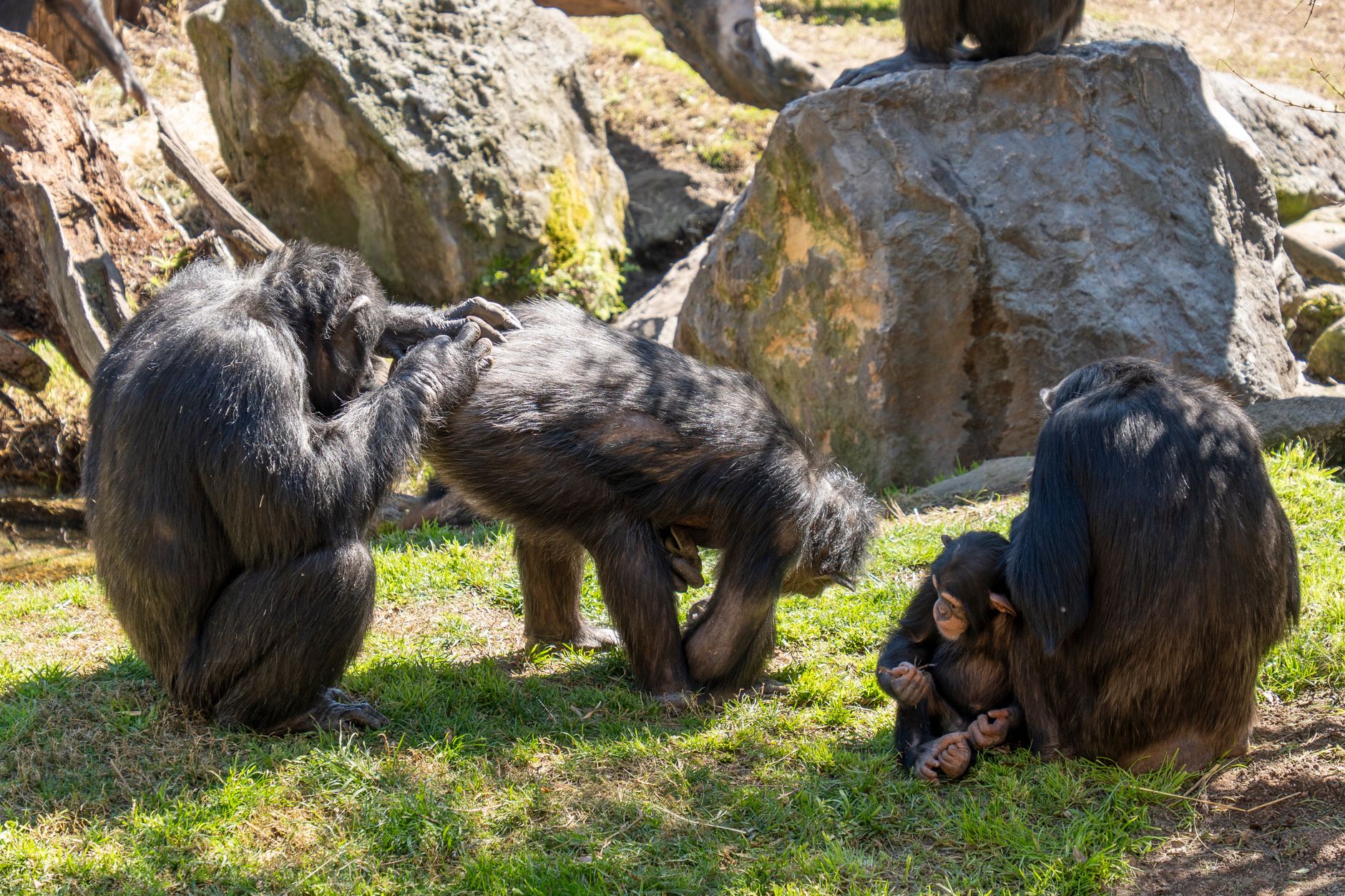
The sanctuary is divided into two large, naturally vegetated enclosures on either side of the Ewaso Nyiro River, each home to a social group. From the viewing platform and along the fence line of the chimp walk, you’ll watch the troop do what chimps do — groom one another in long, companionable sessions, squabble noisily over rank and food, the youngsters tumbling and showing off, the big males making impressive displays. Keepers point out individuals by name and personality, and around feeding time the animals come close, giving superb views of their expressive faces and astonishingly human hands. It’s absorbing in a way that surprises people who came expecting a quick look — most visitors find themselves rooted to the spot, watching the soap opera of chimp society unfold.
Chimpanzees: Our Closest Cousins
Part of what makes the sanctuary so affecting is simply how like us chimpanzees are. They share around 98–99% of our DNA, making them, with bonobos, our closest living relatives. They use tools, recognise themselves in mirrors, form deep and lasting friendships, wage something disturbingly like warfare, console one another in distress, and pass cultural behaviours down the generations. Watching a mother fuss over an infant, or two old friends groom in the sun, the kinship is unmistakable and a little uncanny. In the wild, chimps live in fission-fusion communities across the forests of Central and West Africa, but they are endangered there, their numbers falling under pressure from habitat loss, disease and the very trades that delivered Sweetwaters’ residents to safety. Understanding them as individuals — intelligent, emotional, autonomous — is exactly the shift the sanctuary hopes you’ll take home.
The Sweetwaters Story
The sanctuary began in 1993 with a small group of rescued chimpanzees and has grown into a refuge for more than forty animals. Its founding brought together the Kenya Wildlife Service, the Ol Pejeta (then Sweetwaters) management and the Jane Goodall Institute, and over three decades it has taken in chimps from confiscations and from overwhelmed facilities elsewhere in Africa, including a notable group relocated from Burundi amid civil unrest. The two riverside enclosures were designed to mimic natural forest as far as possible, giving the animals room to range, climb, forage and form functional social groups. The work is expensive and permanent — these animals will live out their natural lives here, some reaching well into their forties and beyond — and it stands as one of the longest-running great-ape sanctuaries in East Africa. It’s a quietly remarkable institution, and your visit is part of what sustains it.
Responsible Primate Tourism
Because chimps are so susceptible to human diseases — a common cold can be deadly to them — responsible viewing protocols matter. You’ll be kept at a respectful distance, viewing from platforms and across barriers rather than entering enclosures, and you should never attempt to touch, feed or hand anything to the animals. If you’re feeling unwell, it’s genuinely kinder to skip the visit. Flash photography is not allowed, and you should keep noise down so as not to stress the troop. These aren’t bureaucratic rules; they’re the difference between tourism that helps and tourism that harms. Done right, your visit funds care and education while leaving the chimps healthier and calmer — the model of how primate tourism should work, and a theme we return to across our conservation tourism coverage.
How the Sanctuary Helps Chimpanzees
Visiting is not just a great morning out — it directly funds the care of the residents and the sanctuary’s wider conservation messaging. Every chimp here represents a survivor of the illegal wildlife trade, and the cost of feeding, housing and providing lifelong veterinary care for more than forty large primates is substantial. Tourism revenue, alongside donations, keeps the sanctuary running, and the education that visitors take home — that chimps are not pets, that the bushmeat and exotic-pet trades are devastating — is part of the mission. It’s conservation tourism at its most tangible, a theme we explore across our conservation and community tourism coverage.
Combining Your Visit
The sanctuary slots beautifully into a wider Ol Pejeta or Laikipia day. Pair it with rhino tracking on foot, a visit to the world’s last two northern white rhinos, a classic game drive across the conservancy, or a stop at the Nanyuki equator on the way through. For a full day’s inspiration, see our roundup of things to do in Laikipia.
Visitor Tips
Time your visit around feeding. This is when the chimps are closest and most active — ask for the day’s schedule and plan around it.
Keep your distance and your voice down. The animals are wild and powerful; viewing is from designated areas for your safety and their wellbeing. Never tease or try to feed them.
Bring a zoom lens. You’ll want reach for portraits, and flash is not permitted.
Combine it with the conservancy. Since entry is generally included with your Ol Pejeta fee, build a full day around it rather than visiting in isolation.
Listen to the keepers. Their individual stories of the chimps are the real magic of the visit — give yourself time to hear them.
Best Time to Visit and What to Pair It With
The sanctuary is rewarding year-round, since the chimps are resident and viewing doesn’t depend on the seasons the way game drives do. That said, the cooler mornings of the dry season tend to see the most active behaviour, and timing your visit to a feeding session is far more important than the month. Because the sanctuary sits inside Ol Pejeta, it slots naturally into a day that also takes in a game drive, rhino tracking and the northern white rhinos — one of the richest single days available anywhere in Kenya. Families in particular find the chimps a perfect complement to the conservancy’s other draws; see our family safari guide.
Supporting the Chimps Beyond a Visit
If the residents capture your heart — and they tend to — there are ways to help beyond the entry fee. Many great-ape sanctuaries, Sweetwaters included, run adoption or sponsorship schemes that let you symbolically support a named chimp’s food and care, often a lovely gift for an animal-loving child back home. Donations fund the veterinary care, enclosure maintenance and food bills that keep the sanctuary running for animals who will live here for decades. And perhaps the most valuable thing you can do costs nothing: take home and share the sanctuary’s core message — that chimpanzees are wild animals, not pets or props, and that the trades which delivered these individuals into captivity persist because of demand. Spreading that understanding is part of the conservation mission, as we discuss across our conservation tourism coverage.
Why the Sanctuary Matters
It would be easy to file the chimpanzee sanctuary under “nice add-on,” but it deserves more than that. In a country with no wild chimpanzees, it stands as both a refuge and a statement — proof that there is a place willing to take responsibility for the casualties of the wildlife trade, and a window through which thousands of visitors a year come to understand great apes as the intelligent, emotional beings they are. The animals here didn’t choose to leave the forests of Central Africa; they were taken. Giving them a dignified, well-cared-for life, and turning their stories into education and funding for conservation, is a small act of repair. That’s why a visit feels different from ordinary wildlife viewing, and why it tends to stay with people long after they’ve left Laikipia.
Frequently Asked Questions
Where can you see chimpanzees in Kenya?
Only at the Ol Pejeta (Sweetwaters) Chimpanzee Sanctuary in Laikipia. Chimpanzees are not native to Kenya, so this sanctuary — a refuge for rescued chimps — is the only place in the country to see them.
How much does it cost to visit the Ol Pejeta Chimpanzee Sanctuary?
The sanctuary is inside Ol Pejeta Conservancy, and entry is generally included once you’ve paid the conservancy fee, whether as a day visitor or staying guest. Rates vary for non-residents, residents and citizens and change periodically, so confirm current fees when booking. See our cost guide for detail.
What are the chimpanzee sanctuary opening and feeding times?
It’s typically open daily, around 08:30–12:30 and 14:00–16:30. Visiting near the set feeding times is best, as the chimps come close to the viewing areas and are most active. Confirm the current schedule on arrival.
Why are there chimpanzees at Ol Pejeta if they’re not native to Kenya?
The sanctuary, founded in 1993 with the Jane Goodall Institute and Kenya Wildlife Service, is a permanent home for chimps rescued from the illegal pet and bushmeat trade across Central and West Africa. They cannot be released into the wild, so the sanctuary provides lifelong care.
How long does a visit take?
Allow about one to one-and-a-half hours. It pairs naturally with other Ol Pejeta activities such as rhino tracking and game drives for a full day on the conservancy.
The chimpanzee sanctuary is one of Laikipia’s most meaningful experiences. Plan a full day around it with our guide to things to do in Laikipia and the complete guide to Laikipia Kenya.