Last updated: June 2026

There is a moment on a rhino-tracking walk in Laikipia that rearranges how you think about safari. You have left the vehicle behind. A ranger crouches, reads the telemetry receiver clicking faintly in his hand, then points with his chin toward a thornbush two hundred metres off — and a black rhino, an animal most visitors only ever glimpse as a grey smudge across a plain, materialises in front of you on foot. You are not watching wildlife. You are, for an hour or two, part of the team that keeps it alive. That is what a conservation experience in Laikipia actually is, and it is the single most under-rated thing to do on this plateau.
Laikipia is unusual among Kenya’s safari regions because conservation here is not a backdrop — it is the business. Most of the land you will travel through is privately or community-owned conservancy rather than national park, and the people protecting it have, over the last three decades, built some of the most sophisticated wildlife-security operations in Africa. Increasingly, they let visitors in behind the scenes. This guide walks you through every conservation experience worth your time in Laikipia: rhino tracking on foot, anti-poaching dog demonstrations, wildlife monitoring with researchers, endangered-species programmes, and the hands-on volunteering options — plus what each costs, where to do it, and how to choose.
Why Laikipia Is Kenya’s Conservation Heartland
To understand why these experiences exist here and almost nowhere else, you need a little context. After Kenya banned big-game hunting in 1977, the vast cattle ranches of the Laikipia plateau had to find a new economic model. Many of them turned to wildlife — and discovered that the land between Mount Kenya and the northern frontier held extraordinary numbers of it. Today Laikipia holds roughly half of Kenya’s black rhino population and is the global stronghold for the endangered Grevy’s zebra, alongside elephant, lion, wild dog and the full northern-species suite. You can read the fuller story in our guide to the Laikipia conservation and community tourism model and the region’s endangered species.
What matters for visitors is this: protecting rhino and elephant in open, unfenced or semi-fenced landscapes is enormously expensive and labour-intensive. Ol Pejeta alone spends well over two million US dollars a year on security. That money comes substantially from tourism — and the conservation experiences below are designed precisely so that your visit funds the work you are watching. When you pay to track a rhino, you are paying the rangers who track that rhino every single day.
Rhino Tracking on Foot
If you do one conservation activity in Laikipia, make it this. Rhino tracking puts you alongside the monitoring teams who account for every individual rhino on the conservancy, and it is the experience that most reliably leaves people quiet for the rest of the day.
The mechanics are genuinely fascinating. Many of Laikipia’s rhinos carry VHF or satellite transmitters, and every animal is identified by its unique pattern of ear-notches. On Ol Pejeta, the sighting policy is rigorous — every rhino must be physically observed every few days, or an alert is raised. You head out with a ranger carrying a telemetry receiver, “ping” the animal’s location as the signal strengthens, then approach carefully on foot, downwind, until you are close enough to watch a two-tonne creature graze in complete wild freedom. The ranger explains how they read the notches, why this particular individual matters genetically, and what the day-to-day threats actually are.
This is also the closest most travellers will come to the world’s last two northern white rhinos, Najin and Fatu, who live under 24-hour armed guard on Ol Pejeta. Visits to them are managed separately and carry a premium fee that goes directly to the groundbreaking effort to save the subspecies through IVF — a story we cover in detail in our piece on the last northern white rhinos.

Where to do it: Ol Pejeta is the most accessible and best-organised for day visitors. Lewa, Borana and Solio also run rhino-focused activities, usually for guests staying on the conservancy.
What it costs: Expect to pay roughly US$50–110 per person for a standard rhino-tracking session on Ol Pejeta (on top of conservancy entry), with premium northern-white-rhino encounters costing more. Prices shift year to year, so confirm at booking — and see our full breakdown of Laikipia safari costs.
Anti-Poaching Dog Units
The canine units are the crowd-pleaser, and deservedly so. Laikipia’s conservancies run some of the most effective tracker-dog programmes in East Africa, and several open a demonstration to visitors. The dogs — usually bloodhounds for tracking and Belgian Malinois for apprehension — are trained to follow a human scent trail for kilometres, detect ivory and bushmeat, and back up rangers on patrol. The Lewa-based unit has tracked not only poachers but lost children and stolen livestock.
In a typical demonstration, a handler sends you off to “hide” or lay a scent trail across the bush; minutes later the hound is unleashed, nose down, and tracks you down with an accuracy that is genuinely startling to watch. The handlers are superb storytellers, and children are mesmerised — this is one of the best family safari activities in the region. Behind the spectacle is a serious point: the mere existence of these dogs is a powerful deterrent, and they have transformed conviction rates.
Where to do it: Ol Pejeta runs a popular interactive dog-tracking simulation; Lewa and Borana operate renowned units accessible primarily to staying guests.
Wildlife Monitoring and Research
For travellers who want to go deeper than a single activity, several conservancies let you shadow the researchers and ecological-monitoring teams whose data underpins everything. Depending on the property and the season, this might mean joining a Grevy’s zebra census (each animal identified by its unique stripe pattern, photographed and logged), helping download data from camera traps, accompanying the team that fits and monitors lion or wild-dog collars, or sitting in on the predator-monitoring work that tracks every big cat on the land.
Ol Pejeta’s endangered-species work — including its wild-dog and lion programmes — is particularly open to interested guests, and Lewa’s research department has decades of long-term datasets that the guides love to explain. If wildlife photography is your angle, monitoring drives often reach animals and situations a normal game drive never would; pair this with our Laikipia wildlife photography guide.

Behind-the-Scenes at the Chimpanzee Sanctuary
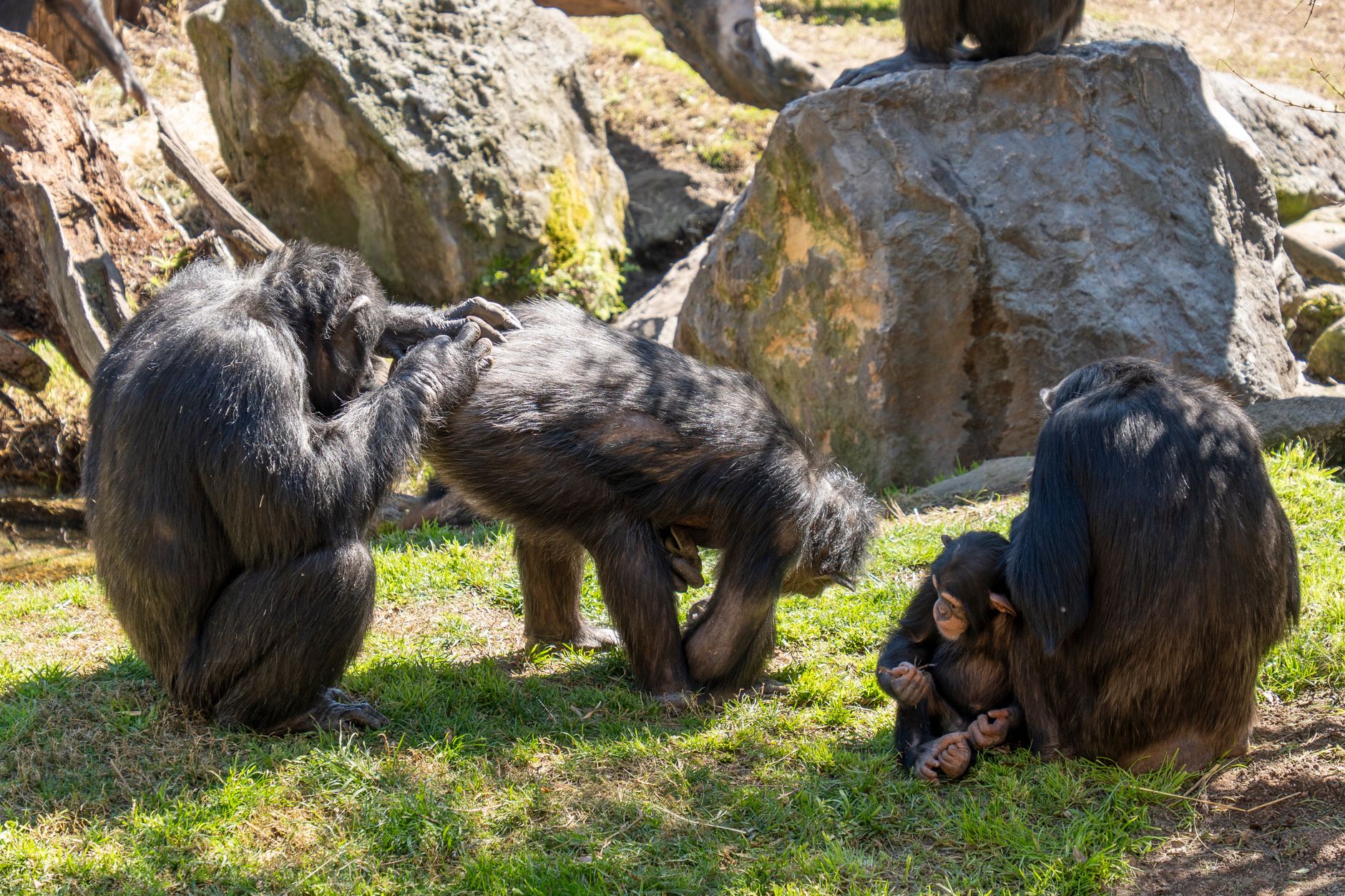
Ol Pejeta is the only place in Kenya you can see chimpanzees, at the Sweetwaters Chimpanzee Sanctuary — a refuge for great apes rescued from the illegal trade. Beyond the standard viewing, behind-the-scenes tours let you meet the keepers, learn individual chimps’ rescue stories, and understand the daily care of more than forty animals that can never be returned to the wild. It is moving, educational and a natural add-on to a conservation-themed day. We cover it fully in our dedicated guide to the Ol Pejeta Chimpanzee Sanctuary.
Volunteering and Longer Conservation Stays
If a half-day isn’t enough, Laikipia offers structured volunteering and conservation-immersion programmes ranging from a few days to several weeks. These can involve habitat work, community-education projects, research assistance and ranger support. They are best arranged well in advance through the conservancies or specialist operators, and they suit gap-year travellers, students and anyone wanting a working holiday with genuine purpose. We go into the options — and how to vet them — in our article on conservation and community tourism in Laikipia.
Conservation Experiences Conservancy by Conservancy
Where you base yourself shapes which experiences are open to you. Here’s a quick orientation to the main players.
Ol Pejeta is the most accessible and the best all-rounder for conservation experiences. As a day visitor or staying guest you can track rhino on foot, join the anti-poaching dog demonstration, visit the northern white rhinos, tour the endangered-species programmes and spend time at the chimpanzee sanctuary — all in one place, half an hour from Nanyuki. It is the single easiest conservation day in Kenya to organise.
Lewa Wildlife Conservancy, a UNESCO World Heritage Site, runs decades-deep research and one of the most celebrated tracker-dog units in Africa. Its conservation activities — rhino monitoring, anti-poaching insight, community-conservation visits — are largely reserved for guests staying on the conservancy, which keeps numbers low and the experience intimate.
Borana shares an unfenced boundary with Lewa, and the two operate as a single rhino landscape. Staying here gives access to rhino-focused activities and a working-conservancy atmosphere, often combined with riding and walking.
Solio is one of Kenya’s original and most successful private rhino sanctuaries, with exceptional rhino densities — a superb, lower-key place to understand rhino recovery up close.
Loisaba and the northern community conservancies layer conservation onto a more adventurous, big-wilderness experience, and are especially strong on the community side of the story — how tourism revenue reaches and empowers local people, which we explore in our conservation and community tourism guide.
The Species Your Visit Protects
It helps to know what, exactly, your money is defending. Laikipia is the global stronghold for several of Africa’s most threatened animals, and the conservation experiences above exist to protect them.
The black rhino is the headline. Critically endangered and worth a fortune to poachers for its horn, it survives in Kenya largely because of Laikipia’s intensively protected sanctuaries — Ol Pejeta holds East Africa’s largest population. The Grevy’s zebra, the largest and most endangered of the world’s zebras with its narrow stripes and huge rounded ears, has its global stronghold here; conservancies run an annual census in which visitors sometimes assist. The African wild dog, one of the continent’s rarest carnivores, hunts across the Laikipia plains in painted packs, and reticulated giraffe, also endangered, are common. And then there are Najin and Fatu, the world’s last two northern white rhinos, whose survival as a subspecies now rests on cutting-edge science being pioneered on Ol Pejeta. Learn more in our guide to Laikipia’s endangered species.
A Morning Tracking Rhino: What It’s Really Like
To give you a feel for it: you set out shortly after dawn, while the grass is still wet and the air cold enough for a fleece. The ranger checks the wind, then raises the telemetry antenna and sweeps it slowly across the horizon until the receiver’s beep quickens — that’s your rhino. You walk, quietly and in single file, the guide reading fresh tracks and dung as you go, explaining how the team knows each animal. The approach is patient and always into the wind, because a rhino’s eyesight is poor but its hearing and smell are excellent. And then, suddenly, there it is: a black rhino grazing in the open, ancient and armoured and utterly indifferent to your presence. You watch in silence for as long as the animal is comfortable, the ranger judging the distance constantly. Walking back, nobody says much. It tends to be the moment people remember longest from their whole trip.
A Short History of Conservation in Laikipia
The conservation experiences you can buy today are the visible tip of a fifty-year story. When Kenya banned big-game hunting in 1977, the great Laikipia ranches lost a chunk of their income overnight and had to reinvent themselves. A handful of pioneering landowners and communities made a radical bet: that protecting wildlife and inviting paying guests to see it could be more valuable, and more durable, than cattle alone. Through the 1980s and 1990s, ranches such as Solio proved that private rhino sanctuaries could work spectacularly, while properties like Lewa evolved from cattle operations into world-renowned conservancies. The community conservancy movement followed, giving pastoralist communities a direct financial stake in the wildlife on their land. The Laikipia Conservancies Association now coordinates much of this work across the plateau. The upshot for a visitor is profound: when you track a rhino or watch the dog unit train, you’re not observing a zoo exhibit but participating in one of the most successful grassroots conservation experiments in Africa. We tell the fuller story in our guide to conservation and community tourism and the history of Laikipia.
Citizen Science: How Visitors Contribute Data
Increasingly, conservation experiences in Laikipia aren’t just observational — guests genuinely contribute. On the annual Great Grevy’s Rally, for instance, visitors and researchers photograph zebras across the region, and software identifies each individual by its unique stripe pattern to produce a population census. On rhino-monitoring outings, the sightings you help log feed into the same database the rangers rely on. Some lodges invite guests to help check camera traps or record wildlife observations through apps. It’s a small contribution individually, but at scale it matters, and it transforms a game drive into something participatory. If you’re travelling with curious teenagers, this is one of the most rewarding family safari angles in Kenya — a real-world science lesson disguised as an adventure.
Choosing the Right Experience for You
With so much on offer, a little self-knowledge helps. If you have only a day and want maximum impact, base near Nanyuki and do Ol Pejeta’s rhino tracking and dog demonstration. If you’re travelling with children, prioritise the anti-poaching dogs and the chimpanzee sanctuary. If you want depth and exclusivity, stay several nights on Lewa or Borana and shadow the research teams. If your heart is set on the rarest encounter, arrange a visit to the northern white rhinos in advance, as slots are limited. And if you want to give more than a day, look into the volunteering and conservation-immersion programmes. There’s no wrong choice here — only the question of how deep you want to go.
How to Build a Conservation Day
The beauty of basing yourself in central Laikipia — near Nanyuki and Ol Pejeta — is how easily these stack. A rewarding full day might look like an early rhino-track on foot, a mid-morning anti-poaching dog demonstration, lunch, and an afternoon at the chimpanzee sanctuary or a monitoring drive. Stay two nights at one of the conservancy lodges and you can spread it out and go deeper. For travellers short on time, even a single day delivers more substance than a week of conventional game-viewing elsewhere.
Pair conservation activities with the other standout things to do in Laikipia — cultural experiences with the Maasai and Samburu, a walking safari, or a day at Ngare Ndare Forest — for a trip that balances wildlife, people and landscape.
Practical Tips
Book ahead. Rhino tracking, dog demonstrations and behind-the-scenes tours run on limited daily slots and fill up, especially in peak season. Arrange them when you book your stay, not on arrival.
Wear neutral colours and closed shoes. Walking activities mean bush underfoot and thorns; greens, browns and khaki keep you unobtrusive.
Listen to your ranger, always. On foot near rhino and elephant, the guide’s instructions are non-negotiable. Move slowly, stay quiet, keep the group tight.
Bring binoculars and a longer lens. Even on foot you won’t always be close, and monitoring drives reward good optics.
Understand where your money goes. These fees are not add-on tourist gimmicks; they directly fund ranger salaries, fuel, telemetry and veterinary care. Spending on them is one of the most effective things a visitor can do.
Frequently Asked Questions
Is rhino tracking in Laikipia safe?
Yes, when done with the conservancy’s trained rangers, who carry it out daily and read animal behaviour expertly. You approach on foot but always downwind, at a controlled distance, in a small group following clear instructions. Incidents are extremely rare.
How much does a conservation experience in Laikipia cost?
Rhino tracking typically runs US$50–110 per person, anti-poaching dog demonstrations are often included for staying guests or modestly priced for day visitors, and premium experiences like visiting the northern white rhinos cost more. Conservancy entry fees apply separately — see our Laikipia safari cost guide.
Where is the best place for conservation experiences in Laikipia?
Ol Pejeta Conservancy is the most accessible and offers the widest range — rhino tracking, dog demonstrations and the chimpanzee sanctuary all in one place. Lewa and Borana offer outstanding experiences primarily for guests staying on the conservancy.
Can children take part?
Yes. Anti-poaching dog demonstrations and the chimpanzee sanctuary are excellent for families, and many lodges tailor walking activities by age. See our Laikipia family safari guide for age-appropriate planning.
Do I need to stay on the conservancy?
Not necessarily. Ol Pejeta in particular welcomes day visitors from Nanyuki and nearby lodges. Deeper, guest-only experiences at Lewa, Borana and Solio do require an overnight stay.
Conservation experiences are the soul of a Laikipia trip. Plan the rest of your visit with our complete guide to things to do in Laikipia, and see how it all fits together in the complete guide to Laikipia Kenya.