Last updated: June 2026
There’s a particular kind of freedom in pointing a Land Cruiser north out of Nairobi with a cooler box, a paper map and a few weeks ahead of you. Self-driving in Laikipia isn’t for everyone — the roads demand respect and the conservancies have rules — but for confident, independent travellers it unlocks the plateau on your own terms, at your own pace, often at a fraction of the cost of a guided package. This guide covers everything you need to do it well: road conditions, the best routes, what vehicle you need, fuel and supplies, the conservancy rules that catch people out, and the safety habits that keep a self-drive trip enjoyable rather than stressful.
A quick honesty check first: Laikipia is not the easiest place in Kenya to self-drive, mostly because the wildlife areas are private conservancies with their own access rules rather than open national parks. But with planning it’s very doable, and the sense of adventure is unmatched. Let’s get into the detail.
Is Self-Driving in Laikipia Right for You?
Self-driving suits experienced, adaptable travellers comfortable with rough roads, basic vehicle troubleshooting and a bit of uncertainty. It’s brilliant if you value independence, are on a budget, or want to combine Laikipia with a wider Kenyan road trip. It’s less ideal if you’re short on time, want guaranteed wildlife sightings (a guide’s expertise is hard to beat — see our game drives guide), or feel uneasy navigating unfamiliar roads. Many visitors strike a middle path: self-drive for the journey and town logistics, then join guided drives within the conservancies. There’s no single right answer — only what fits your style and confidence.
The Drive from Nairobi to Nanyuki
The main artery is the A2 highway, running north from Nairobi through Thika and up onto the highlands to Nanyuki — roughly 200 km and three to four hours of mostly good tarmac. It’s a busy road: expect heavy traffic escaping Nairobi, overtaking matatus, trucks grinding up the inclines, and the occasional herd of livestock or boda-boda (motorbike taxi) to keep you alert. Drive defensively, don’t rush, and you’ll be fine. The equator crossing just outside Nanyuki makes a fun leg-stretch. Beyond Nanyuki, the surfaced roads give way to graded murram (dirt) tracks as you approach the conservancies.

Road Conditions Across Laikipia
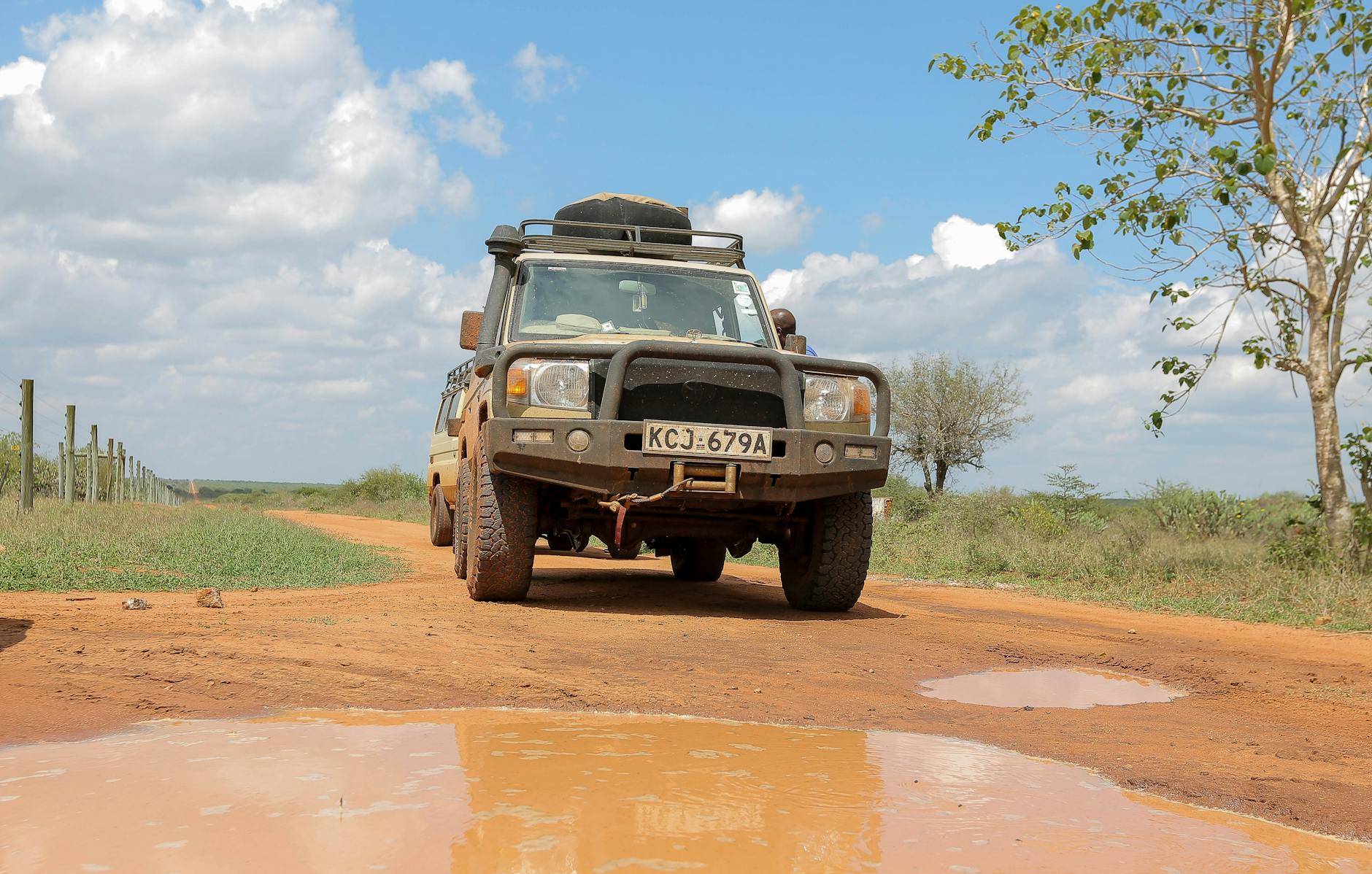
Expect a real mix. The A2 and the main roads around Nanyuki are tarmac and generally good. Once you turn off toward the conservancies, you’re on murram — graded earth roads that range from smooth and fast to badly corrugated, rutted or, after rain, slick and treacherous. The biggest hazard is “black cotton” soil, which turns to greasy, axle-deep mud when wet and can strand even a 4×4. In the dry season the roads are dusty but mostly easy; in the rains (broadly March–May and November) some routes become difficult or impassable, so reassess daily and ask locally before committing to a remote track.
What Vehicle Do You Need?
A high-clearance 4×4 is essential — there’s no sensible way around it. A Toyota Land Cruiser or similar is the standard safari workhorse, and for good reason: ground clearance, low-range gearing and durability matter on these roads. For independent trips, fully-equipped self-drive specialists in Nairobi and Nanyuki rent 4x4s, often with rooftop tents, camping kit, fridges and recovery gear, with rates typically ranging from around US$80 to US$200 a day depending on the vehicle and season. Some have a Nanyuki base, handy if you’re flying in and renting locally. Book ahead, especially in peak season, and check the spare tyre, jack and basic recovery equipment before you set off.
Conservancy Access and Rules
This is the part that surprises first-time self-drivers. Most of Laikipia’s wildlife areas are private and community conservancies, not open national parks, so you can’t simply drive in and explore. Some, like Ol Pejeta, welcome self-drive day visitors with paid entry, good internal roads and clear maps; others are accessible only to staying guests or via guided activities, and many enforce strict no-off-road policies to protect the land. Always check each conservancy’s access policy and fees in advance — our conservancy fees guide helps — and never drive off-track where it’s prohibited. Respecting these rules is part of why the wildlife thrives here.

Fuel, Supplies and Navigation
Top up your tank at every reliable opportunity. Nanyuki has proper fuel stations, ATMs and supermarkets — stock up here before heading to remote areas, where stations are sparse and may not accept cards. Carry cash (and use M-Pesa where you can; see our currency and money guide), plenty of drinking water, snacks and a basic first-aid kit. For navigation, download offline maps before you lose signal — mobile coverage is patchy in the conservancies — and don’t rely solely on your phone; a sense of the route and a backup matter when you’re miles from anywhere.
Driving Rules and Safety
Kenya drives on the left. Speed limits are typically 50 km/h in towns and 80–100 km/h on highways, and police checkpoints are routine — carry your licence (an International Driving Permit alongside your home licence is wise), rental papers and passport. The cardinal rule: do not drive at night outside towns. Unlit roads, livestock, wildlife, pedestrians and the occasional unmarked hazard make night driving genuinely dangerous; always plan to arrive before dusk. Inside conservancies, keep to walking pace near animals, never get between an elephant and its calf, and give all wildlife a wide berth. For broader advice, see our Laikipia safety guide.
Self-Drive Itinerary Ideas
A satisfying self-drive trip might base you in or near Nanyuki for a few nights, with day visits to Ol Pejeta, the equator, Ngare Ndare Forest and the Mount Kenya foothills, before pushing further afield. Camping enthusiasts can combine self-driving with the region’s campsites. Keep daily distances modest — roads are slower than the map suggests — and build in flexibility for weather and the occasional puncture. See our itinerary guide for inspiration.
Tips for a Successful Self-Drive
Check the vehicle thoroughly before leaving the depot — tyres (including the spare), jack, fluids and recovery gear.
Drop tyre pressure on corrugations and soft ground, then reinflate on tarmac, to improve grip and comfort.
Carry cash and download offline maps — remote fuel stations and tracks won’t have card machines or signal.
Never drive at night outside towns, and always reach your destination before dark.
Respect conservancy rules — pay your fees, stay on tracks, and confirm access before arriving.
Breakdowns, Recovery and Being Self-Sufficient
Self-driving in remote country means being ready to help yourself. Before you set out, confirm the vehicle has a good spare tyre (ideally two for longer trips), a working jack and wheel brace, a tyre pump and basic recovery gear like a tow rope and traction boards. Know how to change a wheel — punctures on murram are common. Carry the rental company’s emergency number, plenty of water, and tell someone your route and expected arrival. Mobile coverage drops out in the bush, so don’t rely on calling for help from everywhere. A little preparation turns a potential drama into a minor delay.
Where to Stay on a Self-Drive Trip
Self-drivers have the full range of Laikipia accommodation open to them, but a few options suit road trips especially well. Campsites on conservancies like Ol Pejeta let you pitch under the stars and are ideal if your rental has a rooftop tent, while Nanyuki’s guesthouses and hotels make a convenient, well-connected base for day trips. Book ahead — popular campsites and lodges fill up, especially in peak season — and confirm whether your chosen conservancy allows self-drive access and where you’re permitted to drive once inside.
Self-Drive vs Guided: An Honest Comparison
The headline trade-off is cost versus expertise. Self-driving is cheaper and gives total freedom, but you’ll miss the encyclopaedic knowledge of a professional guide who knows where the lions were this morning and can read the bush like a book — and you’ll do all the navigating, driving and problem-solving yourself. Guided safaris cost more but deliver better wildlife sightings, zero logistics stress and rich interpretation. A popular hybrid: self-drive for the journey, town errands and flexibility, then pay for guided game drives or conservation activities within the conservancies to get the best of both. Weigh it against your budget and how hands-on you want to be.
Combining a Self-Drive with the Wider Region
A Laikipia self-drive slots neatly into a longer Kenyan road trip. From Nanyuki you can push north toward Samburu, loop via Mount Kenya, or head back south to other regions, building a multi-stop adventure. Just respect the realities: distances are slow on murram, fuel and supplies thin out away from towns, and the rains can rewrite your plans. Keep daily drives modest, stock up in Nanyuki, and stay flexible. Our combined safari guide has ideas for linking regions.
Documents and Checkpoints
Driving in Kenya means carrying the right paperwork and expecting routine police checks. Keep your driving licence (an International Driving Permit alongside your national licence is sensible), the vehicle’s rental agreement and insurance papers, your passport and a copy of your eTA in the car. Checkpoints are normal and usually a quick, friendly wave-through; be polite, have documents ready, and you’ll rarely be delayed. Confirm with your rental company exactly what cover and documentation come with the vehicle, and keep their emergency contact saved.
A Sample Self-Drive Route
A rewarding week might look like this: collect your 4×4 in Nairobi or fly to Nanyuki and hire locally; spend the first nights around Nanyuki with day visits to Ol Pejeta, the equator and Ngare Ndare Forest; then, if roads allow, venture toward the northern conservancies or the Mount Kenya foothills before looping back. Keep daily distances short — Laikipia’s roads are slower than the map implies — and always reach your night stop before dark. Our itinerary guide has more route ideas.
Driving Courtesy and Local Conditions
A little road awareness goes a long way. Expect to share the tarmac with matatus, lorries, boda-bodas, pedestrians, cyclists and livestock — drive defensively, keep your speed down, and be patient with the rhythm of rural roads. Use your horn lightly to signal presence on blind corners, dip your lights for oncoming traffic, and pull over safely to let faster vehicles pass on single lanes. Within conservancies, vehicles always give way to wildlife, keep to tracks, and maintain a respectful distance — your game-drive manners apply behind your own wheel too.
Fuel and Range Planning
Out here, a full tank is peace of mind. Nanyuki is your last reliable place for fuel, cash and supplies before the conservancies, so fill up and stock up there. Beyond town, stations thin out, opening hours can be erratic, and card machines may not work, so always carry enough cash (and M-Pesa) for fuel. Plan your day’s range conservatively — murram roads and low-range driving burn more fuel than smooth tarmac — and never set off for a remote area on a half-empty tank. A jerry can of spare fuel is worth considering for the most far-flung routes.
Water and supplies follow the same logic: carry more drinking water than you think you’ll need, plus snacks and a basic kit, because the next shop may be a long way off. Treating Nanyuki as your resupply base and topping up at every opportunity is the habit that keeps a remote self-drive comfortable rather than anxious.
Sharing the Road with Wildlife and Livestock
The animals are the reason you came, and on a self-drive you’ll meet them on the road as well as in the conservancies. Give elephants an enormous amount of space — never crowd or get between adults and calves — and switch off and wait if large animals are crossing. On open rangeland you’ll constantly share the road with cattle, goats, sheep and donkeys herded by local communities; slow right down, expect the unexpected, and pass gently. Wildlife and livestock on unfenced roads are exactly why night driving is so dangerous and why daytime speeds should stay modest. Patience here isn’t just courteous — it’s the core safety skill of driving in Laikipia.
Planning a Realistic Daily Schedule
The biggest mistake self-drivers make in Laikipia is overestimating how far they’ll get in a day. Distances that look short on a map can take hours on corrugated murram, and you’ll want to stop constantly for wildlife, photos and the sheer scenery. Plan conservative daily legs, set off early to make the most of cool morning light and animal activity, and always build in a comfortable margin to reach your night stop well before dark — the single most important rule of driving here. Factor in time for the inevitable: a puncture, a herd of cattle blocking the track, a stop to watch elephants cross.
A good rhythm is to drive in the morning, settle into your camp or lodge by early afternoon, and use the late-afternoon golden hour for a relaxed game drive or short walk rather than more transit. Treating the driving as part of the safari, not a race between sights, is the mindset that makes a self-drive trip a joy. Pair this approach with our itinerary guide and the practicalities in trip planning.
Final Word: Drive It Like It’s Part of the Safari
Done with the right mindset, self-driving in Laikipia is hugely rewarding — the freedom to linger at a sighting, detour to a viewpoint, or simply travel at your own rhythm is something no guided package can quite replicate. The trade-off is responsibility: you’re the navigator, mechanic and risk-manager rolled into one. Respect the roads, the rules and the wildlife; carry cash, water and a good spare; never drive at night outside towns; and treat Nanyuki as your resupply base. Get those basics right and the plateau opens up on your own terms, which for the right kind of traveller is the trip of a lifetime.
Frequently Asked Questions
Can you self-drive in Laikipia?
Yes, with a high-clearance 4×4 and some planning. The main roads to Nanyuki are good tarmac, but conservancy approaches are murram and require care. Note that many wildlife areas are private conservancies with their own access rules, so check each one’s policy before arriving.
Do you need a 4×4 in Laikipia?
Yes. While the A2 highway to Nanyuki is paved, the roads into and around the conservancies are dirt, often rough or muddy after rain, so a high-clearance 4×4 such as a Land Cruiser is essential.
How much does 4×4 hire cost in Kenya?
Self-drive 4×4 rental typically ranges from around US$80 to US$200 per day depending on the vehicle, equipment and season, often with camping gear and rooftop tents available. Book ahead, especially in peak season.
Is it safe to drive in Laikipia?
It can be, with sensible precautions: drive defensively, never drive at night outside towns, carry your documents for checkpoints, keep to conservancy tracks, and watch for livestock and wildlife. See our safety guide for detail.
Can you drive yourself into the conservancies?
It depends on the conservancy. Some, like Ol Pejeta, welcome self-drive day visitors with paid entry; others are limited to staying guests or guided activities, and most prohibit off-road driving. Always confirm access and fees in advance.
Ready for the open road? Pair this with our guides to getting to Laikipia and the full Laikipia travel planning guide.